THE CLASSIC COLLECTION✦Angel Unawares: A Story of Christmas EveCLASSIC FREE BOOKS
Angel Unawares: A Story of Christmas Eve
C. N. (Charles Norris) Williamson & A. M. (Alice Muriel) Williamson
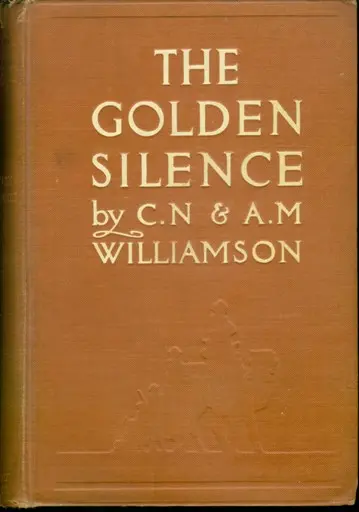
THE CLASSIC COLLECTION · 1910
"The Golden Silence" by C. N. Williamson and A. M. Williamson is a novel written in the early 20th century. The story revolves around Stephen Knight and Margot Lorenzi, as they navigate a turbulent engagement complicated by societal expectations and personal sacrifices stemming from a tragic family legacy. The narrative promises a blend of romance, drama, and the exploration of class distinctions and personal integrity. The opening of the novel introduces us to Stephen Knight, who is displeased with the attention Margot has attracted following a sensational newspaper interview about their engagement. Despite his frustration, he approaches Margot at the Carlton Hotel, where their complex relationship dynamics unfold. Margot, a strikingly beautiful woman with a dramatic past involving her father’s tragic demise in a court case against Stephen’s family, showcases a passionate and somewhat melodramatic personality. Their interaction highlights Stephen's internal conflict over his emotions toward Margot and the external social pressures they face, setting the tone for the drama and romance that will unfold as the story progresses.
Introduction adapted from the source catalogue; source summaries may be automatically generated.
Free to read · English · 172,948 words · No account needed
MAKE TIME FOR A GOOD BOOK
On by default. Untick to stop anonymous reading totals. Each page counts after 10 seconds in view. How this works.
Anonymous counting is on unless you have switched it off.
Stephen and Nevill Caird went up the Rue Bab-el-Oued, leading to the old town, and so came to the Hotel de la Kasbah, where Victoria Ray was staying. It looked more attractive at night, with its blaze of electricity that threw out the Oriental colouring of some crude decorations in the entrance-hall, yet the place appeared less than ever suited to Victoria.
An Arab porter stood at the door, smoking a cigarette. His fingers were stained with henna, and he wore an embroidered jacket which showed grease-spots and untidy creases. It was with the calmest indifference he eyed the Englishmen, as Nevill inquired in French for Miss Ray.
The question whether she were "at home" was conventionally put, for it seemed practically certain that she must be in the hotel. Where could she, who had no other friends than they, and no chaperon, go at night? It was with blank surprise, therefore, that he and Stephen heard the man's answer. Mademoiselle was out.
"I don't believe it," Stephen muttered in English, to Nevill.
The porter understood, and looked sulky. "I tell ze troot," he persisted. "Ze gentlemens no believe, zay ask some ozzer."
They took him at his word, and walked past the Arab into the hotel. A few Frenchmen and Spaniards of inferior type were in the hall, and at the back, near a stairway made of the cheapest marble, was a window labelled "Bureau." Behind this window, in a cagelike room, sat the proprietor at a desk, adding up figures in a large book. He was very fat, and his chins went all the way round his neck in grooves, as if his thick throat might pull out like an accordion. There was something curiously exotic about him, as there is in persons of mixed races; an olive pallor of skin, an oiliness of black hair, and a jetty brightness of eye under heavy lids.
This time it was Stephen who asked for Miss Ray; but he was given the same answer. She had gone out.
"You are sure?"
"Mais, oui, monsieur."
"Has she been gone long?" Stephen persisted, feeling perplexed and irritated, as if something underhand were going on.
"Of that I cannot tell," returned the hotel proprietor, still in guttural French. "She left word she would not be at the dinner."
"Did she say when she would be back?"
"No, monsieur. She did not say."
"Perhaps the American Consul's family took pity on her, and invited her to dine with them," suggested Nevill.
"Yes," Stephen said, relieved. "That's the most likely thing, and would explain her engagement this afternoon."
"We might explore the Kasbah for an hour, and call again, to inquire."
Your reading position is saved on this browser. Take it to another device with a library code. Reading pages adapt to text, rather than matching a printed edition.
C. N. (Charles Norris) Williamson & A. M. (Alice Muriel) Williamson
C. N. (Charles Norris) Williamson & A. M. (Alice Muriel) Williamson
C. N. (Charles Norris) Williamson & A. M. (Alice Muriel) Williamson
C. N. (Charles Norris) Williamson & A. M. (Alice Muriel) Williamson
BEHIND THE BOOK
This eBook is for the use of anyone anywhere in the United States and most other parts of the world at no cost and with almost no restrictions whatsoever. You may copy it, give it away or re-use it under the terms of the Project Gutenberg License included with this eBook or online at www.gutenberg.org. If you are not located in the United States, you will have to check the laws of the country where you are located before using this eBook. Read the source licence.
The original source file, including credits and licence, is retained by this library. Request an original-format copy at no charge. Please include the book title and Project Gutenberg identifier #19108.
KEEP YOUR CURIOSITY GOING
Coulson Kernahan

Maurice Baring
Frances Wright
Cécile Tormay

Frederic Jesup Stimson

W. H. P. (William Henry Pope) Jarvis