THE CLASSIC COLLECTION✦Angel Unawares: A Story of Christmas EveCLASSIC FREE BOOKS
Angel Unawares: A Story of Christmas Eve
C. N. (Charles Norris) Williamson & A. M. (Alice Muriel) Williamson
THE CLASSIC COLLECTION · 1910
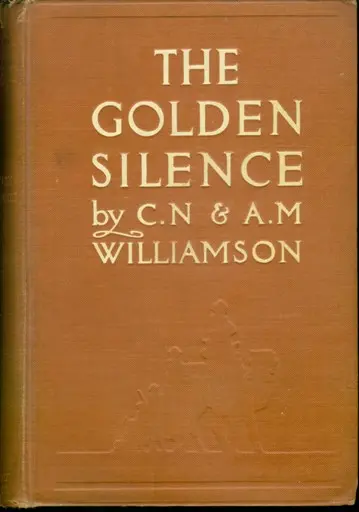
"The Golden Silence" by C. N. Williamson and A. M. Williamson is a novel written in the early 20th century. The story revolves around Stephen Knight and Margot Lorenzi, as they navigate a turbulent engagement complicated by societal expectations and personal sacrifices stemming from a tragic family legacy. The narrative promises a blend of romance, drama, and the exploration of class distinctions and personal integrity. The opening of the novel introduces us to Stephen Knight, who is displeased with the attention Margot has attracted following a sensational newspaper interview about their engagement. Despite his frustration, he approaches Margot at the Carlton Hotel, where their complex relationship dynamics unfold. Margot, a strikingly beautiful woman with a dramatic past involving her father’s tragic demise in a court case against Stephen’s family, showcases a passionate and somewhat melodramatic personality. Their interaction highlights Stephen's internal conflict over his emotions toward Margot and the external social pressures they face, setting the tone for the drama and romance that will unfold as the story progresses.
Introduction adapted from the source catalogue; source summaries may be automatically generated.
Free to read · English · 172,948 words · No account needed
MAKE TIME FOR A GOOD BOOK
On by default. Untick to stop anonymous reading totals. Each page counts after 10 seconds in view. How this works.
Anonymous counting is on unless you have switched it off.
Her tone changed, and became almost apologetic. She stirred uneasily in her deck chair, and looked about half dazedly, as people look about a room that is new to them, on waking there for the first time. "Why, it's grown dark!" she exclaimed.
This fact surprised Stephen equally. "So it has," he said. "By Jove, I was so interested in you--in what you were telling--I hadn't noticed. I'd forgotten where we were."
"I'd forgotten, too," said Victoria. "I always do forget outside things when I think about Saidee, and the golden dream-silence where I see her. All the people who were near us on deck have gone away. Did you see them go?"
"No," said Stephen, "I didn't."
"How odd!" exclaimed the girl.
"Do you think so? You had taken me to the golden silence with you."
"Where can everybody be?" She spoke anxiously. "Is it late? Maybe they've gone to get ready for dinner."
From a small bag she wore at her belt, American tourist-fashion, she pulled out an old-fashioned gold watch of the kind that winds up with a key--her mother's, perhaps, on which she had borrowed money to reach New York. "Something must be wrong with my watch," she said. "It can't be twenty minutes past eight."
The same thing was wrong with Stephen's expensive repeater, whose splendour he was ashamed to flaunt beside the modesty of the girl's poor little timepiece. There remained now no reasonable doubt that it was indeed twenty minutes past eight, since by the mouths of two witnesses a truth can be established.
"How dreadful!" exclaimed Victoria, mortified. "I've kept you here all this time, listening to me."
"Didn't I tell you I'd rather listen to you than anything else? Eating was certainly not excepted. I don't remember hearing the bugle."
"And I didn't hear it."
"I'd forgotten dinner. You had carried me so far away with you."
"And Saidee," added the girl. "Thank you for going with us."
"Thank you for taking me."
They both laughed, and as they laughed, people began streaming out on deck. Dinner was over. The handsome Arab passed, talking with the spare, loose-limbed English parson, whom he had fascinated. They were discussing affairs in Morocco, and as they passed Stephen and Victoria, the Arab did not appear to turn; yet Stephen knew that he was thinking of them and not of what he was saying to the clergyman.
"What shall we do?" asked Victoria.
Stephen reflected for an instant. "Will you invite me to dine at your
table?" he asked.
"Maybe they'll tell us it's too late now to have anything to eat. I don't mind for myself, but for you----"
Your reading position is saved on this browser. Take it to another device with a library code. Reading pages adapt to text, rather than matching a printed edition.
C. N. (Charles Norris) Williamson & A. M. (Alice Muriel) Williamson
C. N. (Charles Norris) Williamson & A. M. (Alice Muriel) Williamson
C. N. (Charles Norris) Williamson & A. M. (Alice Muriel) Williamson
C. N. (Charles Norris) Williamson & A. M. (Alice Muriel) Williamson
BEHIND THE BOOK
This eBook is for the use of anyone anywhere in the United States and most other parts of the world at no cost and with almost no restrictions whatsoever. You may copy it, give it away or re-use it under the terms of the Project Gutenberg License included with this eBook or online at www.gutenberg.org. If you are not located in the United States, you will have to check the laws of the country where you are located before using this eBook. Read the source licence.
The original source file, including credits and licence, is retained by this library. Request an original-format copy at no charge. Please include the book title and Project Gutenberg identifier #19108.
KEEP YOUR CURIOSITY GOING
Coulson Kernahan

Maurice Baring
Frances Wright
Cécile Tormay

Frederic Jesup Stimson

W. H. P. (William Henry Pope) Jarvis