THE CLASSIC COLLECTION✦ToleranceCLASSIC FREE BOOKS
Tolerance
Hendrik Willem Van Loon
THE CLASSIC COLLECTION · 1916
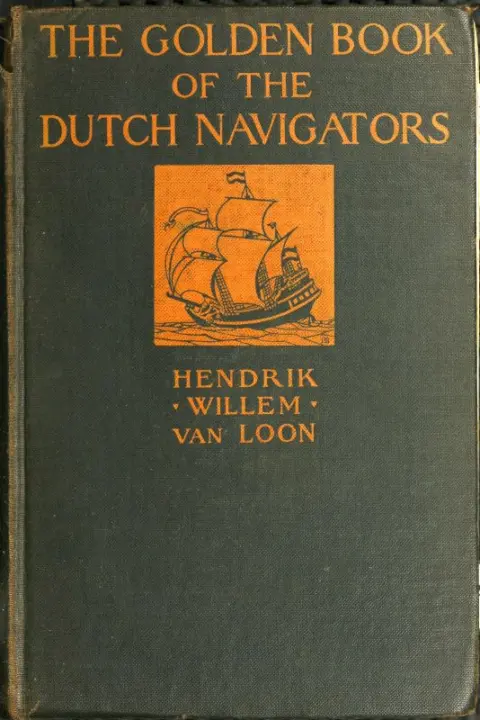
"The Golden Book of the Dutch Navigators" by Hendrik Willem van Loon is a historical account written in the early 20th century. This work explores the adventurous and often perilous voyages undertaken by Dutch explorers during the Age of Exploration, focusing on their contributions to maritime navigation and trade. The narrative covers various expeditions, highlighting the triumphs and tragedies faced by these navigators as they sought new trade routes to the East Indies and beyond. At the start of the book, the author sets the stage for the story by acknowledging the significant sacrifices made by early Dutch navigators, many of whom met tragic ends yet remained undeterred in their quests. The introduction discusses the historical backdrop of the Dutch struggle for independence and their eventual flourishing as a maritime power. The opening chapters introduce key figures like Jan Huygen van Linschoten, who ventured to Spain and eventually became a vital link for Dutch traders seeking access to the riches of the Indian seas. The narrative goes on to describe not only the reckless bravery of these men but also the socio-economic environment of the time, painting a vivid picture of the adventurous spirit that drove them into the unknown.
Introduction adapted from the source catalogue; source summaries may be automatically generated.
Free to read · English · 50,855 words · No account needed
MAKE TIME FOR A GOOD BOOK
On by default. Untick to stop anonymous reading totals. Each page counts after 10 seconds in view. How this works.
Anonymous counting is on unless you have switched it off.
At last, on the twentieth of August, the wind turned, and the ships were able to enter the strait. The joy of the men did not last very long. The next day there was no wind at all, and once more the fleet anchored. To keep his few remaining men busy, the commander arranged an expedition on shore. It was the first time that a Dutch fleet had been in this part of the world, and the event must be properly celebrated. A high pole was planted in a conspicuous spot on shore, and the adventures of the expedition and the names of the leaders were carved on the pole. Near this pole a small cemetery was made where two sailors who had died the night before were buried. In the evening all went back to their ships. When they returned the next morning, they found that the natives had hacked the monument to pieces and the corpses of the dead Hollanders had been dug out of the earth and had been cut into little bits and were spread all over the shore. This humiliating experience was the last one which they suffered in the strait. The wind at last turned to their advantage and on the third of September the ships reached the Pacific Ocean.
The good weather lasted just seven days. A week later, in the night of the tenth of September, a severe storm attacked the little fleet, and the next morning the ships had lost sight of one another. They came together after a short search, but during the next night there was another gale, and in the morning three of the five ships had disappeared. Only the Trouwe and the Geloof were apparently saved. During three weeks these two ships floated aimlessly about, driven hither and thither upon the angry waves of the Pacific Ocean. They had few supplies left, and they could not repair the damage that was done to their masts because both ships had sent their carpenters to one of the other vessels which had been in need of a general overhauling and which was now lost. A month went by, and then they discovered that they had been driven back into the strait. The admiral discussed the situation with his chief officers. Did they advise going back to Holland without having accomplished anything, or would they keep on? The sailors all wanted to return to Holland. They did not have any faith left in the results of this unhappy voyage. Many of them were ill. Others pretended that they were too weak to work. Others murmured about a lack of provisions. There was ground for this talk. The supply-room was getting emptier and emptier in a very mysterious way. At last the admiral decided to investigate this strange case. He discovered that an unknown member of the crew possessed a key to the bread-boxes and stuffed himself every night while his comrades were kept on short rations. It was a gross breach of discipline. Apparently the expedition was going from bad to worse. On the afternoon of the tenth of December Admiral de Weert paid a call to the Trouwe to talk over the situation. The next morning the Trouwe had disappeared. De Weert never saw her again. He was all alone, and his safe return depended upon his own unaided efforts. His first duty was to get enough food. On a certain Sunday afternoon the few men of his ship who could still walk were on shore looking for things to eat when they had an encounter with a large number of natives who had just arrived in three canoes. The natives fled, and hid themselves among the cliffs. One woman and two small babies could not get away and were brought back to the ship. The woman was kept a prisoner for forty-eight hours while the Hollanders studied the habits and customs of the wild people of Tierra del Fuego. The subject of their study refused to eat cooked food, but dead birds which were thrown to her she ate as if she had been a wild animal. The children did the same thing, tearing at the feathers with their sharp teeth. After two days the mother and one of the children were sent back to the shore with a number of presents. The other child was kept on board and was taken back to Holland, where it died immediately after arrival. On the sixteenth of December a last attempt was made to find the Trouwe. A blank cartridge was fired, and a few minutes later a distant answer was heard. Soon a ship came sailing around a nearby cape. It was not the Trouwe, but the ship of Oliver van Noort, who at the head of his expedition had just entered upon the last stretch of his voyage through the strait. Van Noort had a story to tell of a fairly successful voyage, plenty to eat, and little illness. The hungry men of De Weert looked with envy at the happy faces of Van Noort's sailors. The latter had just caught several thousand penguins on a little island not far away. The starving crew of the Geloof asked that they be allowed to sail to this island and catch whatever Van Noort had left alive. De Weert, however, refused this request. Here was his last chance to get to the Indies in the company of the squadron of Van Noort, and he meant to take it. The next morning he joined the new ships on their westward course. But his sailors, weak and miserable after more than a year of illness, could not obey their captain's commands as fast as those who were on the other ships. Soon the Geloof was left behind. The next morning, when Van Noort entered the Pacific, De Weert was helplessly blown back into the strait. It seemed impossible to do more than he had tried to accomplish against such great odds. He called all his remaining sailors together to hear what they wanted him to do. They all had just one wish, to get home as fast as possible by way of Brazil and Africa. The Pacific, so they argued, offered nothing but disappointment. De Weert promised to give his final decision on the next day, which was the first of January of the year 1600. When the morning came, he found himself once more in the company of other ships. Van Noort had reached the Pacific, but the Western storms had been too much for his strong ships. For the second time the Hollanders were all united in a cold little harbor inside the Strait of Magellan.
Your reading position is saved on this browser. Take it to another device with a library code. Reading pages adapt to text, rather than matching a printed edition.
Hendrik Willem Van Loon
Hendrik Willem Van Loon
Hendrik Willem Van Loon
Hendrik Willem Van Loon
BEHIND THE BOOK
This eBook is for the use of anyone anywhere in the United States and most other parts of the world at no cost and with almost no restrictions whatsoever. You may copy it, give it away or re-use it under the terms of the Project Gutenberg License included with this eBook or online at www.gutenberg.org. If you are not located in the United States, you will have to check the laws of the country where you are located before using this eBook. Read the source licence.
The original source file, including credits and licence, is retained by this library. Request an original-format copy at no charge. Please include the book title and Project Gutenberg identifier #45799.
KEEP YOUR CURIOSITY GOING
Wilfrid Scawen Blunt
Wilfrid Scawen Blunt

E. W. (Edgar Watson) Howe
Cécile Tormay

Moritz Busch
John L. Ransom