THE CLASSIC COLLECTION✦Sunshine and snowCLASSIC FREE BOOKS
Sunshine and snow
Harold Bindloss
THE CLASSIC COLLECTION · 1910
"The Gold Trail" by Harold Bindloss is a novel written in the early 20th century. The story is set against the backdrop of railroad construction in western Canada, focusing on the challenges faced by workers, particularly Construction Foreman Cassidy and his crew. The tale follows the lives of several characters, primarily centered around the proud and determined contractor Stirling and his daughter Ida, as well as the hardworking packer Weston, whose journey intersects with theirs amid the rugged wilderness. At the start of the novel, we are introduced to a setting where Cassidy has encountered a seemingly insurmountable challenge—a bottomless swamp halting the progress of railroad construction. Stirling, eager and indomitable, decides to travel west to oversee the situation himself, bringing along his daughter and her English friends. Concurrently, we meet Weston, a young Englishman who has adapted to life in Canada but carries scars from his past pursuits. The dynamic between these characters sets the stage for conflict, resilience, and the unfolding of personal stories as they navigate the trials of construction, the beauty of the Canadian wilderness, and interpersonal relationships. As they face the daunting terrain, the narrative hints at themes of ambition, determination, and the clash between social classes.
Introduction adapted from the source catalogue; source summaries may be automatically generated.
Free to read · English · 106,033 words · No account needed
MAKE TIME FOR A GOOD BOOK
On by default. Untick to stop anonymous reading totals. Each page counts after 10 seconds in view. How this works.
Anonymous counting is on unless you have switched it off.
"Let me take hold," said Devine, and when Weston handed the fork to him he walked back a few paces and crossed the same spot again. The fork, however, pointed straight in front of him. He threw it down and said nothing, but Weston looked at him with a little grim smile.
"I've heard it said that anybody could do it, but that's not my
experience," he observed.
Devine's gesture might have expressed anything.
"Oh, we were both crazy when we started with Grenfell," he said.
Weston moved forward with the fork, and, while Devine looked on, the stem once more inclined. It wavered, tilted downward a little farther, and then slowly swung back to rest again. Still, Weston held on, and when there was a further inclination it became clear that his companion was convinced.
"The thing's picking up the trail!" he exclaimed.
For a time they wandered up and down the thicket, Weston apparently directing his course by the spasmodic movements of the fork, which now and then would lie still altogether. At length it commenced to jerk sharply, and Devine looked at his companion in a curious manner.
"It's heading right back for Grenfell," he said in a hoarse whisper.
They went on until they almost reached the spot which they had left more than an hour ago. Then the fork suddenly pointed straight downward, and Weston stopped. His face was flushed, and his voice was sharp and strained.
"Go and bring the shovel!" he said.
Devine strode into the bush, and Weston struggled through the undergrowth to where Grenfell lay, scarcely a stone's throw away. Stripping off his jacket, he laid it over the dead man to keep off the flies. Then he went back and sat down with a dazed look in his eyes until the surveyor broke out from among the trees with the shovel.
"Sit still," said Devine, "I'll go down the first foot or two,
anyway."
Weary as he was he plied the shovel savagely, flinging out the mould in showers, but he was knee-deep in the hole before there was a clink as the blade struck stones.
"Gravel. The water would work right through that," he said.
He toiled on until the hole was a yard in depth, but the gravel he flung out was dry, and at length he stopped and sat on the side of the excavation, gasping.
"Nothing yet," he said. "You're sure you struck it?"
"Yes," replied Weston, quietly, "I'm sure."
Once more Devine seized the shovel, but in a moment he flung it down suddenly, with a sharp, glad cry.
"It's sluicing out!"
Your reading position is saved on this browser. Take it to another device with a library code. Reading pages adapt to text, rather than matching a printed edition.
Harold Bindloss
Harold Bindloss
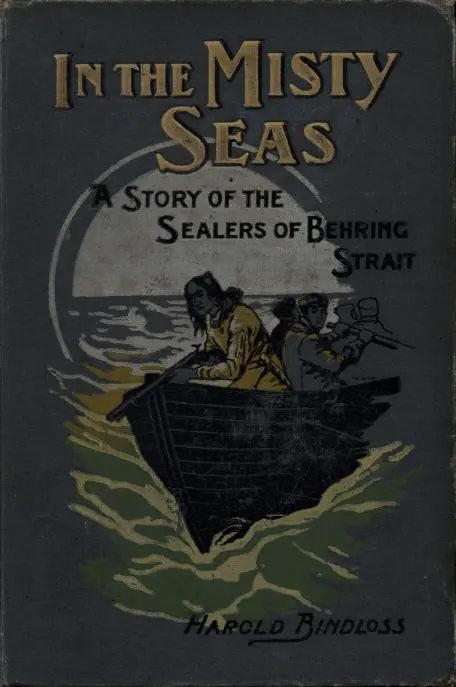
Harold Bindloss

Harold Bindloss
BEHIND THE BOOK
This eBook is for the use of anyone anywhere in the United States and most other parts of the world at no cost and with almost no restrictions whatsoever. You may copy it, give it away or re-use it under the terms of the Project Gutenberg License included with this eBook or online at www.gutenberg.org. If you are not located in the United States, you will have to check the laws of the country where you are located before using this eBook. Read the source licence.
The original source file, including credits and licence, is retained by this library. Request an original-format copy at no charge. Please include the book title and Project Gutenberg identifier #21205.
KEEP YOUR CURIOSITY GOING
Coulson Kernahan

Maurice Baring
Frances Wright
Cécile Tormay

Frederic Jesup Stimson

W. H. P. (William Henry Pope) Jarvis