THE CLASSIC COLLECTION✦Sunshine and snowCLASSIC FREE BOOKS
Sunshine and snow
Harold Bindloss
THE CLASSIC COLLECTION · 1910
"The Gold Trail" by Harold Bindloss is a novel written in the early 20th century. The story is set against the backdrop of railroad construction in western Canada, focusing on the challenges faced by workers, particularly Construction Foreman Cassidy and his crew. The tale follows the lives of several characters, primarily centered around the proud and determined contractor Stirling and his daughter Ida, as well as the hardworking packer Weston, whose journey intersects with theirs amid the rugged wilderness. At the start of the novel, we are introduced to a setting where Cassidy has encountered a seemingly insurmountable challenge—a bottomless swamp halting the progress of railroad construction. Stirling, eager and indomitable, decides to travel west to oversee the situation himself, bringing along his daughter and her English friends. Concurrently, we meet Weston, a young Englishman who has adapted to life in Canada but carries scars from his past pursuits. The dynamic between these characters sets the stage for conflict, resilience, and the unfolding of personal stories as they navigate the trials of construction, the beauty of the Canadian wilderness, and interpersonal relationships. As they face the daunting terrain, the narrative hints at themes of ambition, determination, and the clash between social classes.
Introduction adapted from the source catalogue; source summaries may be automatically generated.
Free to read · English · 106,033 words · No account needed
MAKE TIME FOR A GOOD BOOK
On by default. Untick to stop anonymous reading totals. Each page counts after 10 seconds in view. How this works.
Anonymous counting is on unless you have switched it off.
"Oh, yes," he said. "Unfortunately, however, they are, as a rule, retiring. It's the other kind that is usually in evidence. Do you feel very badly disappointed with us, Miss Stirling?"
"No," replied Ida, with a thoughtfulness which brought the smile more plainly into his eyes. "In fact, I want to think well of you. It's a thing we wouldn't quite admit, but at bottom I believe we all do."
Then she turned to Arabella.
"By the way, what has become of Mr. Weston?"
"He is shut up with my father in the library; and there are reasons for supposing that his business requires the consumption of a considerable quantity of soda and whisky. The major, I am afraid, will be a trifle difficult to get on with this evening. As a matter of fact, he isn't used to it, though he was, one understands, rather popular at the mess table. That's a trifle significant, considering what is said about us, isn't it, Mr. Ainslie?"
"Ah," said Ainslie, "we're a maligned people; and the pity of it is that it's our own people who give us away. You don't believe in doing that in the Colonies?"
"No," laughed Ida, "we are rather fond of making it clear that we are quite above the average as a people. However, it's excusable, perhaps, for, after all, there's a germ of truth in it. I think Miss Kinnaird will agree with that."
Arabella leaned a little farther over her chair.
"I'll leave you to talk it out with Mr. Ainslie. But there's another matter. Does Miss Weston recall to you anybody we have met?"
"No," said Ida, with a somewhat incautious decisiveness. "If you mean our camp-packer, she certainly does not."
Arabella understood this to mean that any comparison of the kind
suggested would be derogatory to the packer, which was somewhat
significant.
"Well," she said, "there is at least a physical resemblance, and
though I haven't probed the matter very deeply, yet I've not abandoned
it."
Then she laughed and turned to Ainslie.
"You and Miss Stirling can thrash out the question."
She strolled away, and Ainslie watched Ida, whose eyes were following Miss Weston at the tennis net.
"Yes," he remarked, "we play these games rather well; and, after all, is there any reason why we shouldn't? There are a good many people in this country who don't consider them as of the first importance."
"Oh," said Ida, "I'm really not looking for faults. Why should you suspect me of such an unpleasant attitude?"
Your reading position is saved on this browser. Take it to another device with a library code. Reading pages adapt to text, rather than matching a printed edition.
Harold Bindloss
Harold Bindloss
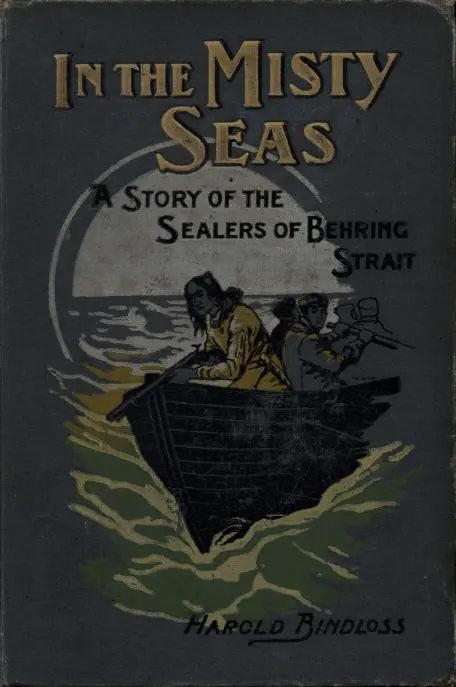
Harold Bindloss
Harold Bindloss
BEHIND THE BOOK
This eBook is for the use of anyone anywhere in the United States and most other parts of the world at no cost and with almost no restrictions whatsoever. You may copy it, give it away or re-use it under the terms of the Project Gutenberg License included with this eBook or online at www.gutenberg.org. If you are not located in the United States, you will have to check the laws of the country where you are located before using this eBook. Read the source licence.
The original source file, including credits and licence, is retained by this library. Request an original-format copy at no charge. Please include the book title and Project Gutenberg identifier #21205.
KEEP YOUR CURIOSITY GOING
Coulson Kernahan

Maurice Baring
Frances Wright
Cécile Tormay

Frederic Jesup Stimson

W. H. P. (William Henry Pope) Jarvis