
The slave ship
Mary Johnston
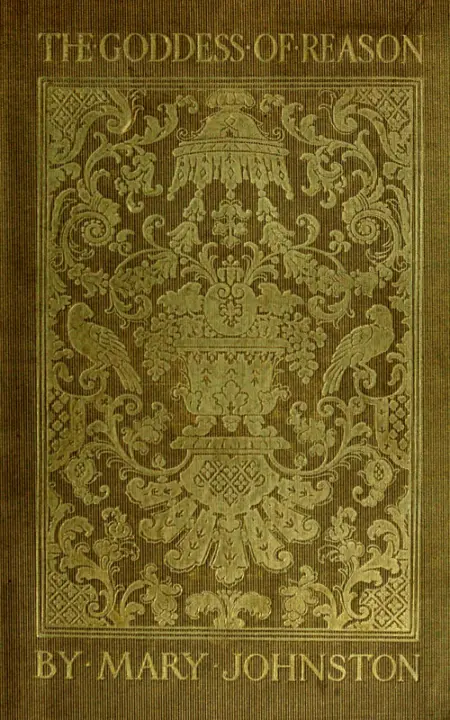
THE CLASSIC COLLECTION · 1907
"The Goddess of Reason: A Drama in Five Acts" by Mary Johnston is a historical drama written in the early 20th century. Set during the tumultuous era of the French Revolution, the play explores themes of class struggle, loyalty, and the complexities of power dynamics between nobles and peasants. The narrative centers around René-Amaury de Vardes, the new Baron of Morbec, and the struggle between his noble lineage and the revolutionary fervor of his peasant subjects, particularly focusing on a character named Yvette, who embodies the passions and resentments of the oppressed. The opening of the drama introduces a luxurious yet decaying world, where Rémond Lalain, a Deputy, seeks an audience with Baron René de Vardes, who has just inherited the château following his cousin’s death. As discussions unfold among the guests about the political turmoil and peasant uprisings, hints of discontent among the lower classes become evident. Lalain’s fervor for revolutionary ideals clashes with the grandeur and entitlement represented by the nobility. The narrative also introduces Yvette, a peasant girl, believed to have a significant role in the unfolding revolution, as she grapples with her identity and feelings toward her noble oppressor. This opening sets the stage for the characters' conflicts and the larger societal struggles that will permeate the narrative.
Introduction adapted from the source catalogue; source summaries may be automatically generated.
Free to read · English · 32,746 words · No account needed
MAKE TIME FOR A GOOD BOOK
On by default. Untick to stop anonymous reading totals. Each page counts after 10 seconds in view. How this works.
Anonymous counting is on unless you have switched it off.
Ah, oftentimes,
They fall before they reach the Judgment Hall!
There in the street, before that fatal door—
Both youth and age, fair women and brave men.
Their blood cries to another judgment seat!
From yonder window you may see it all!
We will not look!
Fie, fie, De Barbasan!
There is a time for everything! Not now,
Nor in this place is’t meet or debonair
To speak of ravening wolves or stricken deer!
To work, my friend! You find us much concerned
About this play of Molière’s! We give
Le Bourgeois Gentilhomme.
You’ll play Jourdain?
Béjart had promised us, but then he went.
He’s not returned.
Nor will, I think. But, yes,
I’ll take the part; I’ll speak in prose to you
To whom I else would speak in poetry!
THE MARQUISE (with a curtesy)
Monsieur Jourdain, your prose is ravishing!—
I’m Dorimène.
And I Dorante!
Lucille.
Nicole!
I am, Monsieur Jourdain, your wife!
Your son-in-law the Turk!
Behold, monsieur,
Your fencing master!
Your maître de danse.
Imagine, pray, you hear my violin:
La, la—The minuet!—La, la, la!
[He plays an imaginary violin. The prisoners hesitate, laugh, then begin to step a minuet. The children and the gaolers watch them. DE VARDES does not dance. He leans against a pillar to the left.
Enter a turnkey, CÉLESTE, ANGÉLIQUE, NANON, and
SÉRAPHINE.
SÉRAPHINE (crossing herself)
Eh! Eh! They dance!—Well, what a thing it is
To be a noble born!
CÉLESTE (jealously)
We dance as well!
Ay, the Carmagnole!
‘Tis a swifter dance!
Why came we here? I never liked this church,
They are too gay of heart, these ci-devants!
Let’s to the Judgment Hall, or to the Loire.
Séraphine would come—
Patience, Citoyennes,
No haste! I’ve just a little word to speak
Unto monseigneur there.
Monseigneur!
Oh,
The Citoyen Vardes! You know my tripping tongue.
NANON (to the turnkey)
Where is that ci-devant men once did call
La belle Marquise?
‘Tis she who dances there,
Fair-haired and dressed in violet.
Awhile
I’ll watch her dance.
Their cheeks are pale.
They smile.
I would not smile if I were they.
[NANON, CÉLESTE, and ANGÉLIQUE watch the dancers. SÉRAPHINE approaches DE VARDES.
SÉRAPHINE (in a low voice)
Monseigneur!
Séraphine Robin, I believe?
Your reading position is saved on this browser. Take it to another device with a library code. Reading pages adapt to text, rather than matching a printed edition.
Mary Johnston
Mary Johnston

Mary Johnston

Mary Johnston
BEHIND THE BOOK
This eBook is for the use of anyone anywhere in the United States and most other parts of the world at no cost and with almost no restrictions whatsoever. You may copy it, give it away or re-use it under the terms of the Project Gutenberg License included with this eBook or online at www.gutenberg.org. If you are not located in the United States, you will have to check the laws of the country where you are located before using this eBook. Read the source licence.
The original source file, including credits and licence, is retained by this library. Request an original-format copy at no charge. Please include the book title and Project Gutenberg identifier #53817.
KEEP YOUR CURIOSITY GOING
Cécile Tormay

Moritz Busch
Coulson Kernahan
John L. Ransom

Maurice Baring
Frances Wright