THE CLASSIC COLLECTION✦A dead man’s diaryCLASSIC FREE BOOKS
A dead man’s diary
Coulson Kernahan
THE CLASSIC COLLECTION · 1891
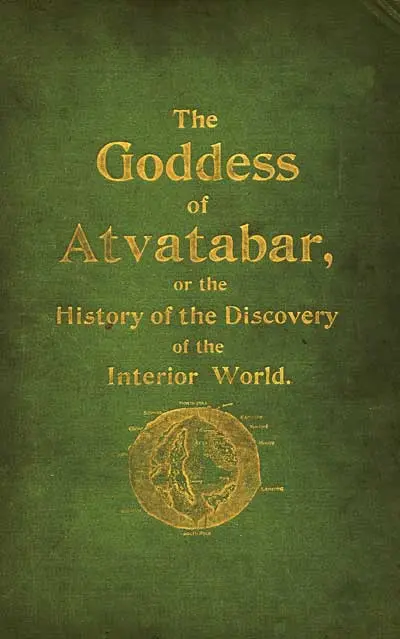
"The Goddess of Atvatabar" by William Richard Bradshaw is a novel written in the late 19th century. The story follows an expedition led by a character named Lexington White who intends to discover the North Pole but instead finds himself venturing into the interior of the Earth. Bradshaw's narrative blends elements of adventure and fantasy, showcasing a richly imagined world filled with unique civilizations and wonders as the crew encounters extraordinary phenomena beneath the Earth’s surface. At the start of the narrative, the crew of the ship "Polar King" is awakened by a catastrophic noise that hints at an imminent adventure. As they investigate, they discover an opening in the ice that leads them toward the North Pole—a journey filled with myriad dangers and scientific inquiry. The crew, comprised of various specialists, grapples with the extraordinary events unfolding around them, including navigating treacherous ice, encountering wildlife, and contending with their fears of the unknown. These initial chapters set the stage for a remarkable journey into a fantastical world, sparked by the mysteries of exploration and the spirit of discovery.
Introduction adapted from the source catalogue; source summaries may be automatically generated.
Free to read · English · 94,323 words · No account needed
MAKE TIME FOR A GOOD BOOK
On by default. Untick to stop anonymous reading totals. Each page counts after 10 seconds in view. How this works.
Anonymous counting is on unless you have switched it off.
"Well, then," said he, "look at the sun. The sun has swung round to the west, but hasn't fallen any."
I looked at the sun, which, sure enough, stood as high as at mid-day. I was paralyzed with a nameless dread. I stood rooted to the deck in anticipation of some dreadful horror.
"Good heavens!" I gasped, "what--what do you mean?"
"I mean," said he, "the sun is not going to fall again on this course. It's we who are going to fall."
"The sun will fall to its usual position at midnight," I stammered;
"wait--wait till midnight."
"The sun won't fall at midnight," said the professor. "I am afraid to
tell you why," he added.
"In God's name," I shouted, "tell me the meaning of this!"
I will never forget the feeling that crazed me as the professor said: "I fear, commander, we are falling into the interior of the earth!"
"You are mad, sir!" I shouted. "It cannot be--we are sailing to the
North Pole."
"Wait till midnight, commander," said he, shaking my hand.
I took his hand and echoed his words--"Wait till midnight." After a pause I inquired if he had mentioned his extraordinary fears to any one else.
"Not a soul," he replied.
"Then," said I, "say nothing to anybody until midnight."
"Ay, ay, sir," said he, and disappeared.
The sailors evidently expected that something was going to happen on account of the sun standing still in the heavens. They were gathered in groups on deck discussing the situation with bated breath. I noticed them looking at me with wild eyes, like sheep cornered for execution. The officers avoided calling my attention to the unusual sight, possibly divining I was already fully excited by it.
Never was midnight looked for so eagerly by any mortal on earth as I
awaited the dreadful hour that would either confirm or dispel my
fears.
Midnight came and the sun had not fallen in the sky! There he stood as high as at noonday, at least five degrees higher than his position twenty-four hours before.
Professor Starbottle, approaching me, said: "Commander, my prognostication was correct; you see the sun's elevation is unchanged since mid-day. Now one of two things has happened--either the axis of the earth has approached five degrees nearer the plane of its orbit since mid-day or we are sailing down into a subterranean gulf! That the former is impossible, mid-day to-day will disprove. If my theory of a subterranean sea is correct, the sun will fall below the horizon at mid-day, and our only light will be the earth-light of the opposite mouth of the gulf into which we are rapidly sinking."
Your reading position is saved on this browser. Take it to another device with a library code. Reading pages adapt to text, rather than matching a printed edition.
BEHIND THE BOOK
This eBook is for the use of anyone anywhere in the United States and most other parts of the world at no cost and with almost no restrictions whatsoever. You may copy it, give it away or re-use it under the terms of the Project Gutenberg License included with this eBook or online at www.gutenberg.org. If you are not located in the United States, you will have to check the laws of the country where you are located before using this eBook. Read the source licence.
The original source file, including credits and licence, is retained by this library. Request an original-format copy at no charge. Please include the book title and Project Gutenberg identifier #32825.
KEEP YOUR CURIOSITY GOING
Coulson Kernahan

Maurice Baring
Frances Wright
Cécile Tormay
Francis Greenleaf Allinson & Anne C. E. (Anne Crosby Emery) Allinson

Frederic Jesup Stimson