THE CLASSIC COLLECTION✦My diaries, being a personal narrative of events 1888-1914, Part 2 (1900-1914)CLASSIC FREE BOOKS
My diaries, being a personal narrative of events 1888-1914, Part 2 (1900-1914)
Wilfrid Scawen Blunt
THE CLASSIC COLLECTION · 1913
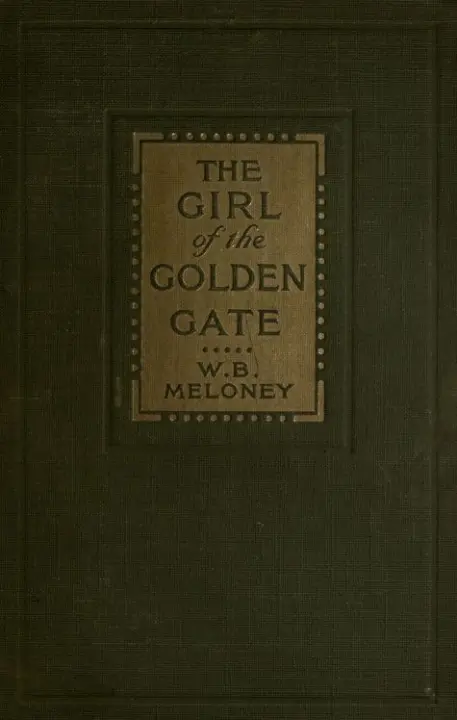
"The Girl of the Golden Gate" by William Brown Meloney is a novel written in the early 20th century. The story appears to center around a dramatic and adventurous narrative, focusing on the character of Paul Whitridge, who is a captain marked by mystery and personal pain. The novel intricately weaves themes of sacrifice, human connection, and the complexities of identity against the backdrop of a perilous sea journey. At the start of the narrative, readers are introduced to a bustling port in Yokohama where Whitridge is preparing to book passage on a ship called the Cambodia. He is characterized by his emotional detachment, indicated by a past filled with trauma, including surviving a mutiny and navigating through a violent storm at sea. Whitridge encounters Emily Granville, a beautiful woman in distress who is desperate to secure a cabin on the same ship. Their brief yet impactful interaction hints at deeper connections and unresolved emotions, setting the stage for an intense exploration of their backgrounds and the obstacles they face. As various circumstances unfold, including Whitridge's willingness to give up his own room for Emily, the narrative establishes a tension between personal sacrifice and the quest for redemption.
Introduction adapted from the source catalogue; source summaries may be automatically generated.
Free to read · English · 62,491 words · No account needed
MAKE TIME FOR A GOOD BOOK
On by default. Untick to stop anonymous reading totals. Each page counts after 10 seconds in view. How this works.
Anonymous counting is on unless you have switched it off.
A woman with hair of the color of gold that has been washed in sea water was coming in out of the sunshine of the radiant March morning. A picture hat of rough bronze straw accentuated the wealth and beauty of her wonderful crown. A long, loose tan coat with full sleeves, made her appear a shade taller than she really was, but her erect, healthy carriage threw the garment about her in clinging folds which softened its fashionable modernness.
She paused for a second, a tilt of inquiry to her vivid head. Then she moved swiftly to the desk where Whitridge was standing.
"I have a letter--I wish to see the director--the manager, please," she said to the clerk in a low, well-bred voice.
Looking up, the clerk gave a start of surprise, recovered himself quickly, and indicated a door to the left. She opened it and passed inside followed by a woman in black, evidently a maid. The clerk's eyes trailed after her with something of awe in them. There was hardly a glance in the room which was not turned in the same direction.
"Out East here we--we see nothing but little, dark women," the clerk began apologetically, facing Whitridge again.
"Ever see Burne-Jones' 'Springtime'?" interrupted the Englishman
eagerly. Whitridge nodded. "Gad! Isn't she like it?" Another nod
answered him.
"Now, sir," interrupted the clerk, spreading out a diagram. "The Cambodia calls at Honolulu, you----"
"I wish to book through to San Francisco--an outside room, if possible."
"Luck's with you, sir. The last one," and he indicated with a pencil point a small space aft on the port side. Whitridge nodded his acceptance and at that moment the office door at the left opened quickly.
A middle-aged man, evidently the agency manager, emerged, preceding the
"Springtime" woman.
"Burr! Reserve an outside room on the Cambodia at once," he called to the clerk booking Whitridge.
"Too late, sir. I've just sold the last one to this gentleman."
Whitridge turned. A shadow of keen disappointment passed over the face of the golden-haired woman.
"Oh, is there nothing you can do?" she asked, looking at the manager appealingly. He glanced at Whitridge. "You don't know the terror I feel--the horror I have of being put inside," she went on. There was a note of genuine distress in her voice.
"There is another ship in eight days," answered the manager.
"But it is imperative that I sail on this one."
"If you will permit me," interrupted Whitridge, baring his head, "I will
resign my room to you."
Your reading position is saved on this browser. Take it to another device with a library code. Reading pages adapt to text, rather than matching a printed edition.
BEHIND THE BOOK
This eBook is for the use of anyone anywhere in the United States and most other parts of the world at no cost and with almost no restrictions whatsoever. You may copy it, give it away or re-use it under the terms of the Project Gutenberg License included with this eBook or online at www.gutenberg.org. If you are not located in the United States, you will have to check the laws of the country where you are located before using this eBook. Read the source licence.
The original source file, including credits and licence, is retained by this library. Request an original-format copy at no charge. Please include the book title and Project Gutenberg identifier #60124.
KEEP YOUR CURIOSITY GOING
Wilfrid Scawen Blunt
Wilfrid Scawen Blunt

E. W. (Edgar Watson) Howe
Coulson Kernahan

Maurice Baring
Frances Wright