THE CLASSIC COLLECTION✦My diaries, being a personal narrative of events 1888-1914, Part 2 (1900-1914)CLASSIC FREE BOOKS
My diaries, being a personal narrative of events 1888-1914, Part 2 (1900-1914)
Wilfrid Scawen Blunt
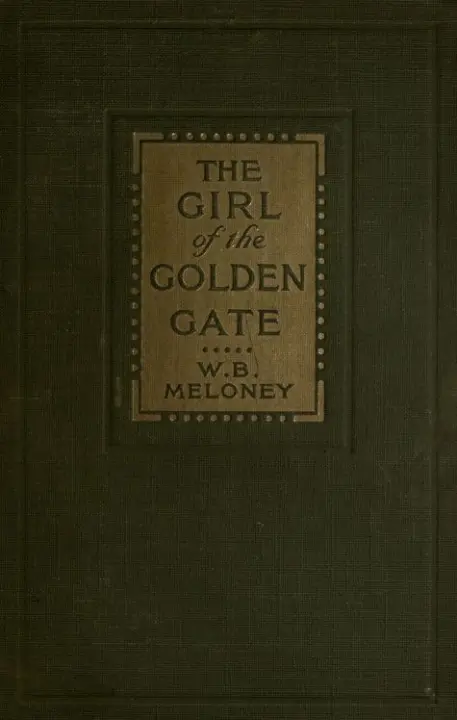
THE CLASSIC COLLECTION · 1913
"The Girl of the Golden Gate" by William Brown Meloney is a novel written in the early 20th century. The story appears to center around a dramatic and adventurous narrative, focusing on the character of Paul Whitridge, who is a captain marked by mystery and personal pain. The novel intricately weaves themes of sacrifice, human connection, and the complexities of identity against the backdrop of a perilous sea journey. At the start of the narrative, readers are introduced to a bustling port in Yokohama where Whitridge is preparing to book passage on a ship called the Cambodia. He is characterized by his emotional detachment, indicated by a past filled with trauma, including surviving a mutiny and navigating through a violent storm at sea. Whitridge encounters Emily Granville, a beautiful woman in distress who is desperate to secure a cabin on the same ship. Their brief yet impactful interaction hints at deeper connections and unresolved emotions, setting the stage for an intense exploration of their backgrounds and the obstacles they face. As various circumstances unfold, including Whitridge's willingness to give up his own room for Emily, the narrative establishes a tension between personal sacrifice and the quest for redemption.
Introduction adapted from the source catalogue; source summaries may be automatically generated.
Free to read · English · 62,491 words · No account needed
MAKE TIME FOR A GOOD BOOK
On by default. Untick to stop anonymous reading totals. Each page counts after 10 seconds in view. How this works.
Anonymous counting is on unless you have switched it off.
The gold woman carried a small black book and she laid it in Paul's hands as she lifted her face from his.
"I want you to have this now, my prince, before the world renders you what it will in a few hours. I would have dragged from the world what it is going to give you willingly. I want all that comes to you to come through me. Darling, that is the woman of it. I have kept this a secret from you because I wished to be able to swear that it was not written at your suggestion; that you knew absolutely nothing about it. If I did wrong in keeping it from you--you----"
"Why, darling, what is it?"
"Can you bear to read?"
"Yes."
"Then begin here," and she opened the book in the middle for him and this is what Paul Lavelle read:
"At sea aboard the bark Daphne, March 31, 191-.
"In the presence of death and without the solicitation or the knowledge of any person hereinafter named I, Daniel McGovern, sometimes called Driscoll, and other names unknown to me, say: I was quartermaster aboard the steamship Yakutat which was wrecked on the California Coast in the month of March--the 15th--190-, through and by the carelessness of her first officer, William Graham, then acting as captain in the place of her dead commander. I joined the ship at Skagway. The shipping records there will show under what name. On the day preceding the wreck and when we were within thirty-six hours of our destination we encountered a dense fog in which the ship remained up to the time she struck. The fog closed in about 10 o'clock at night shortly after I took the wheel. Paul Lavelle, second officer of the Yakutat and ranking next in command to William Graham, was on the bridge. About fifteen minutes afterward Graham came on the bridge. I heard Mr. Lavelle tell a steward to call Graham from the saloon. Lavelle said: 'We are standing in too near the land. There is a bad current along here.' Graham said: 'I've had enough of this talk from you. Hold your course. I'm in command here.' He left the bridge. The next night when I went on watch the course was the same that we had been holding for the previous twenty-four hours. This was at midnight. The third officer and the captain, Graham, were on the bridge. Mr. Lavelle was just being relieved. He said to the captain, Graham: 'I advise you to steer at least three points further to the southward.' We were making a course southeast by east. Graham answered: 'Take your orders or go to your room and stay there. Which will it be?' Mr. Lavelle said: 'I will take my orders.' Other things were said in both these conversations, but what they were I do not know. I give only the parts I heard and remember. The ship struck at fifteen minutes before two. The third officer signaled: 'Full speed astern.' If he had signaled 'Full speed ahead' there would have been but few lives lost. There was a ground swell running, but hardly any sea. Lavelle came on the bridge first. Then came Graham and the fourth officer. Graham was like a crazy man. He kept saying: 'All hands to the boats.' And there were not boats enough aboard for half the ship's company. Mr. Lavelle cursed Graham. Graham said: 'I order you to your boat.' I followed Mr. Lavelle. We had to fight like wild beasts. There were pistols and knives against us at every hand. 'Women and children first; remember, Driscoll.' That is what Mr. Lavelle said to me. The boats were being let go by the run, some half filled and others with not enough in them to man them. We gathered all the women and children we could see. The last we let in was an old gentleman who had been sick all the passage, and his wife. I lifted him in. Mr. Lavelle lifted the wife. One would not go without the other. Then the lights went out. When we cleared the side Lavelle started to climb the boat fall again to go back to the ship. I pulled him back. He was too brave a man to let commit suicide. He had absolutely no thought of himself. I have followed the sea forty-five years and I know brave men. I saw Paul Lavelle's father die at Apia. Nobody was driven from our boat but men. We gave their places to women and children. We did not beat anybody with oars. When we cleared the ship a negro--I had knocked him overboard myself--grabbed the gunwale of the boat. We could not take him in. Mr. Lavelle struck at him with an oar. Somebody stood up in the boat and the next second we were all gone. I did not remember what happened until one year ago. The minister at the Bethel in Hong Kong can tell you about that. The doctors there know, too. While I was on the Yakutat I did not know who Paul Lavelle was.
Your reading position is saved on this browser. Take it to another device with a library code. Reading pages adapt to text, rather than matching a printed edition.
BEHIND THE BOOK
This eBook is for the use of anyone anywhere in the United States and most other parts of the world at no cost and with almost no restrictions whatsoever. You may copy it, give it away or re-use it under the terms of the Project Gutenberg License included with this eBook or online at www.gutenberg.org. If you are not located in the United States, you will have to check the laws of the country where you are located before using this eBook. Read the source licence.
The original source file, including credits and licence, is retained by this library. Request an original-format copy at no charge. Please include the book title and Project Gutenberg identifier #60124.
KEEP YOUR CURIOSITY GOING
Wilfrid Scawen Blunt
Wilfrid Scawen Blunt

E. W. (Edgar Watson) Howe
Coulson Kernahan

Maurice Baring
Frances Wright