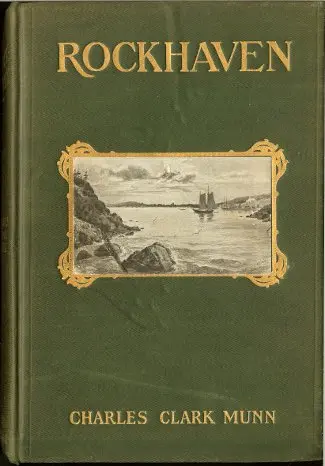
Rockhaven
Charles Clark Munn
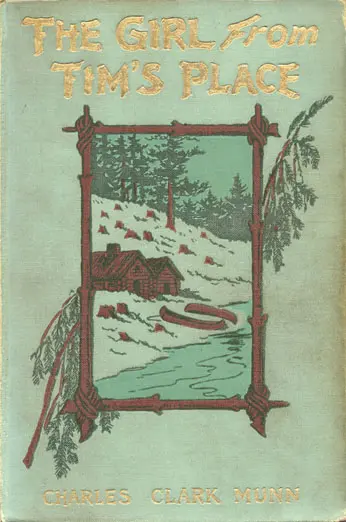
THE CLASSIC COLLECTION · 1906
"The Girl From Tim's Place" by Charles Clark Munn is a novel written in the early 20th century. The story centers around a young girl named Chip McGuire, who struggles to escape a life of servitude and brutality in a remote wilderness community run by harsh individuals, including her outlaw father. Her flight from Tim's Place leads her through the challenges of nature and her own harrowing fears, setting the stage for themes of survival, resilience, and the search for a better life. At the start of the narrative, we are introduced to Chip, a sixteen-year-old girl who is subjected to a miserable existence at Tim's Place, where she is treated as a menial servant. The opening illustrates her weariness and sense of despair as she overhears a discussion that reveals her father has sold her to a half-breed trapper named Pete Bolduc. Terrified of her impending fate, Chip decides to flee, embarking on a treacherous journey through the wilderness filled with supernatural fears inspired by the stories of an old Indian named Tomah. The opening of the book paints a vivid picture of her desperation and determination as she navigates both physical and emotional challenges, ultimately leading to a chance encounter with a more compassionate group of strangers who may help her rewrite her fate.
Introduction adapted from the source catalogue; source summaries may be automatically generated.
Free to read · English · 89,481 words · No account needed
MAKE TIME FOR A GOOD BOOK
On by default. Untick to stop anonymous reading totals. Each page counts after 10 seconds in view. How this works.
Anonymous counting is on unless you have switched it off.
"I'm a miserable sinner 'n' the Lord'll never forgive me," she half moaned, when Chip tried to console her. "An' to think ye feel the way ye say, 'n' to bring me a present, arter all the mean things I said. It's a-heapin' coals o' fire on my head, that it is." And the shower increased.
"I have forgotten all about them, Hannah, truly I have," Chip assured her, "and I wish you would. You didn't understand me then, perhaps, or I you, so let us be friends now."
The next afternoon Chip, who had learned that Miss Phinney's school was to close the day following, set out to call on her in time to arrive at its adjournment.
No hint of her return had reached Miss Phinney, no letters had been exchanged, and not since that tearful separation had they met.
And now as Chip followed the lonely by-road so often traversed by her, what a flood of bitter-sweet memories returned,--each bend, each tree, each rock, and the bridge over the Mizzy held a different recollection. Here at this turn she had first met Ray, after her resolve to leave Greenvale. At the next landmark, a lane crossing the meadows, she had always parted from her teacher, the last time in tears. And how long, long ago it all seemed!
Then beyond, and barely visible, was the dear old schoolhouse. She could see it now, half hid in the bushes, a lone and lowly little brown building outlined on the winter landscape and apparently dwarfed in size. Once it had awed her; now it seemed pathetic.
The last of its pupils were vanishing as Chip drew near, and inside, and as lonely as that lone temple, Miss Phinney still lingered.
That day had not gone well with her. A note of complaint had come from one parent that morning, and news that a dearly loved scholar was ill as well, and Miss Phinney's own life seemed like the fields just now--cold, desolate, and snow-covered.
And then while she, thus lone and lonesome, was putting away books, slates, ink-bottles, and all the badges of her servitude, Chip, without knocking, walked in.
How they first exclaimed, then embraced, then kissed, and then repeated it while each tried to wink the tears away, and failed; how they sat hand in hand in that dingy, smoke-browned room with its knife-hacked benches, unconscious of the chill, while Chip told her story; and how, just as the last rays of the setting sun flashed from the icicles along its eaves, they left it, still hand in hand, was but an episode such as many a schoolgirl can recall.
Your reading position is saved on this browser. Take it to another device with a library code. Reading pages adapt to text, rather than matching a printed edition.
BEHIND THE BOOK
This eBook is for the use of anyone anywhere in the United States and most other parts of the world at no cost and with almost no restrictions whatsoever. You may copy it, give it away or re-use it under the terms of the Project Gutenberg License included with this eBook or online at www.gutenberg.org. If you are not located in the United States, you will have to check the laws of the country where you are located before using this eBook. Read the source licence.
The original source file, including credits and licence, is retained by this library. Request an original-format copy at no charge. Please include the book title and Project Gutenberg identifier #34202.
KEEP YOUR CURIOSITY GOING
Coulson Kernahan

Maurice Baring
Frances Wright
Cécile Tormay

Frederic Jesup Stimson

W. H. P. (William Henry Pope) Jarvis