Rockhaven
Charles Clark Munn
THE CLASSIC COLLECTION · 1906
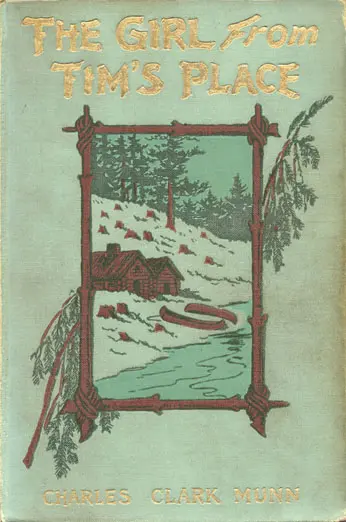
"The Girl From Tim's Place" by Charles Clark Munn is a novel written in the early 20th century. The story centers around a young girl named Chip McGuire, who struggles to escape a life of servitude and brutality in a remote wilderness community run by harsh individuals, including her outlaw father. Her flight from Tim's Place leads her through the challenges of nature and her own harrowing fears, setting the stage for themes of survival, resilience, and the search for a better life. At the start of the narrative, we are introduced to Chip, a sixteen-year-old girl who is subjected to a miserable existence at Tim's Place, where she is treated as a menial servant. The opening illustrates her weariness and sense of despair as she overhears a discussion that reveals her father has sold her to a half-breed trapper named Pete Bolduc. Terrified of her impending fate, Chip decides to flee, embarking on a treacherous journey through the wilderness filled with supernatural fears inspired by the stories of an old Indian named Tomah. The opening of the book paints a vivid picture of her desperation and determination as she navigates both physical and emotional challenges, ultimately leading to a chance encounter with a more compassionate group of strangers who may help her rewrite her fate.
Introduction adapted from the source catalogue; source summaries may be automatically generated.
Free to read · English · 89,481 words · No account needed
MAKE TIME FOR A GOOD BOOK
On by default. Untick to stop anonymous reading totals. Each page counts after 10 seconds in view. How this works.
Anonymous counting is on unless you have switched it off.
A week later school closed, and Chip's conduct was then also a puzzle to Miss Phinney. As usual on these occasions, when the hour came, each pupil, young and old, filed past the teacher at her desk, the boys to shake hands, the girls to be kissed, and all bade good-by, after which they trooped away, glad to escape.
This ceremony now took place as usual. All departed except Chip, and she remained at her desk. Some intuition of pity or sympathy drew Miss Phinney to her at once; and then, at the first word from her, Chip gave way to tears--not light ones, but sobs that shook her as a great grief. Vainly Miss Phinney tried to cheer and console her, stroking the bowed head until her own eyes grew misty.
"I didn't mean to give way," Chip said at last, looking up and brushing away the tears, "but you've been so good and patient with me, I couldn't help it. I hain't many friends here, I guess, and--" choking back another sob--"I shall be more lonesome'n ever."
It was true enough, as Miss Phinney well understood, and somehow her heart went out to this unfortunate girl now, as never before.
"You mustn't think about that," she said at last, in her most soothing voice, "but come and see me as often as you can--every day, if you like, for I shall always be glad to have you. I'd keep on studying, if I were you," she added, as Chip brightened, "it will help you on, and I will gladly hear you recite every day."
Then hand in hand, like two sisters, they left the dear old schoolhouse. Little did Miss Phinney, good soul that she was, realize how recently poor Chip had cried her heart almost out on its well-worn sill, or that never again would this strange, winsome, woman-grown pupil enter that temple.
At the parting of their ways the two embraced, kissed, and with
tear-dimmed eyes separated.
"I can't account for it," Miss Phinney said to herself when well away. "It may be a love-affair with young Stetson, or it may be something worse."
That evening she called on Angie. The result was fruitless, so far as obtaining any light upon this puzzling matter was concerned, for Angie was either blind to the situation, or feigned ignorance.
"They were together all last summer, of course," she said, "in fact, they were forced to be like two children, you know. I was glad to have it so, feeling it would benefit the girl. If any love flame was started then, it has had ample time to die out since."
Your reading position is saved on this browser. Take it to another device with a library code. Reading pages adapt to text, rather than matching a printed edition.
BEHIND THE BOOK
This eBook is for the use of anyone anywhere in the United States and most other parts of the world at no cost and with almost no restrictions whatsoever. You may copy it, give it away or re-use it under the terms of the Project Gutenberg License included with this eBook or online at www.gutenberg.org. If you are not located in the United States, you will have to check the laws of the country where you are located before using this eBook. Read the source licence.
The original source file, including credits and licence, is retained by this library. Request an original-format copy at no charge. Please include the book title and Project Gutenberg identifier #34202.
KEEP YOUR CURIOSITY GOING
Coulson Kernahan

Maurice Baring
Frances Wright
Cécile Tormay

Frederic Jesup Stimson

W. H. P. (William Henry Pope) Jarvis