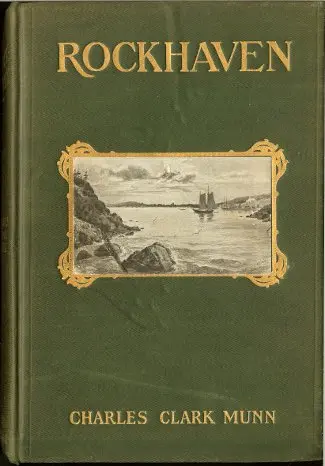
Rockhaven
Charles Clark Munn
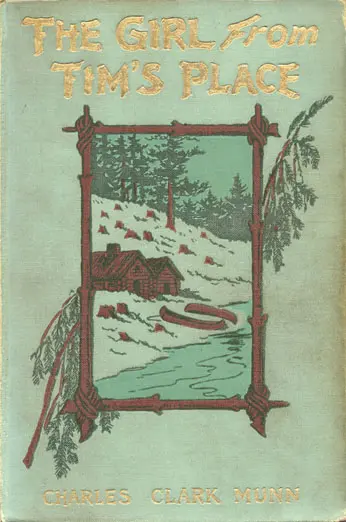
THE CLASSIC COLLECTION · 1906
"The Girl From Tim's Place" by Charles Clark Munn is a novel written in the early 20th century. The story centers around a young girl named Chip McGuire, who struggles to escape a life of servitude and brutality in a remote wilderness community run by harsh individuals, including her outlaw father. Her flight from Tim's Place leads her through the challenges of nature and her own harrowing fears, setting the stage for themes of survival, resilience, and the search for a better life. At the start of the narrative, we are introduced to Chip, a sixteen-year-old girl who is subjected to a miserable existence at Tim's Place, where she is treated as a menial servant. The opening illustrates her weariness and sense of despair as she overhears a discussion that reveals her father has sold her to a half-breed trapper named Pete Bolduc. Terrified of her impending fate, Chip decides to flee, embarking on a treacherous journey through the wilderness filled with supernatural fears inspired by the stories of an old Indian named Tomah. The opening of the book paints a vivid picture of her desperation and determination as she navigates both physical and emotional challenges, ultimately leading to a chance encounter with a more compassionate group of strangers who may help her rewrite her fate.
Introduction adapted from the source catalogue; source summaries may be automatically generated.
Free to read · English · 89,481 words · No account needed
MAKE TIME FOR A GOOD BOOK
On by default. Untick to stop anonymous reading totals. Each page counts after 10 seconds in view. How this works.
Anonymous counting is on unless you have switched it off.
It was a fantastic, weird, almost spookish tale,--the spectres she had seen were so real to her that the telling made them seem almost so to the rest, and beyond that, the girl herself, so like a young witch, with her shadowy eyes and furtive glances, added to the illusion.
But now came a diversion, for Levi freshened the fire, and at a nod from Angie, Ray brought forth his banjo. It was his one pet foible, and it went with him everywhere, and now, with time and place so in accord, he was glad to exhibit his talent. He was not an expert,--a few jigs and plantation melodies composed his repertory,--but with the moonlight glinting through the spruce boughs, the river murmuring near, somehow one could not fail to catch the quaint humor of "Old Uncle Ned," "Jim Crack Corn," and the like, and see the two dusky lovers as they floated down the "Tombigbee River," and feel the pathos of "Nellie Grey" and "Old Kentucky Home."
Ray sang fairly well and in sympathy with each theme. To Angie and the rest it was but ordinary; but to this waif, who never before had heard a banjo or a darky song, it was marvellous. Her face lit up with keen interest, her eyes grew misty at times, and once two tears stole down her cheeks.
For an hour Ray was the centre of interest, and then Angie arose.
"Come, Chip," she said pleasantly, "it's time to go to bed, and you
are to share my tent."
"I'd rather not," the girl replied bluntly. "I ain't fit. I kin jist ez well curl 'longside o' the fire."
But Angie insisted and the girl followed her into the tent.
Here occurred another incident that must be related. Angie, always devout, and somewhat puritanical, was one who never forgot her nightly prayer, and now, when ready for slumber, she knelt on the bed of fir twigs, and by the light of one small candle offered her usual petition, while Chip watched her with wide and wondering eyes. As might be expected, that waif was mentioned, and with deep feeling.
"Do ye s'pose God heard ye?" she queried with evident candor, when
Angie ceased.
"Why, certainly," came the earnest answer; "God hears all prayers."
"And do the spites hear 'em?"
"There are no such creatures as 'spites,'" answered Angie,
severely; "you only imagine them, and what this Indian has told you is
superstition."
"But I've seen 'em, hundreds on 'em, big and little," returned the
girl, stoutly.
Angie looked at her with pity.
Your reading position is saved on this browser. Take it to another device with a library code. Reading pages adapt to text, rather than matching a printed edition.
BEHIND THE BOOK
This eBook is for the use of anyone anywhere in the United States and most other parts of the world at no cost and with almost no restrictions whatsoever. You may copy it, give it away or re-use it under the terms of the Project Gutenberg License included with this eBook or online at www.gutenberg.org. If you are not located in the United States, you will have to check the laws of the country where you are located before using this eBook. Read the source licence.
The original source file, including credits and licence, is retained by this library. Request an original-format copy at no charge. Please include the book title and Project Gutenberg identifier #34202.
KEEP YOUR CURIOSITY GOING
Coulson Kernahan

Maurice Baring
Frances Wright
Cécile Tormay

Frederic Jesup Stimson

W. H. P. (William Henry Pope) Jarvis