Notes on the Bibliography of Yucatan and Central America Comprising Yucatan, Chiapas, Guatemala (the Ruins of Palenque, Ocosingo, and Copan), and Oaxaca (Ruins of Mitla)
Adolph Francis Alphonse Bandelier
THE CLASSIC COLLECTION · 1893
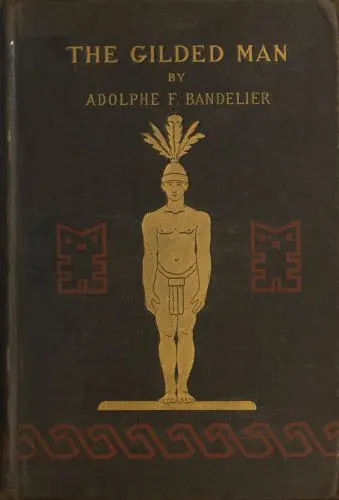
"The Gilded Man (El Dorado) and Other Pictures of the Spanish Occupancy of America" by A. F. Bandelier is a historical account written in the late 19th century. This work explores the Spanish exploration and colonization of the Americas, particularly focusing on the mythical El Dorado legend and the quest for wealth that characterized these expeditions. The narrative delves into the richly detailed and often harrowing history of the encounters between Spanish adventurers and Indigenous tribes, highlighting the consequences of the greed that drove these early conquests." "The opening of this work introduces the context of Spanish exploration in the Americas, emphasizing the historical neglect of the Spanish presence in the Southwest compared to the Atlantic seaboard. It discusses how the pursuit of gold led Spaniards into both remarkable adventures and devastating consequences for Indigenous populations. The text sets the stage with references to the tales of El Dorado, manly exploits, and the darker moral implications of these conquests, establishing a foundation for the detailed exploration of significant expeditions and encounters that follow."
Introduction adapted from the source catalogue; source summaries may be automatically generated.
Free to read · English · 86,614 words · No account needed
MAKE TIME FOR A GOOD BOOK
On by default. Untick to stop anonymous reading totals. Each page counts after 10 seconds in view. How this works.
Anonymous counting is on unless you have switched it off.
Ponce de Léon arrived at the City of Mexico on July 2, 1526, and was received with pomp by Cortés, who placed himself wholly at his disposition; but the climate agreed no better with the new functionary than it had before agreed with Garay. He died in the same month after a short illness; and eight weeks afterward his successor in office, the Bachelor Márcos de Aguilar, also died. The process against Cortés dragged slowly along with many interruptions amid great disquiet in the country; for Alonso de Estrada had taken the reins of government, and had abridged the conqueror’s prerogatives to the domain of military command and Indian administration. Shorn of all power, Cortés had to submit to the inevitable, and to suffer patiently a banishment from the City of Mexico, which Estrada imposed upon him in order to secure tranquillity.
Although further explorations in the north were temporarily interrupted by the disorders that prevailed in the country, Cortés found time to organize an expedition to the Molukkes on the western coast, and at least to open communication with them. The royal officers, on the contrary, could accomplish nothing, and in order to circumscribe their power, as well as that of the governor of Panamá, Pedro Arias Dávila, independent jurisdictions were created out of Honduras, Guatemala, and Yucatan. At the same time the Church assumed the control of Indian affairs, and finally, in order to terminate the arbitrary provisional system of government, the royal court of law, Audiencia real, was set up in the year 1527 as the chief authority in Mexico.
Nuño Beltrán de Guzman entered into possession of his government in Pánuco in the year 1528. He was young, vigorous, and energetic, but imperious, and his inconsiderate ambition was not capable of the wise patience that Cortés manifested. His first step was to stir up boundary disputes with the adjacent jurisdiction of New Spain or Mexico, and when no results accrued from them, he sent Sancho de Caniego to Madrid with a series of complaints against Hernando Cortés, which could not fail to excite earnest attention. Besides the charge of treason against the Crown already raised, Guzman accused the conqueror with having murdered Francisco de Garay and Luis Ponce de Léon. Cortés presented himself in Spain almost simultaneously with the charges, to defend himself personally against them. But an accusation of another more heinous offence had been more recently filed in secret against him at the court. His wife, Doña Catalina Xuarez, with whom he had not long shared the happiness of wedded life, having been separated from her a few years after their marriage by absence on his campaigns, had joined him again after the conquest of Mexico, and suddenly died three months later. He was therefore, although not openly, accused of murdering her. The Acts of the Process against Cortés included a “secret inquiry” (pesquisa secreta) into this terrible accusation. The Process resulted in an official acquittal; but the Acts themselves presented the death of Francisco de Garay in the most suspicious light, left the manner in which the death of Ponce de Léon occurred an open question, and made it certain that Cortés had with his own hands strangled in bed his first faithful wife, who had followed him to Mexico at his request. The Process did not detain Cortés later than till the year 1530. In the meantime the Spanish Crown, as soon as it was informed of the new accusations that had been brought against Cortés, appointed Nuño Beltrán de Guzman president of the court of law in Mexico, and thus elevated him to the highest official position in New Spain. The selection was an unwise one. Guzman proceeded to Mexico, where he arrived in 1529. His demeanor was very arrogant. The complaints against him soon became as loud, even on the side of the Audiencia, as they had been against Cortés. At last the King of Spain (the Emperor Charles V.) named a new Audiencia, and appointed as its president Sebastian Ramirez de Fuenléal, bishop of Santo Domingo. The president did not go directly to the mainland, but spent some time in his episcopal see, partly in order to observe quietly the course of affairs in Mexico, and partly to perfect his plans for the reorganization of the country.
Your reading position is saved on this browser. Take it to another device with a library code. Reading pages adapt to text, rather than matching a printed edition.
Adolph Francis Alphonse Bandelier
Adolph Francis Alphonse Bandelier
Adolph Francis Alphonse Bandelier
Adolph Francis Alphonse Bandelier
BEHIND THE BOOK
This eBook is for the use of anyone anywhere in the United States and most other parts of the world at no cost and with almost no restrictions whatsoever. You may copy it, give it away or re-use it under the terms of the Project Gutenberg License included with this eBook or online at www.gutenberg.org. If you are not located in the United States, you will have to check the laws of the country where you are located before using this eBook. Read the source licence.
The original source file, including credits and licence, is retained by this library. Request an original-format copy at no charge. Please include the book title and Project Gutenberg identifier #56596.
KEEP YOUR CURIOSITY GOING
Wilfrid Scawen Blunt
Wilfrid Scawen Blunt

E. W. (Edgar Watson) Howe
Cécile Tormay

Moritz Busch
John L. Ransom