Notes on the Bibliography of Yucatan and Central America Comprising Yucatan, Chiapas, Guatemala (the Ruins of Palenque, Ocosingo, and Copan), and Oaxaca (Ruins of Mitla)
Adolph Francis Alphonse Bandelier
THE CLASSIC COLLECTION · 1893
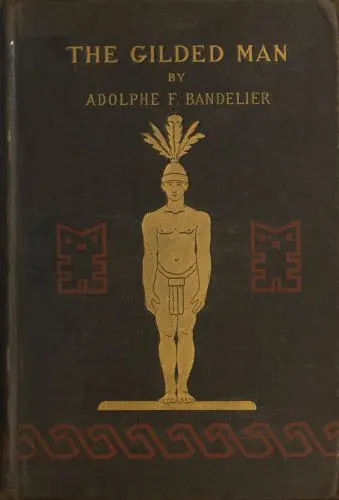
"The Gilded Man (El Dorado) and Other Pictures of the Spanish Occupancy of America" by A. F. Bandelier is a historical account written in the late 19th century. This work explores the Spanish exploration and colonization of the Americas, particularly focusing on the mythical El Dorado legend and the quest for wealth that characterized these expeditions. The narrative delves into the richly detailed and often harrowing history of the encounters between Spanish adventurers and Indigenous tribes, highlighting the consequences of the greed that drove these early conquests." "The opening of this work introduces the context of Spanish exploration in the Americas, emphasizing the historical neglect of the Spanish presence in the Southwest compared to the Atlantic seaboard. It discusses how the pursuit of gold led Spaniards into both remarkable adventures and devastating consequences for Indigenous populations. The text sets the stage with references to the tales of El Dorado, manly exploits, and the darker moral implications of these conquests, establishing a foundation for the detailed exploration of significant expeditions and encounters that follow."
Introduction adapted from the source catalogue; source summaries may be automatically generated.
Free to read · English · 86,614 words · No account needed
MAKE TIME FOR A GOOD BOOK
On by default. Untick to stop anonymous reading totals. Each page counts after 10 seconds in view. How this works.
Anonymous counting is on unless you have switched it off.
The sight of the first villages on the plateau satisfied the Spaniards of the wealth of the country. The people imagined that the strangers were man-eating monsters and fled to the woods, but left behind them a quantity of provisions, which were very acceptable to the half-starved Spaniards, and some gold and emeralds. The Indians posted themselves on the defensive in a ravine near Zorocota. Quesada tried unsuccessfully to storm their strong barricade. In the evening, after both sides had returned, tired with fighting, to their camps, two of the Spaniards’ horses broke loose and ran, chasing one another, over to the natives. The Indians, frightened by the strange beasts, fled into the woods. The Spaniards found the large village of Guacheta deserted, the inhabitants having taken refuge among the rocks overlooking it. In the midst of the place was an old man stripped and bound to a stake, as an offering of food to the whites. They unbound him, gave him a red cap, and sent him away. Thereupon the men on the rocks, supposing that they considered him too tough, cast living children down to them. Seeing that these little ones, too, were not touched by the strangers, they sent down from the heights a man and a woman, both stripped, and a stag, bound. The Spaniards sent back the man and woman with small gifts, and kept the stag. The Indians upon this were reassured, left their place of refuge, came down from the rocks, and gave themselves up to the white men. This was on March 12, 1537. Quesada followed the wise policy of conserving the strictest discipline. He caused one of his men who had stolen cloth from an Indian to be hung. This course secured him the good-will of the natives, so that many places received the Spaniards as liberators; for the country they had so far passed through was tributary to the Muysca of Bogotá, and, as was the case everywhere among the Indians, the subjected races hated the conquering tribe. The people were therefore not at all loath to point out to the strangers by signs the direction of Muequeta, the chief town of Bogotá, near the present Santa Fé, where, they intimated to the eager Spaniards, emeralds and gold were plentiful. The rulers of Bogotá witnessed with apprehension the approach of the strangers, and their braves having assembled for a campaign against Tunja, the whole force, in which there were five hundred uzaques, or chiefs, alone, turned against the Spaniards. The Muysca fell upon Quesada’s rear-guard near the Salines of Zippaquira, their xeques, or priests, carrying in front the bones of deceased chieftains, while in the midst of the host was the head chief of Bogotá, Thysqueshuza, on a gilded barrow. The first assault having been repelled by the Spaniards, the Indian warriors scattered in every direction; the zippa leaped from his barrow and fled to the woods, and each chief hastened back with his men into his village. Quesada took possession of Muequeta without meeting resistance, for the power of the tribe of Bogotá was broken forever. But he did not find the treasure he was in search of and had expected to obtain. The place had been stripped of everything valuable, and the conqueror surveyed the bare and empty rooms with no little disappointment. Every attempt to put himself in communication with the fugitive zippa miscarried, while no promises of reward, no torture, could extract from the Indians of Muequeta the secret of the spot whither the treasure had been taken. Muequeta became Quesada’s headquarters, and thence he sent out scouting parties to explore the country. A few villages surrendered to the Spaniards, but others, like Guatavitá, the home of the dorado, resisted them strenuously, and hid their gold or threw it into the lagoons of the páramos. The region subjected to the Spaniards in this way grew continuously larger, for the Muysca never offered a united resistance. The dissensions and the mutual hatreds of the smaller tribes contributed quite as much as the superiority of their own weapons to the victory of the conquerors. Out of hostility to that clan a rival uzaque informed a Spanish scouting party of the great wealth of the powerful tribe of the Tunja. Quesada himself went against them, and so quiet was his march that the uzaque of Tunja and all the chiefs of the tribe were surprised in their council-house. Quesada was about to embrace the chief, but the Indians looked upon this as an offence, and threw themselves, armed, upon the Spaniards. A savage combat ensued, within and without the council-house. By sunset the village of Tunja was in the possession of the whites, the uzaque was a prisoner, and the pillage was fully under way. The booty, when piled up in a courtyard, formed a heap so large that a rider on horseback might hide himself behind it. “Peru, Peru, we have found a second Cassamarca!” exclaimed the astonished victors.
Your reading position is saved on this browser. Take it to another device with a library code. Reading pages adapt to text, rather than matching a printed edition.
Adolph Francis Alphonse Bandelier
Adolph Francis Alphonse Bandelier
Adolph Francis Alphonse Bandelier
Adolph Francis Alphonse Bandelier
BEHIND THE BOOK
This eBook is for the use of anyone anywhere in the United States and most other parts of the world at no cost and with almost no restrictions whatsoever. You may copy it, give it away or re-use it under the terms of the Project Gutenberg License included with this eBook or online at www.gutenberg.org. If you are not located in the United States, you will have to check the laws of the country where you are located before using this eBook. Read the source licence.
The original source file, including credits and licence, is retained by this library. Request an original-format copy at no charge. Please include the book title and Project Gutenberg identifier #56596.
KEEP YOUR CURIOSITY GOING
Wilfrid Scawen Blunt
Wilfrid Scawen Blunt

E. W. (Edgar Watson) Howe
Cécile Tormay

Moritz Busch
John L. Ransom