THE CLASSIC COLLECTION✦An American tragedy, v. 2CLASSIC FREE BOOKS
An American tragedy, v. 2
Theodore Dreiser
THE CLASSIC COLLECTION · 1915
"The 'Genius'" by Theodore Dreiser is a semi-autobiographical novel first published in 1915. It follows Eugene Witla, a talented painter who struggles between his artistic ambitions and overwhelming sexual desires. Unable to remain faithful to his wife Angela, Eugene pursues affairs that devastate his marriage and derail his career. The novel traces his journey from small-town Illinois to the art world of New York, culminating in scandal and tragedy as his uncontrolled passions destroy everything around him.
Introduction adapted from the source catalogue; source summaries may be automatically generated.
Free to read · English · 304,353 words · No account needed
MAKE TIME FOR A GOOD BOOK
On by default. Untick to stop anonymous reading totals. Each page counts after 10 seconds in view. How this works.
Anonymous counting is on unless you have switched it off.
These fall days, too, with their brown leaves, sharp winds, scudding smoke and whirls of dust showed him that the city could be cruel. He met shabby men, sunken eyed, gloomy, haggard, who looked at him, apparently out of a deep despair. These creatures all seemed to be brought where they were by difficult circumstances. If they begged at all,--and they rarely did of him, for he did not look prosperous enough, it was with the statement that unfortunate circumstances had brought them where they were. You could fail so easily. You could really starve if you didn't look sharp,--the city quickly taught him that.
During these days he got immensely lonely. He was not very sociable, and too introspective. He had no means of making friends, or thought he had none. So he wandered about the streets at night, marveling at the sights he saw, or staying at home in his little room. Mrs. Woodruff, the landlady, was nice and motherly enough, but she was not young and did not fit into his fancies. He was thinking about girls and how sad it was not to have one to say a word to him. Stella was gone--that dream was over. When would he find another like her?
After wandering around for nearly a month, during which time he was compelled to use some money his mother sent him to buy a suit of clothes on an instalment plan, he got a place as driver of a laundry, which, because it paid ten dollars a week, seemed very good. He sketched now and then when he was not tired, but what he did seemed pointless. So he worked here, driving a wagon, when he should have been applying for an art opening, or taking art lessons.
During this winter Myrtle wrote him that Stella Appleton had moved to Kansas, whither her father had gone; and that his mother's health was bad, and that she did so want him to come home and stay awhile. It was about this time that he became acquainted with a little Scotch girl named Margaret Duff, who worked in the laundry, and became quickly involved in a relationship which established a precedent in his experiences with women. Before this he had never physically known a girl. Now, and of a sudden, he was plunged into something which awakened a new, and if not evil, at least disrupting and disorganizing propensity of his character. He loved women, the beauty of the curves of their bodies. He loved beauty of feature and after a while was to love beauty of mind,--he did now, in a vague, unformed way,--but his ideal was as yet not clear to him. Margaret Duff represented some simplicity of attitude, some generosity of spirit, some shapeliness of form, some comeliness of feature,--it was not more. But, growing by what it fed on, his sex appetite became powerful. In a few weeks it had almost mastered him. He burned to be with this girl daily--and she was perfectly willing that he should, so long as the relationship did not become too conspicuous. She was a little afraid of her parents, although those two, being working people, retired early and slept soundly. They did not seem to mind her early philanderings with boys. This latest one was no novelty. It burned fiercely for three months--Eugene was eager, insatiable: the girl not so much so, but complaisant. She liked this evidence of fire in him,--the hard, burning flame she had aroused, and yet after a time she got a little tired. Then little personal differences arose,--differences of taste, differences of judgment, differences of interest. He really could not talk to her of anything serious, could not get a response to his more delicate emotions. For her part she could not find in him any ready appreciation of the little things she liked--theater jests, and the bright remarks of other boys and girls. She had some conception of what was tasteful in dress, but as for anything else, art, literature, public affairs, she knew nothing at all, while Eugene, for all his youth, was intensely alive to what was going on in the great world. The sound of great names and great fames was in his ears,--Carlyle, Emerson, Thoreau, Whitman. He read of great philosophers, painters, musicians, meteors that sped across the intellectual sky of the western world, and he wondered. He felt as though some day he would be called to do something--in his youthful enthusiasm he half-thought it might be soon. He knew that this girl he was trifling with could not hold him. She had lured him, but once lured he was master, judge, critic. He was beginning to feel that he could get along without her,--that he could find someone better.
Your reading position is saved on this browser. Take it to another device with a library code. Reading pages adapt to text, rather than matching a printed edition.
Theodore Dreiser
Theodore Dreiser
Theodore Dreiser
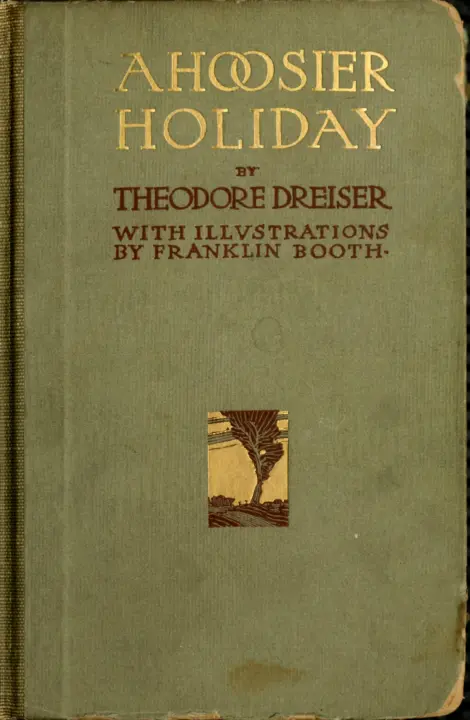
Theodore Dreiser
BEHIND THE BOOK
This eBook is for the use of anyone anywhere in the United States and most other parts of the world at no cost and with almost no restrictions whatsoever. You may copy it, give it away or re-use it under the terms of the Project Gutenberg License included with this eBook or online at www.gutenberg.org. If you are not located in the United States, you will have to check the laws of the country where you are located before using this eBook. Read the source licence.
The original source file, including credits and licence, is retained by this library. Request an original-format copy at no charge. Please include the book title and Project Gutenberg identifier #31824.
KEEP YOUR CURIOSITY GOING
Coulson Kernahan

Maurice Baring
Frances Wright
Cécile Tormay

Frederic Jesup Stimson

W. H. P. (William Henry Pope) Jarvis