THE CLASSIC COLLECTION✦My diaries, being a personal narrative of events 1888-1914, Part 2 (1900-1914)CLASSIC FREE BOOKS
My diaries, being a personal narrative of events 1888-1914, Part 2 (1900-1914)
Wilfrid Scawen Blunt
THE CLASSIC COLLECTION · 1916
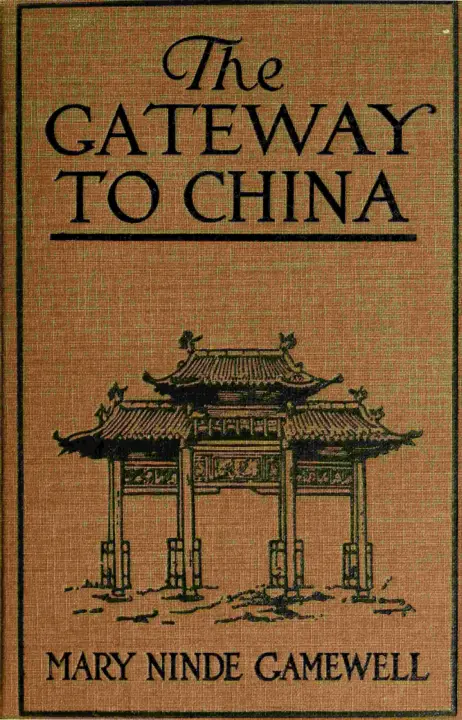
"The Gateway to China" by Mary Ninde Gamewell is a travelogue and social-historical portrait written in the early 20th century. Through illustrated vignettes it presents Shanghai as a cosmopolitan “model settlement” and microcosm of China in transition, highlighting its blend of ancient customs and modern institutions across civic life, commerce, education, philanthropy, and missionary work.
The opening of the work sets its aim: to capture Shanghai’s fast-changing scenes and kindle understanding of the Chinese people, then sketches the city’s growth from river silt and fishing hamlet to treaty port and commercial hub, its refugee surges during the T’aiping turmoil, the short-lived first railway, and the stabilizing rise of the Imperial Maritime Customs under Sir Robert Hart. It details the International Settlement’s governance, the Mixed Court and prisons, police corps (British, Sikh, and Chinese), volunteers, fire brigade, a patchwork postal system, and an energetic Health Department battling plague via rat-proofing and public hygiene campaigns, with special attention to tuberculosis. Street portraits follow: the Bund and its gardens, sampan communities, the glare and crowds of Nanking Road and its tea-houses, elite boulevards and race-course, bustling markets, mill districts, winding roads shaped by superstition, narrow lanes of shikumen housing, beggar guilds, and jarring juxtapositions of temples and trams. Commerce comes alive in silver and silk emporiums, roast-duck and bake shops, pawn and exchange houses, coffin dealers, curio dens on Pig Alley, and child apprentices documented by the Y.M.C.A.; practical prices and a local canning industry show everyday life. The start of the housekeeping chapter follows a newcomer couple navigating scarce rentals, taxes, split jurisdictions, bare-bones houses without fixtures, leisurely workmen, auctions and junk shops, concluding as they turn to bespoke Chinese-made furniture.
Introduction adapted from the source catalogue; source summaries may be automatically generated.
Free to read · English · 64,490 words · No account needed
MAKE TIME FOR A GOOD BOOK
On by default. Untick to stop anonymous reading totals. Each page counts after 10 seconds in view. How this works.
Anonymous counting is on unless you have switched it off.
Shanghai once boasted a supremely great citizen. He lived back in the sixteenth century, a veritable Chinese Maecenas. Besides being a man of letters and encouraging Western learning, he rose to the highest position in the empire, as Premier and Chancellor of the Privy Council. His name will be of little consequence to the outside world, but it is Siu Kuang-ki, should any one care to know it. He was converted to Christianity under the Jesuit Fathers, and lived a pure, consistent, devoted life, dying so poor in spite of large emoluments that his funeral expenses had to be paid from the public treasury. He built in the Chinese City the first Christian church ever seen in these parts. During the exigencies of later years it was converted into a temple sacred to the god of war, but was afterward redeemed and restored to its original use. This church is still standing, a striking edifice back a little from the noisy street, with a typical Chinese roof, and below it on the front outside wall, a beautiful gilded cross.
The present war god’s temple is near the temple of Confucius, with its grass-grown court and deserted halls. Once a year, in the early dawn, the military governor of Shanghai and the city officials enter the sanctuary dedicated to the god of war and conduct a weird pageant-like ceremony in honour of two local military heroes. The tutelary deities of the Chinese City, black and repelling, occupy a large centrally located temple more frequented by worshippers than any other. The roomy outer court, like the temple court in Jerusalem, is given up to buying and selling, also to eating and drinking, gambling and fortune-telling, and there is no busier, noisier mart in all the city.
The local official in the Chinese City is called the “Chih-hsien,” or District Magistrate, and is appointed from Peking. His official residence styled the Yamen, is a common, ordinary building, approached through several untidy courts lined with the low one-story quarters of the Yamen retainers and petty officials. Every day, in three small, bare rooms of the Yamen, court is held, the Chinese judges in their professional gowns looking distinctly out of keeping with their surroundings. To the left and back of the Yamen is the City Prison and adjoining it a much smaller one for women. Stories are afloat regarding the unsanitary condition of the prison and the treatment of prisoners that cause one to cringe and dread an investigation, but whatever may have been the state of affairs under the old régime, and the prison manager is frank to confess that things were very different ten years ago, there is now little to criticise and a great deal to commend. The grey brick buildings are in thoroughly good repair, the cells of the four hundred men and the fifty women prisoners, clean and fairly well lighted and ventilated, though, as the manager himself will hasten to tell the visitor, too crowded for health. A few carefully tended plants are growing in the centre of each of the courts, a praiseworthy effort to introduce a touch of the æsthetic. Industrial work on a considerable scale is carried on in the men’s prison, though the grant of money from the government is too small to keep all at work. Wooden and rattan furniture, towels, mats, shoes, and clothing are made. A very little industrial work is given the women in the way of cutting out and making garments, but from lack of funds to supply workrooms and material, most of the poor creatures are forced to pass their days in idleness. The wardens of the women’s prison are women. The discipline is excellent, yet not severe, the prisoners look well fed and well cared for, and the men especially, happy and contented. Provision is made to send sick prisoners to a Chinese hospital, where they receive the best of care.
Your reading position is saved on this browser. Take it to another device with a library code. Reading pages adapt to text, rather than matching a printed edition.
BEHIND THE BOOK
This eBook is for the use of anyone anywhere in the United States and most other parts of the world at no cost and with almost no restrictions whatsoever. You may copy it, give it away or re-use it under the terms of the Project Gutenberg License included with this eBook or online at www.gutenberg.org. If you are not located in the United States, you will have to check the laws of the country where you are located before using this eBook. Read the source licence.
The original source file, including credits and licence, is retained by this library. Request an original-format copy at no charge. Please include the book title and Project Gutenberg identifier #77783.
KEEP YOUR CURIOSITY GOING
Wilfrid Scawen Blunt
Wilfrid Scawen Blunt

E. W. (Edgar Watson) Howe
Francis Greenleaf Allinson & Anne C. E. (Anne Crosby Emery) Allinson
Cyrenus Cole

John Martineau