THE CLASSIC COLLECTION✦My diaries, being a personal narrative of events 1888-1914, Part 2 (1900-1914)CLASSIC FREE BOOKS
My diaries, being a personal narrative of events 1888-1914, Part 2 (1900-1914)
Wilfrid Scawen Blunt
THE CLASSIC COLLECTION · 1916
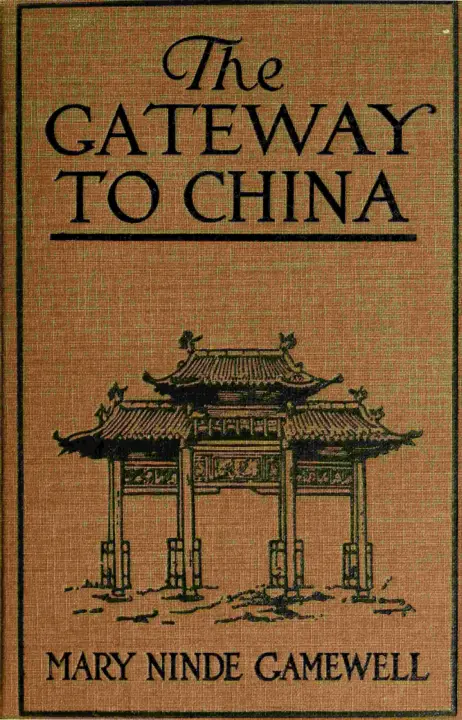
"The Gateway to China" by Mary Ninde Gamewell is a travelogue and social-historical portrait written in the early 20th century. Through illustrated vignettes it presents Shanghai as a cosmopolitan “model settlement” and microcosm of China in transition, highlighting its blend of ancient customs and modern institutions across civic life, commerce, education, philanthropy, and missionary work.
The opening of the work sets its aim: to capture Shanghai’s fast-changing scenes and kindle understanding of the Chinese people, then sketches the city’s growth from river silt and fishing hamlet to treaty port and commercial hub, its refugee surges during the T’aiping turmoil, the short-lived first railway, and the stabilizing rise of the Imperial Maritime Customs under Sir Robert Hart. It details the International Settlement’s governance, the Mixed Court and prisons, police corps (British, Sikh, and Chinese), volunteers, fire brigade, a patchwork postal system, and an energetic Health Department battling plague via rat-proofing and public hygiene campaigns, with special attention to tuberculosis. Street portraits follow: the Bund and its gardens, sampan communities, the glare and crowds of Nanking Road and its tea-houses, elite boulevards and race-course, bustling markets, mill districts, winding roads shaped by superstition, narrow lanes of shikumen housing, beggar guilds, and jarring juxtapositions of temples and trams. Commerce comes alive in silver and silk emporiums, roast-duck and bake shops, pawn and exchange houses, coffin dealers, curio dens on Pig Alley, and child apprentices documented by the Y.M.C.A.; practical prices and a local canning industry show everyday life. The start of the housekeeping chapter follows a newcomer couple navigating scarce rentals, taxes, split jurisdictions, bare-bones houses without fixtures, leisurely workmen, auctions and junk shops, concluding as they turn to bespoke Chinese-made furniture.
Introduction adapted from the source catalogue; source summaries may be automatically generated.
Free to read · English · 64,490 words · No account needed
MAKE TIME FOR A GOOD BOOK
On by default. Untick to stop anonymous reading totals. Each page counts after 10 seconds in view. How this works.
Anonymous counting is on unless you have switched it off.
A unique institution peculiar to Shanghai, indeed, as some one has called it, “the most unique institution ever dedicated to justice,” is the Mixed Court. In the early days, when Chinese were made prisoners in the International Settlement, they were turned over to the Chinese City officials for trial and punishment, but justice was rare, and cruel or unduly lenient treatment the rule. To protect the Chinese, and insure fair dealing in those cases in which foreigners were involved, as well as to try the cases of foreigners having no consular representation, the Mixed Court was established in 1865. It has not proved a wholly satisfactory solution of the difficulty, for the law in force is the Chinese law, and the foreign assessor, an Englishman, American, or German, according to the day of the week, who occupies a seat on the judicial bench beside the Chinese judge, ranks as little more than a figurehead, acting merely in an advisory capacity. Practically though, it must be said, and this is particularly true since 1911, he is coming to be the real power behind the throne, and to exercise pretty much of a controlling influence. At the time of the revolution the management of the Mixed Court passed from the hands of the Chinese to the control of the Municipal Council. The change was effected quietly, so that while the Chinese were well aware of what was going on they could appear not to know, and thus save their “face.” If only “face” can be preserved facts are of small moment.
A morning spent in visiting the Mixed Court is to most people an experience of absorbing interest, as it throws innumerable side-lights on Chinese life and character. At half-past nine each morning, the hour of opening court, the foreign assessor and the Chinese judge walk in and take their seats, each flanked by his interpreters and clerks of solemn mein. The witnesses, Chinese and foreign, assemble on opposite sides of the room, the prisoners, most of them poor forlorn specimens of humanity, file into the docket closely guarded by Sikh and Chinese policemen, with an English sergeant-at-arms on duty near by, while in the hall, around the door and pressing as far inside as they dare, gathers the curious, motley crowd of onlookers, many of them relatives and friends of the prisoners, but stolidly immobile during all the proceedings. Is there another place in the world where such a variety of cases is heard as at the Shanghai Mixed Court, cases civil and criminal, tragic, pathetic and comic? Some are intricate enough to tax the wisdom of a Solomon, and some are simple as a child’s play. An old couple appeared one morning to petition for a divorce. Their faces wore such a kindly expression, they seemed so at peace with mankind in general and each other in particular, that the judge was puzzled. “Have you quarreled?” he asked. “Oh, no.” “Don’t you live happily together?” “We are most happy and that is why we are here,” hastily explained the old woman. Then the whole story was poured out. An evil omen had convinced them that in the future they would quarrel frightfully, separate, and die apart of broken hearts, so in order to avert such a calamity they had determined to take time by the forelock and part company while they were still good friends. A few words of advice and assurance set matters all right, and it was not long before the aged lovers, for that is what they really were, passed smilingly out of the courtroom, hand in hand, to return to their humble home. No executions take place in the Settlement. Prisoners sentenced to capital punishment are handed over to the Chinese authorities, and here again “face” is considered, for while the death sentence has actually been passed the court in the Chinese City is allowed to assume that it has not, and proceed as if the prisoner was condemned on its own initiative.
Your reading position is saved on this browser. Take it to another device with a library code. Reading pages adapt to text, rather than matching a printed edition.
BEHIND THE BOOK
This eBook is for the use of anyone anywhere in the United States and most other parts of the world at no cost and with almost no restrictions whatsoever. You may copy it, give it away or re-use it under the terms of the Project Gutenberg License included with this eBook or online at www.gutenberg.org. If you are not located in the United States, you will have to check the laws of the country where you are located before using this eBook. Read the source licence.
The original source file, including credits and licence, is retained by this library. Request an original-format copy at no charge. Please include the book title and Project Gutenberg identifier #77783.
KEEP YOUR CURIOSITY GOING
Wilfrid Scawen Blunt
Wilfrid Scawen Blunt

E. W. (Edgar Watson) Howe
Francis Greenleaf Allinson & Anne C. E. (Anne Crosby Emery) Allinson
Cyrenus Cole

John Martineau