THE CLASSIC COLLECTION✦My diaries, being a personal narrative of events 1888-1914, Part 2 (1900-1914)CLASSIC FREE BOOKS
My diaries, being a personal narrative of events 1888-1914, Part 2 (1900-1914)
Wilfrid Scawen Blunt
THE CLASSIC COLLECTION · 1916
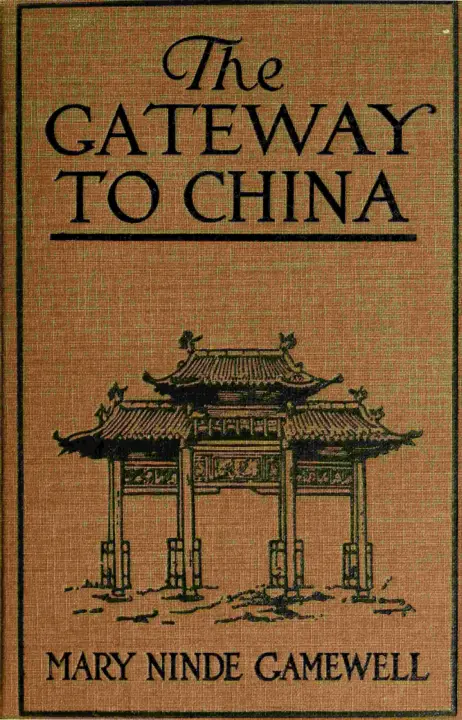
"The Gateway to China" by Mary Ninde Gamewell is a travelogue and social-historical portrait written in the early 20th century. Through illustrated vignettes it presents Shanghai as a cosmopolitan “model settlement” and microcosm of China in transition, highlighting its blend of ancient customs and modern institutions across civic life, commerce, education, philanthropy, and missionary work.
The opening of the work sets its aim: to capture Shanghai’s fast-changing scenes and kindle understanding of the Chinese people, then sketches the city’s growth from river silt and fishing hamlet to treaty port and commercial hub, its refugee surges during the T’aiping turmoil, the short-lived first railway, and the stabilizing rise of the Imperial Maritime Customs under Sir Robert Hart. It details the International Settlement’s governance, the Mixed Court and prisons, police corps (British, Sikh, and Chinese), volunteers, fire brigade, a patchwork postal system, and an energetic Health Department battling plague via rat-proofing and public hygiene campaigns, with special attention to tuberculosis. Street portraits follow: the Bund and its gardens, sampan communities, the glare and crowds of Nanking Road and its tea-houses, elite boulevards and race-course, bustling markets, mill districts, winding roads shaped by superstition, narrow lanes of shikumen housing, beggar guilds, and jarring juxtapositions of temples and trams. Commerce comes alive in silver and silk emporiums, roast-duck and bake shops, pawn and exchange houses, coffin dealers, curio dens on Pig Alley, and child apprentices documented by the Y.M.C.A.; practical prices and a local canning industry show everyday life. The start of the housekeeping chapter follows a newcomer couple navigating scarce rentals, taxes, split jurisdictions, bare-bones houses without fixtures, leisurely workmen, auctions and junk shops, concluding as they turn to bespoke Chinese-made furniture.
Introduction adapted from the source catalogue; source summaries may be automatically generated.
Free to read · English · 64,490 words · No account needed
MAKE TIME FOR A GOOD BOOK
On by default. Untick to stop anonymous reading totals. Each page counts after 10 seconds in view. How this works.
Anonymous counting is on unless you have switched it off.
Four years after the brothers started their venture, their three sisters launched a school for girls. This school, like the other, had a small beginning, but from the first was a pronounced success. Later, its promotors were also given public land on which to build, and what is more, bricks from the city wall, at that time in process of being torn down, were donated for building material. Can the imagination conjure up anything more strange and romantic than a part of the old storied walls metamorphosed into a school for Chinese girls? How the city fathers who planned those walls, to say nothing of Confucius himself, whose prophetic eye caught no vision of a liberally educated womanhood, would have shrunk in horror from such unseemly desecration! The sisters are all married, one being a widow, and with their families live in neat apartments in the rear of the school. They are well-to-do, and teach for love’s sake rather than for the money there is in it. Indeed, the school has not yet become self-supporting. One teacher is principal, another supervises the classes in embroidery, and the third manages the business. The one hundred and thirty bright-faced pupils, besides the common branches, are taught music, drawing, painting, and plain sewing. They receive regular instruction in physical training from a young Chinese woman who had her own education in Boston. The school has been honoured with medals from several expositions to which specimens of beautiful embroidery and drawings have been sent.
Fifty years ago a baby girl destined for an unusual career was born in one of the patrician Chinese homes in Shanghai. She was reared in luxury and given the meagre education at home usually accorded by indulgent parents to girls in her position. Allowed by choice to remain unmarried, she eventually allied herself with a society of austere Buddhist religionists known as “vegetarians.” Years rolled by, till the girl, grown to womanhood, had passed her thirty-ninth birthday. She had long observed that her father was a liberal-minded man, and that his benefactions were frequently in aid of schools for girls, which were gradually becoming common. “If my father is interested in the education of girls,” she reasoned within herself, “why should I not open a school and he help me?” But when she mentioned the plan to her father he frowned upon it harshly, and her stepmother was even more violent in her opposition. Education might be condoned in others, but no daughter of theirs needed more than she had, and much less should she aspire to be a medium for encouraging it. Moreover, the father realized the young woman’s marked ability, and had plans of his own respecting the help she would by and by render him in the management of his estate. The more she was opposed, however, the stronger grew her purpose, until finally the controversy led to her being practically disinherited and driven from the parental roof. She had a little money with which she managed to open a small school, and then sold her jewels to keep it running. That was twelve years ago. Twice she has moved, the last time, in the spring of 1914, to a handsome new building she erected herself largely with the portion of her inheritance she was able to secure when her father died. There was a notable “opening” to which many Chinese guests and a few favored foreigners were invited. On the wall of the Assembly Room hung a large portrait of the principal’s father, for the flower of filial piety rarely dies in China, no matter how rough the winds that blow upon it. Chinese flags were draped over the platform and fluttered from pillar to post. In the side rooms the industrial work of the girls was on exhibition and a fine collation set forth.
Your reading position is saved on this browser. Take it to another device with a library code. Reading pages adapt to text, rather than matching a printed edition.
BEHIND THE BOOK
This eBook is for the use of anyone anywhere in the United States and most other parts of the world at no cost and with almost no restrictions whatsoever. You may copy it, give it away or re-use it under the terms of the Project Gutenberg License included with this eBook or online at www.gutenberg.org. If you are not located in the United States, you will have to check the laws of the country where you are located before using this eBook. Read the source licence.
The original source file, including credits and licence, is retained by this library. Request an original-format copy at no charge. Please include the book title and Project Gutenberg identifier #77783.
KEEP YOUR CURIOSITY GOING
Wilfrid Scawen Blunt
Wilfrid Scawen Blunt

E. W. (Edgar Watson) Howe
Francis Greenleaf Allinson & Anne C. E. (Anne Crosby Emery) Allinson
Cyrenus Cole

John Martineau