THE CLASSIC COLLECTION✦My diaries, being a personal narrative of events 1888-1914, Part 2 (1900-1914)CLASSIC FREE BOOKS
My diaries, being a personal narrative of events 1888-1914, Part 2 (1900-1914)
Wilfrid Scawen Blunt
THE CLASSIC COLLECTION · 1916
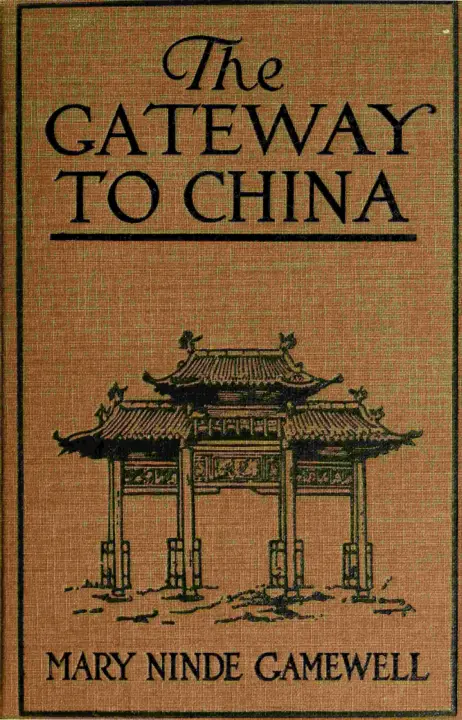
"The Gateway to China" by Mary Ninde Gamewell is a travelogue and social-historical portrait written in the early 20th century. Through illustrated vignettes it presents Shanghai as a cosmopolitan “model settlement” and microcosm of China in transition, highlighting its blend of ancient customs and modern institutions across civic life, commerce, education, philanthropy, and missionary work.
The opening of the work sets its aim: to capture Shanghai’s fast-changing scenes and kindle understanding of the Chinese people, then sketches the city’s growth from river silt and fishing hamlet to treaty port and commercial hub, its refugee surges during the T’aiping turmoil, the short-lived first railway, and the stabilizing rise of the Imperial Maritime Customs under Sir Robert Hart. It details the International Settlement’s governance, the Mixed Court and prisons, police corps (British, Sikh, and Chinese), volunteers, fire brigade, a patchwork postal system, and an energetic Health Department battling plague via rat-proofing and public hygiene campaigns, with special attention to tuberculosis. Street portraits follow: the Bund and its gardens, sampan communities, the glare and crowds of Nanking Road and its tea-houses, elite boulevards and race-course, bustling markets, mill districts, winding roads shaped by superstition, narrow lanes of shikumen housing, beggar guilds, and jarring juxtapositions of temples and trams. Commerce comes alive in silver and silk emporiums, roast-duck and bake shops, pawn and exchange houses, coffin dealers, curio dens on Pig Alley, and child apprentices documented by the Y.M.C.A.; practical prices and a local canning industry show everyday life. The start of the housekeeping chapter follows a newcomer couple navigating scarce rentals, taxes, split jurisdictions, bare-bones houses without fixtures, leisurely workmen, auctions and junk shops, concluding as they turn to bespoke Chinese-made furniture.
Introduction adapted from the source catalogue; source summaries may be automatically generated.
Free to read · English · 64,490 words · No account needed
MAKE TIME FOR A GOOD BOOK
On by default. Untick to stop anonymous reading totals. Each page counts after 10 seconds in view. How this works.
Anonymous counting is on unless you have switched it off.
There is a Christian mission for the ricsha coolies. It was started four years ago by a Scotch business man on whose heart had been laid the spiritual needs of this neglected class. At two centres in thickly-populated coolie districts week-day and Sunday meetings are held in rented Chinese houses, besides Sunday-schools and day-schools for the children of the ricsha coolies and a weekly religious meeting for women. A native evangelist visits the men in their homes and in the tea-shops they are wont to frequent, a Bible woman goes among the women, hot rice and beds are given to the really destitute in cold weather, and the sick are sent to the hospital. At the special Christmas services held one year each coolie was presented with a cheap towel, to his great delight. But let it not be imagined that the coolie’s satisfaction was due to the fact that he could now remove a few layers of dirt from his hands and face. That consideration, if it entered his mind at all, was wholly secondary. The chief use of the towel was to wipe the sweat from his brow when running, so that he could see more clearly. The coolies’ incredulous amazement that any one should care for them was most touching. At first when they flocked to the Hall they would say to the evangelist, “Is this for us?” and at the close of the meeting, “We never heard anything like it!” There have been a number of very bright conversions among them. The work is supported by voluntary contributions, the coolies themselves, out of their extreme poverty, giving generously. The ambition of some is to raise enough money to build a church! It is a noble purpose but leagues beyond the possibilities of their meagre resources.
Tramcars began running in the International Settlement in Shanghai in 1907. Six years later they were introduced on Chinese territory. No street in the Chinese city being wide enough for a car to pass through it, the intention is to surround the city with a track in place of the old moat, and it will not be long before the circle is complete. The cars are divided into two unequal sections, the larger one for third-class passengers and the smaller for first-class. Some foreigners travel third-class and many Chinese first-class. On one line in the Settlement, owing to the rude treatment accorded them in the third-class compartment by Chinese men, Chinese women are allowed to travel first-class for a third-class fare. Two notices stand out conspicuously in third-class cars. One prohibits spitting and is put up by the Municipal Health Department to guard against tuberculosis. The other warns passengers not to enter or leave while the cars are in motion. The warning is emphasized by a coloured picture of a man who has fallen in jumping off a car and is lying on the ground with the blood flowing from his wounds. Still, every year some Chinese are killed and many more injured in attempting, in their ignorance of physical laws, to imitate what they see foreigners do. Yet accidents do not deter them from using the cars, and during the busy hours of the day they fairly swarm into them. Nearly all the cars carry a trailer, and except for a few seats in front reserved for first-class passengers, that too is crowded with Chinese. Fares are rated according to the distance traveled. Both motorman and conductor are Chinese, and the latter understands just enough English to collect fares. But if a stranger in the city asks in English for general information he will rarely succeed in making himself understood. Railless cars, brought over from England, were introduced on one road in the autumn of 1914, but proved too heavy for the paving and were prohibited after a week or two. The following spring, the road foundation having been strengthened, a second trial of the cars was made, and this time with pronounced success. They soon became very popular. Underground and elevated cars have not yet made their appearance in Shanghai, but the son of one of its most prominent Chinese citizens has been spending some time in Paris learning to fly, so on his return in the near future almost anything may be expected to develop in this progressive corner of the Orient.
Your reading position is saved on this browser. Take it to another device with a library code. Reading pages adapt to text, rather than matching a printed edition.
BEHIND THE BOOK
This eBook is for the use of anyone anywhere in the United States and most other parts of the world at no cost and with almost no restrictions whatsoever. You may copy it, give it away or re-use it under the terms of the Project Gutenberg License included with this eBook or online at www.gutenberg.org. If you are not located in the United States, you will have to check the laws of the country where you are located before using this eBook. Read the source licence.
The original source file, including credits and licence, is retained by this library. Request an original-format copy at no charge. Please include the book title and Project Gutenberg identifier #77783.
KEEP YOUR CURIOSITY GOING
Wilfrid Scawen Blunt
Wilfrid Scawen Blunt

E. W. (Edgar Watson) Howe
Francis Greenleaf Allinson & Anne C. E. (Anne Crosby Emery) Allinson
Cyrenus Cole

John Martineau