THE CLASSIC COLLECTION✦My diaries, being a personal narrative of events 1888-1914, Part 2 (1900-1914)CLASSIC FREE BOOKS
My diaries, being a personal narrative of events 1888-1914, Part 2 (1900-1914)
Wilfrid Scawen Blunt
THE CLASSIC COLLECTION · 1916
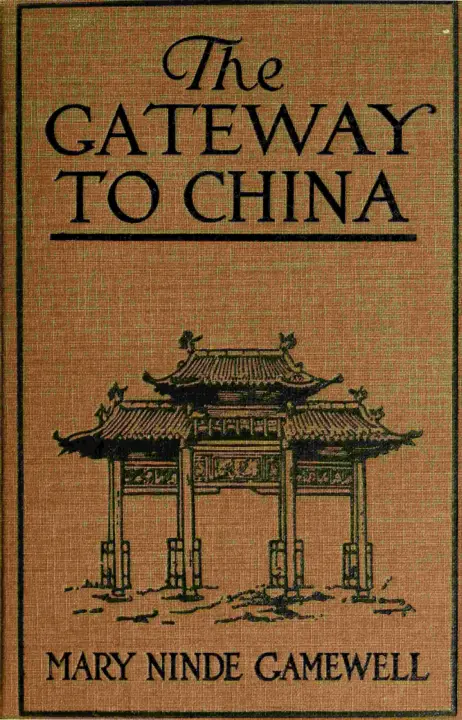
"The Gateway to China" by Mary Ninde Gamewell is a travelogue and social-historical portrait written in the early 20th century. Through illustrated vignettes it presents Shanghai as a cosmopolitan “model settlement” and microcosm of China in transition, highlighting its blend of ancient customs and modern institutions across civic life, commerce, education, philanthropy, and missionary work.
The opening of the work sets its aim: to capture Shanghai’s fast-changing scenes and kindle understanding of the Chinese people, then sketches the city’s growth from river silt and fishing hamlet to treaty port and commercial hub, its refugee surges during the T’aiping turmoil, the short-lived first railway, and the stabilizing rise of the Imperial Maritime Customs under Sir Robert Hart. It details the International Settlement’s governance, the Mixed Court and prisons, police corps (British, Sikh, and Chinese), volunteers, fire brigade, a patchwork postal system, and an energetic Health Department battling plague via rat-proofing and public hygiene campaigns, with special attention to tuberculosis. Street portraits follow: the Bund and its gardens, sampan communities, the glare and crowds of Nanking Road and its tea-houses, elite boulevards and race-course, bustling markets, mill districts, winding roads shaped by superstition, narrow lanes of shikumen housing, beggar guilds, and jarring juxtapositions of temples and trams. Commerce comes alive in silver and silk emporiums, roast-duck and bake shops, pawn and exchange houses, coffin dealers, curio dens on Pig Alley, and child apprentices documented by the Y.M.C.A.; practical prices and a local canning industry show everyday life. The start of the housekeeping chapter follows a newcomer couple navigating scarce rentals, taxes, split jurisdictions, bare-bones houses without fixtures, leisurely workmen, auctions and junk shops, concluding as they turn to bespoke Chinese-made furniture.
Introduction adapted from the source catalogue; source summaries may be automatically generated.
Free to read · English · 64,490 words · No account needed
MAKE TIME FOR A GOOD BOOK
On by default. Untick to stop anonymous reading totals. Each page counts after 10 seconds in view. How this works.
Anonymous counting is on unless you have switched it off.
Customers young and old frequent the shop, sometimes carrying bowls of their own which they get filled with nutritious food for a few coppers and take home to furnish, it may be, a meal for an entire family. Perhaps a woman drops into the shop with a nest of wooden trays. She says something to the shopkeeper, who begins laying into them wonderful little cakes, sticking into each one a wee cluster of artificial flowers. This choice collection of dainties is to form part of a wedding feast. The year round, at certain hours of the day, but especially in the early morning, women and children, provided with kettles, wend their way to the restaurants to buy hot water for tea. Hot water is cheaper than fuel, and besides to buy it saves trouble.
Chinese candy shops never want for trade. Those on Nanking Road are much patronized by foreigners, for some kinds of Chinese candy fairly melt in the mouth. The only drawback to a full enjoyment of it is the realization that too often instead of being protected under glass it has lain for hours on an open counter exposed to dust, flies, and dirty hands.
Fine teas from Hangchow, put up in pretty coloured paper boxes, are seen in the windows of tea shops, and beside them other fancy boxes containing small dried flowers. One or more dried rosebuds placed in a cup of tea impart a delicate flavor to the beverage and are said by the Chinese to aid digestion. They, however, are a luxury indulged in only by the well-to-do epicure, but this class is numerous.
Silk shops are pre-eminently the most popular shops in Shanghai as silk is the commodity for which it is most celebrated. Many silk shops are found on the “Great Horse Road,” the largest and showiest being in a three-story building well down toward the Bund. But the two of special repute and reliability do a thriving business a block south of the busy thoroughfare. No goods are displayed in their windows as is the case with those on Nanking Road. The more conspicuous one has behind each sheet of plate glass a single potted plant on a stand. The other, across the road, disdains to indulge in even that much decoration. Its windows are the small, old-fashioned kind that fold in like blinds with little panes of glass, and up and down over each one stretch protecting iron bars. The reputation of the aristocratic house of “Laou Kai Fook” is too well established to need the help of advertisements. While neighbouring firms may boast of a business career of a few decades, this one points back proudly three quarters of a century to the date of its founding. Though nothing on the exterior of the shop attracts the eye, there is an abundance within to draw on the purse-strings. Laou Kai Fook’s clerks are gravely dignified but wide-awake. It was not one of them but an employee in a lesser shop who, when a would-be purchaser indicated a piece of silk in a showcase that she wished to see, after making a feeble and abortive effort to unlock the case, turned his long finger-nails out, remarking unconcernedly, “It won’t open,” and let the customer walk away. The shelves lining the walls of the silk shops from top to bottom are heaped with rolls of silk wrapped in light brown paper, the rolls lying crosswise on the shelves. From each roll depends a white paper tag marked with Chinese characters, and these tags, seen on every side, produce a curious effect but give to the uninitiated no clue to the wealth they represent. Some of the finest silks, with the paper coverings removed, are kept in showcases to decoy the unwary.
Your reading position is saved on this browser. Take it to another device with a library code. Reading pages adapt to text, rather than matching a printed edition.
BEHIND THE BOOK
This eBook is for the use of anyone anywhere in the United States and most other parts of the world at no cost and with almost no restrictions whatsoever. You may copy it, give it away or re-use it under the terms of the Project Gutenberg License included with this eBook or online at www.gutenberg.org. If you are not located in the United States, you will have to check the laws of the country where you are located before using this eBook. Read the source licence.
The original source file, including credits and licence, is retained by this library. Request an original-format copy at no charge. Please include the book title and Project Gutenberg identifier #77783.
KEEP YOUR CURIOSITY GOING
Wilfrid Scawen Blunt
Wilfrid Scawen Blunt

E. W. (Edgar Watson) Howe
Francis Greenleaf Allinson & Anne C. E. (Anne Crosby Emery) Allinson
Cyrenus Cole

John Martineau