THE CLASSIC COLLECTION✦My diaries, being a personal narrative of events 1888-1914, Part 2 (1900-1914)CLASSIC FREE BOOKS
My diaries, being a personal narrative of events 1888-1914, Part 2 (1900-1914)
Wilfrid Scawen Blunt
THE CLASSIC COLLECTION · 1916
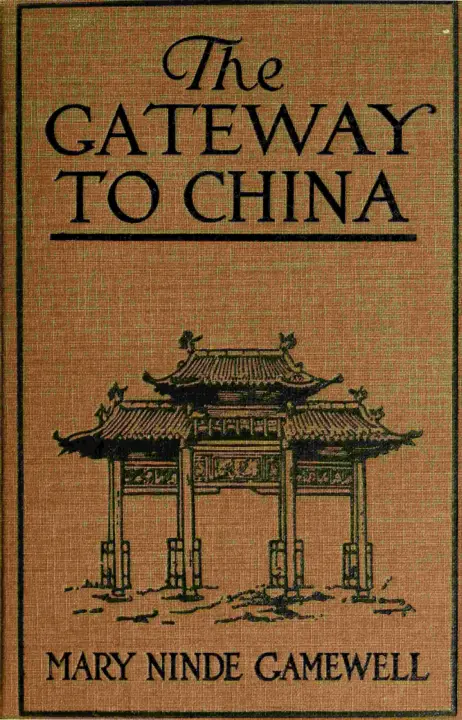
"The Gateway to China" by Mary Ninde Gamewell is a travelogue and social-historical portrait written in the early 20th century. Through illustrated vignettes it presents Shanghai as a cosmopolitan “model settlement” and microcosm of China in transition, highlighting its blend of ancient customs and modern institutions across civic life, commerce, education, philanthropy, and missionary work.
The opening of the work sets its aim: to capture Shanghai’s fast-changing scenes and kindle understanding of the Chinese people, then sketches the city’s growth from river silt and fishing hamlet to treaty port and commercial hub, its refugee surges during the T’aiping turmoil, the short-lived first railway, and the stabilizing rise of the Imperial Maritime Customs under Sir Robert Hart. It details the International Settlement’s governance, the Mixed Court and prisons, police corps (British, Sikh, and Chinese), volunteers, fire brigade, a patchwork postal system, and an energetic Health Department battling plague via rat-proofing and public hygiene campaigns, with special attention to tuberculosis. Street portraits follow: the Bund and its gardens, sampan communities, the glare and crowds of Nanking Road and its tea-houses, elite boulevards and race-course, bustling markets, mill districts, winding roads shaped by superstition, narrow lanes of shikumen housing, beggar guilds, and jarring juxtapositions of temples and trams. Commerce comes alive in silver and silk emporiums, roast-duck and bake shops, pawn and exchange houses, coffin dealers, curio dens on Pig Alley, and child apprentices documented by the Y.M.C.A.; practical prices and a local canning industry show everyday life. The start of the housekeeping chapter follows a newcomer couple navigating scarce rentals, taxes, split jurisdictions, bare-bones houses without fixtures, leisurely workmen, auctions and junk shops, concluding as they turn to bespoke Chinese-made furniture.
Introduction adapted from the source catalogue; source summaries may be automatically generated.
Free to read · English · 64,490 words · No account needed
MAKE TIME FOR A GOOD BOOK
On by default. Untick to stop anonymous reading totals. Each page counts after 10 seconds in view. How this works.
Anonymous counting is on unless you have switched it off.
“Sam Joe” on Broadway claims to be the leading Chinese grocer in the city. He is certainly one of the best known. Like other grocers he keeps no fresh vegetables and no fresh fruits except apples and lemons. His place is clean and inviting, and presided over by numerous clerks of low and high degree. Any one of these middle-aged men, of dignified mien and scholarly cast of countenance, will kindly deign to take an order, discuss the merit of goods, and even point them out if within sight. But when a piece of cheese is to be wrapped up, or a bottle taken down from the shelf, he waves his long-finger-nailed hand in a lordly manner to an underling, who hastens to perform the menial service. Sam Joe used to own an automobile, with “Sam Joe, Shanghai’s leading grocer,” prominent in large gilt letters on its back. It was a familiar object for some time on the streets, but its upkeep proved too great an expense, so the firm has reverted to the ordinary delivery wagon and horse. Still, a horse-drawn wagon is extraordinary enough in this city of man labor, and Sam Joe’s outfit is in advance of most Chinese grocers, who content themselves with box carts propelled by tricycles.
On a bright morning nothing is more delightful than a leisurely stroll up and down Nanking Road for a study of the shops. Some are shut in behind a door and show windows, like foreign stores, and others after the manner of the general run of Chinese shops have the entire front open to the street. Occasionally, in addition to the regular street crossings, a slit between the buildings leads to a narrow lane or alley, without sidewalks, long, narrow, and fearsome, yet possessing a compelling fascination for the wanderer. The Nanking Road shops are almost uniformly two stories high, with frequently a tall, fancy cornice giving the effect of a third. The most striking are the large silver shops. The façades of several stand out boldly, ornamented with coloured stucco in relief. One is resplendent with a gorgeous peacock of heroic size and spreading tail. Another shows two mythical figures disporting themselves on either side of a huge vase of flowers of wondrous hues, while a third, more recently built of plain brick, is dotted over with electric bulbs. On gala occasions, these shops, as well as others able to afford it, are lighted up at night with elaborate electrical designs, making Nanking Road the most brilliantly illuminated street in the city. In addition, it is customary at the time of an opening or anniversary to decorate the entire façade with gay-coloured cotton cloth or silk that is twisted, puffed, puckered, and curled into rosettes and other fantastic designs. Often a light bamboo scaffolding is erected in front of the shop and the trimmings attached to it instead of to the walls. When the sun fades the decorations they are taken down, re-dyed, and put in place again. Close against the show windows of the unforeignized silver shops are glass shelves ranged one above another and loaded with silver. Many of the pieces are massive and richly embossed, Buddhas, vases, jewelry cases, tea-sets, besides less ornate small pieces such as wine cups and bonbon dishes, all of native design and manufacture. Inside the shop the foreigner meets with a surprise, for there are no show cases, and no sign of silver is visible except away at the back where a glimmer can be discerned behind a glass door protected by a wooden or wire lattice. Panel mirrors and carved blackwood chairs at the sides give a drawing-room effect which is enhanced by the leisurely manner in which the numerous clerks move about or lean idly upon the counter, as if their main purpose in life was to pose as useless adjuncts of the firm employing them. Yet in reality a paying business is carried on from day to day, though it may be conducted quietly and unostentatiously over tea-cups and with true Oriental deliberation.
Your reading position is saved on this browser. Take it to another device with a library code. Reading pages adapt to text, rather than matching a printed edition.
BEHIND THE BOOK
This eBook is for the use of anyone anywhere in the United States and most other parts of the world at no cost and with almost no restrictions whatsoever. You may copy it, give it away or re-use it under the terms of the Project Gutenberg License included with this eBook or online at www.gutenberg.org. If you are not located in the United States, you will have to check the laws of the country where you are located before using this eBook. Read the source licence.
The original source file, including credits and licence, is retained by this library. Request an original-format copy at no charge. Please include the book title and Project Gutenberg identifier #77783.
KEEP YOUR CURIOSITY GOING
Wilfrid Scawen Blunt
Wilfrid Scawen Blunt

E. W. (Edgar Watson) Howe
Francis Greenleaf Allinson & Anne C. E. (Anne Crosby Emery) Allinson
Cyrenus Cole

John Martineau