THE CLASSIC COLLECTION✦My diaries, being a personal narrative of events 1888-1914, Part 2 (1900-1914)CLASSIC FREE BOOKS
My diaries, being a personal narrative of events 1888-1914, Part 2 (1900-1914)
Wilfrid Scawen Blunt
THE CLASSIC COLLECTION · 1916
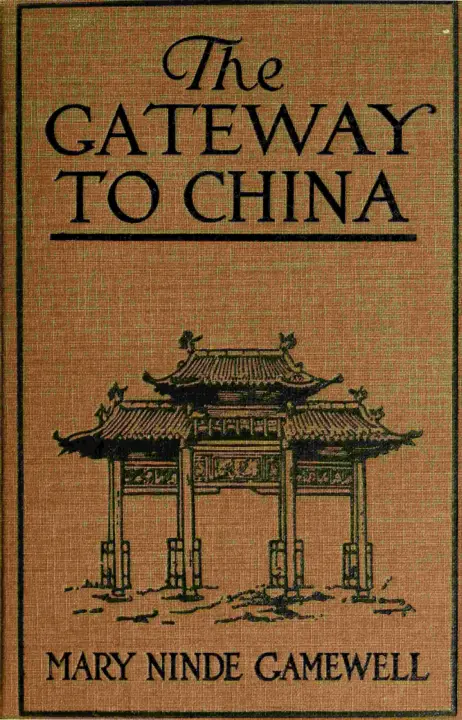
"The Gateway to China" by Mary Ninde Gamewell is a travelogue and social-historical portrait written in the early 20th century. Through illustrated vignettes it presents Shanghai as a cosmopolitan “model settlement” and microcosm of China in transition, highlighting its blend of ancient customs and modern institutions across civic life, commerce, education, philanthropy, and missionary work.
The opening of the work sets its aim: to capture Shanghai’s fast-changing scenes and kindle understanding of the Chinese people, then sketches the city’s growth from river silt and fishing hamlet to treaty port and commercial hub, its refugee surges during the T’aiping turmoil, the short-lived first railway, and the stabilizing rise of the Imperial Maritime Customs under Sir Robert Hart. It details the International Settlement’s governance, the Mixed Court and prisons, police corps (British, Sikh, and Chinese), volunteers, fire brigade, a patchwork postal system, and an energetic Health Department battling plague via rat-proofing and public hygiene campaigns, with special attention to tuberculosis. Street portraits follow: the Bund and its gardens, sampan communities, the glare and crowds of Nanking Road and its tea-houses, elite boulevards and race-course, bustling markets, mill districts, winding roads shaped by superstition, narrow lanes of shikumen housing, beggar guilds, and jarring juxtapositions of temples and trams. Commerce comes alive in silver and silk emporiums, roast-duck and bake shops, pawn and exchange houses, coffin dealers, curio dens on Pig Alley, and child apprentices documented by the Y.M.C.A.; practical prices and a local canning industry show everyday life. The start of the housekeeping chapter follows a newcomer couple navigating scarce rentals, taxes, split jurisdictions, bare-bones houses without fixtures, leisurely workmen, auctions and junk shops, concluding as they turn to bespoke Chinese-made furniture.
Introduction adapted from the source catalogue; source summaries may be automatically generated.
Free to read · English · 64,490 words · No account needed
MAKE TIME FOR A GOOD BOOK
On by default. Untick to stop anonymous reading totals. Each page counts after 10 seconds in view. How this works.
Anonymous counting is on unless you have switched it off.
The chapel built so long ago by Dr. Medhurst in the Chinese city is still standing, sandwiched in between a book shop on one side and a shop selling funeral supplies on the other. Its years exceed the allotted age of man, and if bricks could speak, many a tale this pile could relate of fires and floods, famines and pestilence, riots and rebellions. While destruction was rife and changes taking place all around, the little chapel, within whose walls was proclaimed daily the Evangel of Peace, remained intact as if it possessed a charmed existence.
It is rather singular that to-day there is not a single hospital foreign or Chinese, in the populous Chinese City. The small plant started so long ago by Dr. Medhurst was transferred, in 1861, with the other activities of the Mission, to the new site, now known as Shantung Road, where a great medical work is carried on. Accident cases are especially numerous in the roomy wards, where an empty bed is rarely seen, and hundreds attend the daily clinic.
In the centre of another crowded district is beautiful St. Elizabeth’s Hospital of the American Episcopal Mission. This hospital, which is for women only, receives patients from the Municipal Prison, and when one looks about the cheerful, sunny wards, it ceases to be a wonder that the poor creatures often make a feint of illness in order to be kept on a little longer where they are so happy and comfortable.
One other woman’s hospital is located near the western entrance to the Chinese City. Thirty-five years ago a large-hearted American, Margaret Williamson, had a vision of helpless sufferers in China, and in dying left money for a hospital which bears her name. While waiting for the building to be completed, the doctor and trained nurse just out from home opened a dispensary in a small rented house in the disease-infected Chinese city. They toiled on day after day through all the unaccustomed heat of July and August. “Some friend ought to have warned us of the danger of it,” one of them, years afterward, smilingly told a caller. “How did the Chinese feel about the hospital? Were the women afraid to go to it?” “Oh, not at all. We were always full. In fact it was necessary to keep enlarging our borders as fast as we could get the money.” The sweet face in its frame of snow-white hair broke into a reminiscent smile, and the listener knew something interesting was coming. “We used to have most amusing clinic experiences. Patients many times would persist in taking internally what was meant for external application. It was necessary to be careful and give nothing strong enough to do any great harm either way. Then, too, the women would get so excited and jealous over the medicines. If one patient received something and another did not, the latter felt unhappy. It did no good to explain to her that she wasn’t in need of that particular medicine. She wanted it just the same. I remember one time the doctor had ordered a large dose of castor oil for a patient. Her companion saw it and begged for some too. She was so persistent that I finally asked the doctor if I should give it to her. “Yes, do,” said she. “It can’t hurt her and the experience may do her good.” The clinics are very large. On a winter’s afternoon an unexpected visitor found one young doctor in sole charge, her colleague having been taken sick. She that day treated two hundred and forty-seven dispensary patients besides caring for the wards and performing three difficult operations. “I shall not stay a minute,” declared the caller when the last woman had departed, “you must rest.” “Oh, do sit down a little while. I need to get my mind off my work,” urged the doctor. Just then the friend, noticing the exhausted look on the wan face before her, remarked impulsively, “I wish I could take you home with me and put you to bed and give you a little mothering.” “Don’t speak to me like that,” cried the younger woman almost sharply, while a few hot tears forced themselves into her eyes. “I shall break down and cry if you do, and I mustn’t; I mustn’t!” This hospital belongs to that pioneer in the field of woman’s work for women, The Woman’s Union Missionary Society of America.
Your reading position is saved on this browser. Take it to another device with a library code. Reading pages adapt to text, rather than matching a printed edition.
BEHIND THE BOOK
This eBook is for the use of anyone anywhere in the United States and most other parts of the world at no cost and with almost no restrictions whatsoever. You may copy it, give it away or re-use it under the terms of the Project Gutenberg License included with this eBook or online at www.gutenberg.org. If you are not located in the United States, you will have to check the laws of the country where you are located before using this eBook. Read the source licence.
The original source file, including credits and licence, is retained by this library. Request an original-format copy at no charge. Please include the book title and Project Gutenberg identifier #77783.
KEEP YOUR CURIOSITY GOING
Wilfrid Scawen Blunt
Wilfrid Scawen Blunt

E. W. (Edgar Watson) Howe
Francis Greenleaf Allinson & Anne C. E. (Anne Crosby Emery) Allinson
Cyrenus Cole

John Martineau