
At the Sign of the Fox: A Romance
Mabel Osgood Wright
THE CLASSIC COLLECTION · 1906
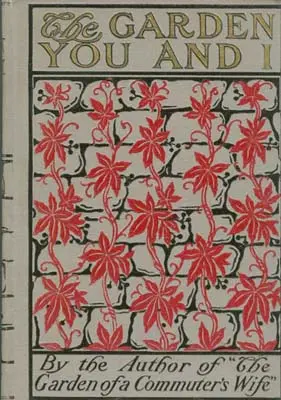
"The Garden, You, and I" by Mabel Osgood Wright is a gardening-themed nonfiction work likely written in the early 20th century. The book explores the joys and intricacies of gardening through the lens of personal experiences and practical advice, offering insights into the relationship between people and their garden spaces. The central character seems to be a gardener who reflects on the cycles of nature, the challenges of cultivation, and the community formed around the love of gardening. At the start of the book, the narrator introduces the concept of gardening by emphasizing the importance of understanding environmental elements like sun and wind in creating a successful garden. The opening chapter is rich with metaphorical insights that personify nature and stress the significance of planning and preparation. There is a blend of personal anecdotes and practical advice, as the narrator recounts experiences with varying seasons, the dynamics of planting, and interactions with neighboring gardeners, hinting at a deeper philosophical connection to nature and community that unfolds throughout the work.
Introduction adapted from the source catalogue; source summaries may be automatically generated.
Free to read · English · 84,848 words · No account needed
MAKE TIME FOR A GOOD BOOK
On by default. Untick to stop anonymous reading totals. Each page counts after 10 seconds in view. How this works.
Anonymous counting is on unless you have switched it off.
"It's not gadding I mean, mem, but here on the porch, one foine night, jest before the last time Mister Blake went off fer good, they was sat there some toime, so still that, says I to meself, 'When they do foind spach, it'll be something worth hearing!'
"'Do I annoy you by staying here? Would you prefer I went elsewhere?' says he, and well I moind the words, for Oi thought an offer was on the road, and as 'twas the nearest I'd been to wan, small wonder I got excoited! Then Miss Marie spoke up, smooth as a knife cutting ice cream,--'To speak frankly,' says she, 'you do not exactly annoy me, but I'd much rather you went elsewhere!' Och, but it broke me heart, the sound of it!"
HEAVILY SCENTED FLOWERS, SUCH AS HYACINTHS, LEMON AND AURATUM LILIES,
POLYANTHUS NARCISSUS, MAGNOLIAS, LILACS, AND THE LIKE, SHOULD BE
AVOIDED.
Snowdrops and pussy-willows. Hepaticas and moss. Spice-bush and shad-bush sprays. Trailing arbutus and sweet, white garden violets. Double daffodils and willow sprays. Crocus buds and moss. Blue garden scillas and wild white saxifrage. Black-birch catkins and wind-flowers. Plants of the various wild violets, according to season, arranged in an earthen pan with a moss or bark covering. Old-fashioned myrtle, with its glossy leaves, and single narcissus, or English primroses. Bleeding-heart and young ferns. English border primroses in small rose bowls. Lilies-of-the-valley, with plenty of their own leaves, and poets' narcissus. Tulip-tree flowers and leaves. The wild red-and-gold columbine with young white-birch sprays. Pinxter flower and the New York or wood fern. Jack-in-the-pulpit with its own leaves, in a bark or moss covered jar. Pink moccasin-flowers with ferns, in bark-covered jar. Pansies with ivy or laurel leaves, arranged in narrow dishes to form a parterre about a central mirror. Iceland poppies with small ferns or grasses. May pinks and forget-me-nots. Blue larkspurs and deutzia (always put white with blue flowers). Peonies with evergreen ferns, in a central jar. Sweet-william, arranged in separate colours for parterre effect or in a large blue-and-white bowl, with graceful sprays of honeysuckle flowers. Wild roses with plenty of buds and foliage, in blue-and-white bowls. Roses in large sprays with branches of the young leaves of copper beech--or masses of Chinese honeysuckle. Roses with short stems arranged with their own or rugosa foliage in blue-and-white dishes that have coarse wire netting fitted to the top to keep the flowers in place. White field daisies, clover, and flowering grasses, in a large bowl or jar. Mountain laurel with its own leaves, in central jar and parterre dishes. Nasturtiums, in cut-glass bowl or vase, with the foliage of lemon verbena. Sweet peas of five colours with a fringe of maiden-hair ferns, the deepest colour in a central jar, with other smaller bowls at corners, and small ferns laid around mirror and on cloth between. Japan lilies, single flowers, in parterre dishes with ivy leaves, and sprays in central vase. Balsams arranged in effect of set borders. Asters in separate colours. Spotted-leaved pipsissewa of the woods with fern border, in bark-covered dish. Red and gold bell meadow lilies, in large jar, with field grasses. Gladioli--the flowers separated from the stalks and arranged with various leaves for parterre effect, or stalks laid upon the cloth with evergreen ferns to separate the places at a formal meal. Sweet sultan, in separate colours, in rose bowls, with fragrant geranium or lemon-verbena foliage. Shirly poppies with grasses or green rye, in four slender vases about a larger centrepiece. Margaret or picotee carnations with mignonette, arranged loosely in a cut-glass vase or bowl. Green rye, wheat, or oats with the blue garden cornflower--or wild blue chickory. Wild asters with heavy tasselled marsh-grasses. Goldenrods with purple iron weed and vines of wild white clematis, arranged about a flat dish of peaches and pears. All through autumn place your central mirror on a mat made by laying freshly gathered coloured leaves upon the cloth. Wallflowers and late pansies. White Japanese anemonies and ferns. Grass of Parnassus, ladies tresses, and marsh shield ferns. Garden chrysanthemums, in blue-and-white jars and bowls, on a large mat of brown magnolia leaves. Sprays of yellow witch-hazel flowers and leaves of red oak. Sprays of coral winterberry, from which leaves have been removed, and white-pine tassels. Club-mosses, small evergreen ferns, and partridge vine with its red berries, in a bark-covered dish of earth.
Your reading position is saved on this browser. Take it to another device with a library code. Reading pages adapt to text, rather than matching a printed edition.
Mabel Osgood Wright

Mabel Osgood Wright
Mabel Osgood Wright

Mabel Osgood Wright
BEHIND THE BOOK
This eBook is for the use of anyone anywhere in the United States and most other parts of the world at no cost and with almost no restrictions whatsoever. You may copy it, give it away or re-use it under the terms of the Project Gutenberg License included with this eBook or online at www.gutenberg.org. If you are not located in the United States, you will have to check the laws of the country where you are located before using this eBook. Read the source licence.
The original source file, including credits and licence, is retained by this library. Request an original-format copy at no charge. Please include the book title and Project Gutenberg identifier #17514.
KEEP YOUR CURIOSITY GOING

Charles G. (Charles Griffith) Ross
Hannah Webster Foster

Emily Lawless
Edwin Hamlin Carr

Charles De Lano Hine
Andrew Ure