
The Game-Birds of the Coasts and Lakes of the Northern States of America A full account of the sporting along our sea-shores and inland waters, with a comparison of the merits of breech-loaders and muzzle-loaders
Robert Barnwell Roosevelt

THE CLASSIC COLLECTION · 1865
"The Game Fish, of the Northern States and British Provinces" by Robert Barnwell Roosevelt is a scientific publication written in the late 19th century. This work focuses on the various game fish found in North America, detailing their characteristics, habitats, and fishing techniques, particularly for salmon and sea-trout fishing in Canada. Roosevelt combines practical fishing advice with his observations, aiming to enrich the reader's understanding of fish biology and fishing practices. The opening of the publication begins with a preface where Roosevelt reflects on his motivations for writing the book, highlighting a growing demand for updated information on fishing. He emphasizes the importance of outdoor recreation for health and well-being and shares his experiences that led to a commitment to conserving fish populations and improving fishing methods. Furthermore, he sets the stage for the book by introducing the classification of fish and the balance between naturalists and sportsmen regarding fish nomenclature. This blend of personal anecdotes, environmental advocacy, and scientific insight creates an engaging introduction for readers interested in fishing or natural history.
Introduction adapted from the source catalogue; source summaries may be automatically generated.
Free to read · English · 89,095 words · No account needed
MAKE TIME FOR A GOOD BOOK
On by default. Untick to stop anonymous reading totals. Each page counts after 10 seconds in view. How this works.
Anonymous counting is on unless you have switched it off.
These fish, both pickerel and mascallonge, can be captured in immense numbers in the St. Lawrence, at Cape Vincent, Clayton, Alexandria Bay and many other places; in Lake Champlain, near Rouse’s Point; and in all the lakes of Canada; but they are dull sport in the catching and poor food in the eating. Believe no one who boasts of the fine flavor of the mascallonge, cook him as you will, he is nothing but a dirty, flabby, tasteless pickerel. And as for the sport, carry a blanket with you, take a turn with the hand-line round your leg, and stretching yourselves as best you may in the bottom of the boat, sleep comfortably till either a call from your oarsman or a tug on your leg rouses you to the dreary work of pulling in a worthless, unresisting log. When you strike and lose one fish, remain rowing round and round; if he is not much hurt, he will bite again, and where there is one there are more; remain at that spot till, by passing over the ground once or twice without a strike, you are thoroughly satisfied you have exhausted the supply. There is sometimes great beauty of scenery, and if your guide has anything to say, which he rarely has, you can, as you should be able ever to do in the open air, enjoy yourself.
The mode of fishing among the pond lilies that I have described is much more exciting, requiring continued activity, some skill and no little judgment, while there is greater risk of losing your prey. To avoid the latter casualty, if the fish weigh not over four pounds, lift him out at once, and proceed in the same way with larger fish to the extent your rod will stand. As for snap-fishing, that is, using a hook so constructed as to spring open or shut the moment it feels the bite, and thus grasping the fish or imbedding an extra hook in his jaws, I have only tried it sufficiently to be disgusted with it, although probably it may work well in open water. If, however, it touches a weed, it will be sprung, and then you cannot catch a fish at all till it is reset. It was invented to avoid the hook’s coming out of the pickerel’s mouth, which, from the nature of the latter, it is apt to do, a difficulty which old, slow, poky, English puntfishers endeavor to remedy by allowing the pike or jack, as they call him, to gorge the bait. A pickerel, like a trout, rushes up, strikes his prey, and immediately returns with it to his haunt; he then ends it round, having generally struck it crosswise, and swallows it. This he takes much longer to do than a trout, and the English works on fishing direct you to wait five minutes or till he runs again, and then, by striking smartly, you can fix the hook into his gills or stomach, from which nothing but the knife will remove it. The disadvantage, however, is that the pickerel often eject instead of gorging the bait, and when the fisherman, having impatiently awaited his five minutes, comes to strike, he strikes naught but the thin water or the stem of a water lily. After a few such disgusting results, he will probably determine, as the writer has, to strike at once, unless, by one of those exceptional cases to all good rules, some peculiar difficulty forces him to proceed otherwise. The word spoon, that has been so frequently used, is derived from the use originally of the bowl of a pewter table-spoon, into one end of which was fastened three hooks, and into the other a swivel attached to the line, and which, by playing and flashing through the water, attracted the fish; the old-fashioned spoon is now out of use, and entirely superseded by Buel’s patent. Pickerel, especially the smaller varieties, will take a fly, but not very readily; and this can hardly be said to be an established mode of fishing for them.
Your reading position is saved on this browser. Take it to another device with a library code. Reading pages adapt to text, rather than matching a printed edition.
Robert Barnwell Roosevelt
Robert Barnwell Roosevelt
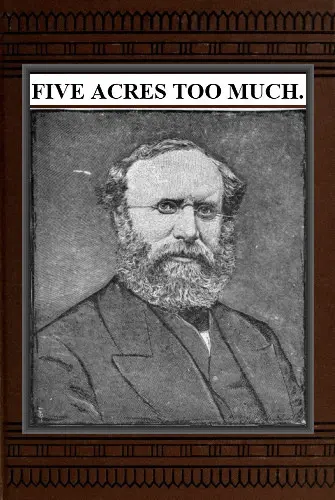
Robert Barnwell Roosevelt
Robert Barnwell Roosevelt
BEHIND THE BOOK
This eBook is for the use of anyone anywhere in the United States and most other parts of the world at no cost and with almost no restrictions whatsoever. You may copy it, give it away or re-use it under the terms of the Project Gutenberg License included with this eBook or online at www.gutenberg.org. If you are not located in the United States, you will have to check the laws of the country where you are located before using this eBook. Read the source licence.
The original source file, including credits and licence, is retained by this library. Request an original-format copy at no charge. Please include the book title and Project Gutenberg identifier #56267.
KEEP YOUR CURIOSITY GOING

Charles G. (Charles Griffith) Ross
Hannah Webster Foster

Emily Lawless
Edwin Hamlin Carr

Charles De Lano Hine
Andrew Ure