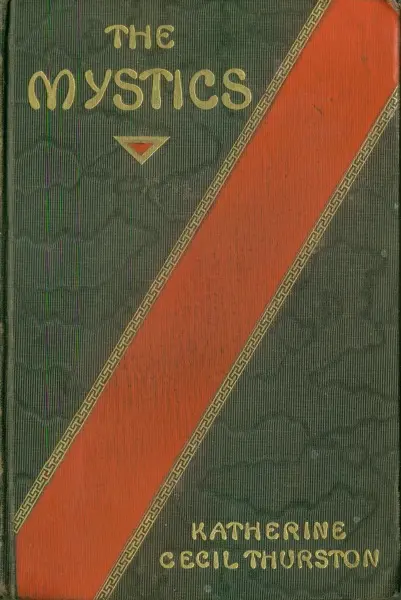
The Mystics: A Novel
Katherine Cecil Thurston
THE CLASSIC COLLECTION · 1905
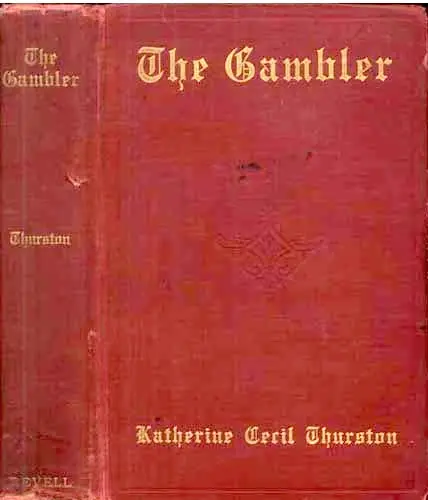
"The Gambler: A Novel" by Katherine Cecil Thurston is a work of fiction written in the early 20th century. The narrative follows James Milbanke, an English archaeologist, as he embarks on a journey to Ireland, where he is set to reconnect with an old friend, Denis Asshlin, who seems to be struggling with personal demons. As the story unfolds, themes of nostalgia, personal change, and the cultural contrasts between the English and the Irish emerge. At the start of the novel, we are introduced to Milbanke during his arrival in Ireland, where he reflects on his past and his long-standing friendship with Asshlin, who he has not seen in nearly thirty years. The journey is marked by the dreariness of a rainy landscape, evoking a sense of isolation. Once he reaches the Asshlin home, their reunion is filled with warmth but also hints at underlying tensions. Through dinner conversations, Milbanke feels a mix of nostalgia and unease about his friend’s life and his own evolving viewpoint, setting the stage for the complexities of their relationship that will develop throughout the story. As he interacts with Asshlin and his daughters, Clodagh and Nance, the unfolding drama around gambling, familial expectations, and personal struggles begins to take shape.
Introduction adapted from the source catalogue; source summaries may be automatically generated.
Free to read · English · 123,295 words · No account needed
MAKE TIME FOR A GOOD BOOK
On by default. Untick to stop anonymous reading totals. Each page counts after 10 seconds in view. How this works.
Anonymous counting is on unless you have switched it off.
"It feels late!" he said. "What is the time, Lady Diana? My conscience
begins to trouble me!"
Lady Diana smiled a little conventionally.
"I think it is about half-past two," she answered.
"Oh, Lady Diana, how wicked of us!" Mrs. Bathurst affected a charming
penitence.
Mansfeldt looked genuinely uncomfortable and distressed.
"We owe you an apology!" he said. "We have kept you from your rest."
But Lady Diana graciously waived all apologies aside.
"It is nothing!--nothing!" she assured them. "We are not so rustic as all that. Lord Deerehurst, you and Mr. Mansfeldt will find George in the smoking-room." She gave the suggestion with her usual hospitable warmth; but the smile that accompanied the words was not the smile she had given to Clodagh the evening before--or that morning at breakfast.
And Clodagh, keenly sensitive to this altered bearing, stood silent, offering no apology. At last, as though the tension of the position compelled her to action, she held out her hand in a half-diffident, half-defiant gesture.
"Good-night, Lady Diana! Good-night, Rose! Good-night, Mr. Mansfeldt. Good-night!" Last of all, her fingers touched Deerehurst's, and as his cold hand closed over hers, he bent his head deferentially.
"Good-night, partner! Sleep well! We will be more fortunate in the
future."
But Clodagh gave no sign that she had even heard. Almost ungraciously, she freed her hand; and, without glancing at any of the occupants of the room, moved quickly to the door, and passed out into the corridor.
Her brain seemed to burn, as she mounted the long flight of shallow stairs that led to the bedrooms; her head ached; her senses felt confused. She had lost money to a far greater extent than she could possibly afford; she had alienated the friend she had so ardently desired to make; she had acted wilfully--absurdly--wrongly.
She opened the door of her bedroom with hasty, unsteady fingers. The lamp on the writing-table was lighted, but the rest of the room was dim; through the open windows came a slight breeze that stirred the chintz curtains; in a chair by the dressing-table sat Simonetta in an attitude of weariness.
The sight of the woman's tired figure jarred on Clodagh's over-strained
nerves.
"You can go, Simonetta!" she said sharply. "I'll put myself to bed."
Simonetta started up remorsefully.
"Pardon, signora----" she exclaimed.
But Clodagh cut her short.
"You can go!" she said. "Good-night!"
The woman looked at her for a moment in doubt and reluctance; then,
instinctively realising that argument was useless, moved softly to the
door.
"Good-night, signora!" she ventured; but as Clodagh made no response, she departed, silently closing the door.
Your reading position is saved on this browser. Take it to another device with a library code. Reading pages adapt to text, rather than matching a printed edition.
Katherine Cecil Thurston
Katherine Cecil Thurston
BEHIND THE BOOK
This eBook is for the use of anyone anywhere in the United States and most other parts of the world at no cost and with almost no restrictions whatsoever. You may copy it, give it away or re-use it under the terms of the Project Gutenberg License included with this eBook or online at www.gutenberg.org. If you are not located in the United States, you will have to check the laws of the country where you are located before using this eBook. Read the source licence.
The original source file, including credits and licence, is retained by this library. Request an original-format copy at no charge. Please include the book title and Project Gutenberg identifier #33490.
KEEP YOUR CURIOSITY GOING
Coulson Kernahan

Maurice Baring
Frances Wright
Cécile Tormay

Frederic Jesup Stimson

W. H. P. (William Henry Pope) Jarvis