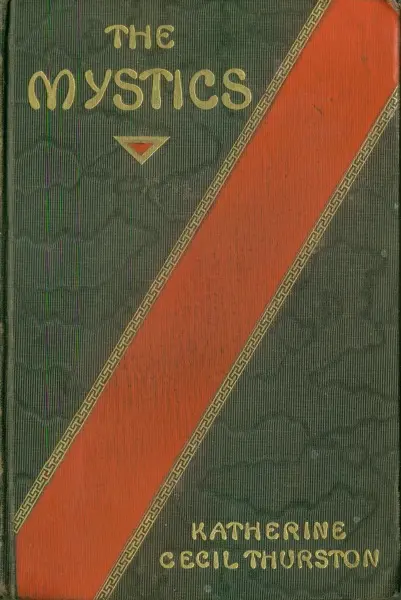
The Mystics: A Novel
Katherine Cecil Thurston
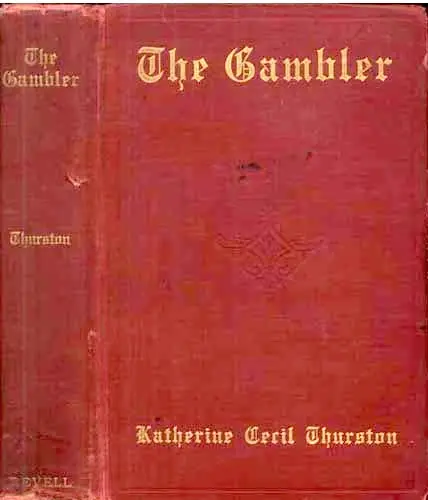
THE CLASSIC COLLECTION · 1905
"The Gambler: A Novel" by Katherine Cecil Thurston is a work of fiction written in the early 20th century. The narrative follows James Milbanke, an English archaeologist, as he embarks on a journey to Ireland, where he is set to reconnect with an old friend, Denis Asshlin, who seems to be struggling with personal demons. As the story unfolds, themes of nostalgia, personal change, and the cultural contrasts between the English and the Irish emerge. At the start of the novel, we are introduced to Milbanke during his arrival in Ireland, where he reflects on his past and his long-standing friendship with Asshlin, who he has not seen in nearly thirty years. The journey is marked by the dreariness of a rainy landscape, evoking a sense of isolation. Once he reaches the Asshlin home, their reunion is filled with warmth but also hints at underlying tensions. Through dinner conversations, Milbanke feels a mix of nostalgia and unease about his friend’s life and his own evolving viewpoint, setting the stage for the complexities of their relationship that will develop throughout the story. As he interacts with Asshlin and his daughters, Clodagh and Nance, the unfolding drama around gambling, familial expectations, and personal struggles begins to take shape.
Introduction adapted from the source catalogue; source summaries may be automatically generated.
Free to read · English · 123,295 words · No account needed
MAKE TIME FOR A GOOD BOOK
On by default. Untick to stop anonymous reading totals. Each page counts after 10 seconds in view. How this works.
Anonymous counting is on unless you have switched it off.
But Lady Frances came forward to the hall door, and at the same moment a groom hurried round from the stables.
Clodagh slipped easily from her horse; took her flowers from the saddle; and then turned to greet her friend.
"How are you?" she said. "I was so sorry not to have seen you this morning. I have had a glorious ride."
Lady Frances did not respond to the words with her habitual smile. And, on closer scrutiny, Clodagh observed that, despite a very careful toilet, she looked tired and annoyed.
"You've been away an age," she said irritably. "It's after twelve."
"Then perhaps I'd better change. The coach is to be back from the
station at half-past twelve."
"No. Never mind! Diana isn't conventional. You can meet the people--and lunch too--in your habit. I want to talk to you."
Clodagh's eyes opened. It was new to find Lady Frances's manner either
hasty or perturbed.
"To me? What about?"
The other hesitated for a moment, then looked straight at her
companion.
"About Walter Gore."
The onslaught was so sudden that Clodagh had no time to guard her feelings. She flushed--a deep, painful flush, that spread over her cheeks, her ears, her forehead.
Lady Frances looked at her mercilessly.
"I have been worrying so about his coming--worrying so about you."
"About me?"
Clodagh said the words consciously and uncomfortably.
"Yes. I feel so much for you--you, who are so sensitive. Clodagh!"--she laid her fingers lightly on Clodagh's arm--"Clodagh! I am your best friend. You believe that?"
"You--you have always been very good to me."
"And always shall be good to you. Look here!" Her voice suddenly took on the tone of seeming frankness that is the clever woman's best weapon. "I'm enormously fond of you--enormously fond of you. I should hate to see you hurt or--or----"
She paused judiciously.
"But who would hurt me? Why should I be hurt?"
"You shouldn't be, of course. But sometimes circumstances--chances --people--hurt one. Oh, my dear girl, I'm unhappy at this unlucky coming of Walter's. It's hard--it's really hard--on you."
As the words were uttered, it seemed to Clodagh that a faint cold wind blew from some unseen quarter, chilling the summer warmth--chilling her own happiness.
"Why--why hard on me?" she asked.
"Dear child!" Lady Frances's tone was deep and kind. "Do you remember the night in town when you asked me to take you to the Tamperleigh's party?"
"Yes. I remember."
"You remember why I refused?"
"Yes, I remember."
"But you did not know my full reason for refusing. I had met Walter a day or two before. We had discussed you."
"And what had Sir Walter Gore to say of me?"
Your reading position is saved on this browser. Take it to another device with a library code. Reading pages adapt to text, rather than matching a printed edition.
Katherine Cecil Thurston
Katherine Cecil Thurston
BEHIND THE BOOK
This eBook is for the use of anyone anywhere in the United States and most other parts of the world at no cost and with almost no restrictions whatsoever. You may copy it, give it away or re-use it under the terms of the Project Gutenberg License included with this eBook or online at www.gutenberg.org. If you are not located in the United States, you will have to check the laws of the country where you are located before using this eBook. Read the source licence.
The original source file, including credits and licence, is retained by this library. Request an original-format copy at no charge. Please include the book title and Project Gutenberg identifier #33490.
KEEP YOUR CURIOSITY GOING
Coulson Kernahan

Maurice Baring
Frances Wright
Cécile Tormay

Frederic Jesup Stimson

W. H. P. (William Henry Pope) Jarvis