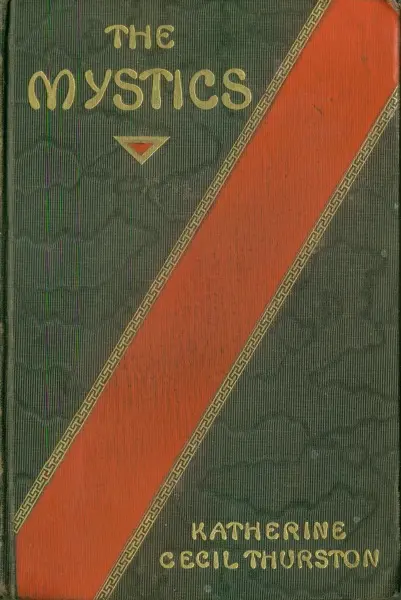
The Mystics: A Novel
Katherine Cecil Thurston
THE CLASSIC COLLECTION · 1905
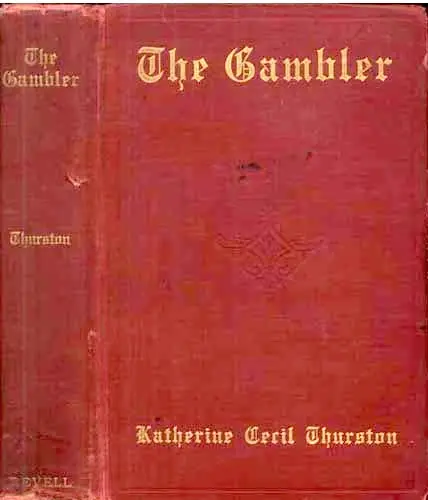
"The Gambler: A Novel" by Katherine Cecil Thurston is a work of fiction written in the early 20th century. The narrative follows James Milbanke, an English archaeologist, as he embarks on a journey to Ireland, where he is set to reconnect with an old friend, Denis Asshlin, who seems to be struggling with personal demons. As the story unfolds, themes of nostalgia, personal change, and the cultural contrasts between the English and the Irish emerge. At the start of the novel, we are introduced to Milbanke during his arrival in Ireland, where he reflects on his past and his long-standing friendship with Asshlin, who he has not seen in nearly thirty years. The journey is marked by the dreariness of a rainy landscape, evoking a sense of isolation. Once he reaches the Asshlin home, their reunion is filled with warmth but also hints at underlying tensions. Through dinner conversations, Milbanke feels a mix of nostalgia and unease about his friend’s life and his own evolving viewpoint, setting the stage for the complexities of their relationship that will develop throughout the story. As he interacts with Asshlin and his daughters, Clodagh and Nance, the unfolding drama around gambling, familial expectations, and personal struggles begins to take shape.
Introduction adapted from the source catalogue; source summaries may be automatically generated.
Free to read · English · 123,295 words · No account needed
MAKE TIME FOR A GOOD BOOK
On by default. Untick to stop anonymous reading totals. Each page counts after 10 seconds in view. How this works.
Anonymous counting is on unless you have switched it off.
Clodagh made a lofty gesture of denial; and, walking across the room,
paused beside her bureau.
For a minute there was no sound in the room save the abrupt opening and shutting of one or two small drawers; then Clodagh turned round again, a cheque-book in her hand.
"Now tell me what I owe you," she said. "I'll write you a cheque and post-date it to July the first. Will that do? I draw my money then, you know."
"Perfectly. But, my dear Clodagh----"
But again Clodagh made a gesture that seemed to relegate the matter to a region of obscure--if not of absolutely contemptible--things.
"Don't trouble!" she said. "Money is never worth an argument. What do I
owe?"
During her words, her companion had sat silent--speculative and suspicious. To her worldly mind, Clodagh's grand manner--Clodagh's extraordinary behaviour--indicated but one possibility. She had found means of augmenting her income!
Any knowledge of the false pride, the empty magnificence that will, metaphorically speaking, fling its last coin to a beggar, while passing on to penury, had never come within her experience. It needs the environments of such places as Orristown to bring them to maturity. She looked now at her companion, and her eyes narrowed in a sudden, triumphant satisfaction. Something that she had anticipated had come to pass! At the imagined discovery, she gave a quick laugh.
"If you insist on being so scrupulous----"
Clodagh looked round from the bureau at which she had seated herself.
"How much?" she said laconically.
Lady Frances pretended to knit her brows.
"Well, there was the eight hundred pounds at Nice--and the forty pounds the night of your return to town--the night we played bridge with Val and Deerehurst----"
She looked very quickly at Clodagh.
But Clodagh gave no sign. "And the fifty pounds a fortnight ago--besides the sixty for Lady Shrawle," she interrupted.
"Yes--oh yes! Let me see, that makes----"
"Nine hundred and fifty pounds," Clodagh interjected in a very quiet voice; and picking up a pen, she wrote out the cheque, signing it with her usual bold signature. A moment later she rose, blotted it, and held it out.
As the flimsy slip of paper passed from one to the other, the elder woman permitted a gleam of curiosity to show in her eyes.
"A thousand thanks!" she exclaimed. "And don't think me a wretch if I run away now that I've got it. You know how fidgety my bay mare is. Well, good-bye! I shall see you at Ranelagh?"
But Clodagh was absently studying her cheque-book.
"I don't think so," she said. "Lord Deerehurst offered to take me down, but I shan't go. I--I have some business to attend to."
Your reading position is saved on this browser. Take it to another device with a library code. Reading pages adapt to text, rather than matching a printed edition.
Katherine Cecil Thurston
Katherine Cecil Thurston
BEHIND THE BOOK
This eBook is for the use of anyone anywhere in the United States and most other parts of the world at no cost and with almost no restrictions whatsoever. You may copy it, give it away or re-use it under the terms of the Project Gutenberg License included with this eBook or online at www.gutenberg.org. If you are not located in the United States, you will have to check the laws of the country where you are located before using this eBook. Read the source licence.
The original source file, including credits and licence, is retained by this library. Request an original-format copy at no charge. Please include the book title and Project Gutenberg identifier #33490.
KEEP YOUR CURIOSITY GOING
Coulson Kernahan

Maurice Baring
Frances Wright
Cécile Tormay

Frederic Jesup Stimson

W. H. P. (William Henry Pope) Jarvis