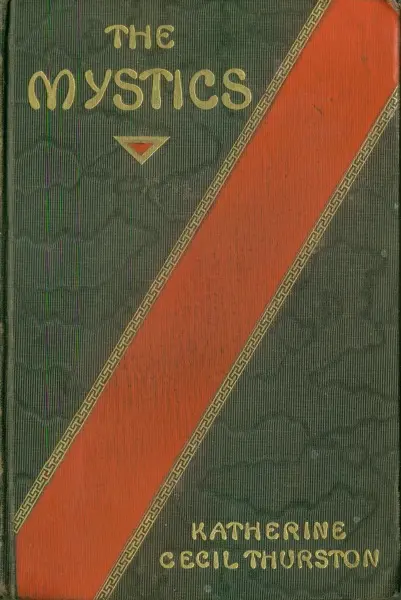
The Mystics: A Novel
Katherine Cecil Thurston
THE CLASSIC COLLECTION · 1905
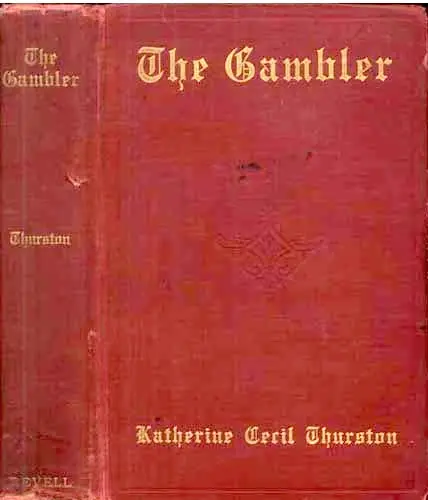
"The Gambler: A Novel" by Katherine Cecil Thurston is a work of fiction written in the early 20th century. The narrative follows James Milbanke, an English archaeologist, as he embarks on a journey to Ireland, where he is set to reconnect with an old friend, Denis Asshlin, who seems to be struggling with personal demons. As the story unfolds, themes of nostalgia, personal change, and the cultural contrasts between the English and the Irish emerge. At the start of the novel, we are introduced to Milbanke during his arrival in Ireland, where he reflects on his past and his long-standing friendship with Asshlin, who he has not seen in nearly thirty years. The journey is marked by the dreariness of a rainy landscape, evoking a sense of isolation. Once he reaches the Asshlin home, their reunion is filled with warmth but also hints at underlying tensions. Through dinner conversations, Milbanke feels a mix of nostalgia and unease about his friend’s life and his own evolving viewpoint, setting the stage for the complexities of their relationship that will develop throughout the story. As he interacts with Asshlin and his daughters, Clodagh and Nance, the unfolding drama around gambling, familial expectations, and personal struggles begins to take shape.
Introduction adapted from the source catalogue; source summaries may be automatically generated.
Free to read · English · 123,295 words · No account needed
MAKE TIME FOR A GOOD BOOK
On by default. Untick to stop anonymous reading totals. Each page counts after 10 seconds in view. How this works.
Anonymous counting is on unless you have switched it off.
For an instant she looked away across the darkening waters; then her
glance flashed back to his.
"Yes, old," she said passionately; "but so naturally old, that its age is not thrust upon you. Where I come from, there is a ruined chapel on the edge of a cliff that dates from the fourth century. And at the present day the peasants pray there, just as their ancestors prayed centuries and centuries ago. They don't stare at it, and read about it, and write about it, like the antiquarians do. They pray there. The chapel isn't a curiosity to them; it's a part of their lives."
Gore was silent. An unconquerable surprise--a reluctant fascination--held him chained, forgetful of the gathering darkness and of the gondola that awaited him at the foot of the steps.
As he stood hesitating, Clodagh spoke again.
"Don't you believe that things should be lived--not merely looked at?" she asked, her voice low and tense. Almost unconsciously the desire to interest this man, to win his attention, to compel him to share her opinions, had sprung into her mind.
Gore answered her with directness.
"No," he said. "All things cannot be lived."
His voice was quiet and controlled; the pose of his body, the look in his eyes, all suggested a tempered strength--a curbed vitality. The desire to dominate him rose higher, overshadowing every other sensation in Clodagh's brain.
She stepped nearer to him, her hand resting on the stone balustrade,
her body bending forward.
"Don't you think that when life is so very short, we are justified in taking all we can--when we can?"
Her warm lips were parted, her eyes shone with an added light. She was walking on the edge of an abyss with the ardour of one whose gaze is fixed upon the sun. But Gore--seeing only the abyss--girded on his armour.
"No," he said slowly and deliberately. "No; that has never been my
standpoint."
"Then you refuse the good things of life when they come your way?"
"Good is a very elastic word."
He was fencing, and she realised it. With a subtle change of tone, she
made a fresh essay.
"Isn't the meaning of every word merely a matter of inflexion?"
He hesitated.
"I--I suppose so," he admitted guardedly.
She smiled suddenly, looking up into his face.
"Then to me, the word 'good' means all that is warm and light and happy. And to you, it means something cold--or unattainable?"
"Indeed no! You have made a wrong deduction."
"Well, what does it mean to you?"
"Mean? I--I am not sure that I can tell you."
"Perhaps you have not found the meaning?"
"Perhaps not."
"But you are seeking for it?"
Your reading position is saved on this browser. Take it to another device with a library code. Reading pages adapt to text, rather than matching a printed edition.
Katherine Cecil Thurston
Katherine Cecil Thurston
BEHIND THE BOOK
This eBook is for the use of anyone anywhere in the United States and most other parts of the world at no cost and with almost no restrictions whatsoever. You may copy it, give it away or re-use it under the terms of the Project Gutenberg License included with this eBook or online at www.gutenberg.org. If you are not located in the United States, you will have to check the laws of the country where you are located before using this eBook. Read the source licence.
The original source file, including credits and licence, is retained by this library. Request an original-format copy at no charge. Please include the book title and Project Gutenberg identifier #33490.
KEEP YOUR CURIOSITY GOING
Coulson Kernahan

Maurice Baring
Frances Wright
Cécile Tormay

Frederic Jesup Stimson

W. H. P. (William Henry Pope) Jarvis