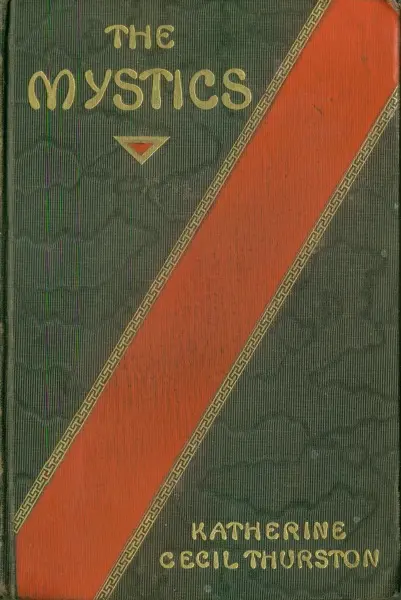
The Mystics: A Novel
Katherine Cecil Thurston
THE CLASSIC COLLECTION · 1905
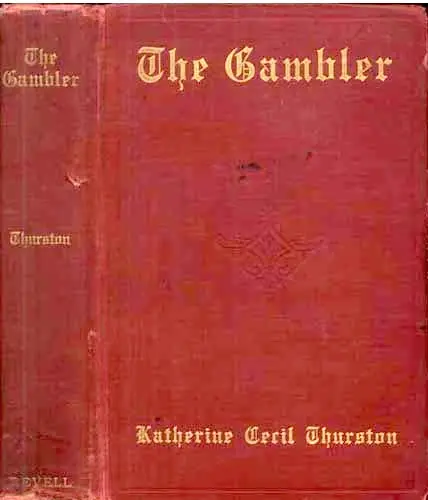
"The Gambler: A Novel" by Katherine Cecil Thurston is a work of fiction written in the early 20th century. The narrative follows James Milbanke, an English archaeologist, as he embarks on a journey to Ireland, where he is set to reconnect with an old friend, Denis Asshlin, who seems to be struggling with personal demons. As the story unfolds, themes of nostalgia, personal change, and the cultural contrasts between the English and the Irish emerge. At the start of the novel, we are introduced to Milbanke during his arrival in Ireland, where he reflects on his past and his long-standing friendship with Asshlin, who he has not seen in nearly thirty years. The journey is marked by the dreariness of a rainy landscape, evoking a sense of isolation. Once he reaches the Asshlin home, their reunion is filled with warmth but also hints at underlying tensions. Through dinner conversations, Milbanke feels a mix of nostalgia and unease about his friend’s life and his own evolving viewpoint, setting the stage for the complexities of their relationship that will develop throughout the story. As he interacts with Asshlin and his daughters, Clodagh and Nance, the unfolding drama around gambling, familial expectations, and personal struggles begins to take shape.
Introduction adapted from the source catalogue; source summaries may be automatically generated.
Free to read · English · 123,295 words · No account needed
MAKE TIME FOR A GOOD BOOK
On by default. Untick to stop anonymous reading totals. Each page counts after 10 seconds in view. How this works.
Anonymous counting is on unless you have switched it off.
"No, I'm afraid I must confess ignorance. I know disgracefully little
about the past."
Barnard, fearing a dissertation from Milbanke, interrupted with a
laugh.
"I'm afraid most of us find the present more alluring!"
He cast a swift glance at Clodagh.
But Clodagh, still annoyed with him, and with herself--still puzzled by Gore's attitude--lifted her head sharply.
"At least," she said, "we can be sure that the present is genuine."
Gore turned and looked at her.
"Are you quite sure of that, Mrs. Milbanke?" he asked quietly. "Don't you think there is trickery and deception in the manufacture of many things besides the antique?"
Her glance faltered.
"I have seen a lot of unauthentic relics," she said with a touch of
obstinacy.
"And I, a lot of unauthentic life."
He looked at her with a slight smile. The smile stung her unreasonably.
"Some people can never become connoisseurs," she retorted quickly.
Gore laughed, but without offence.
"Not of treasures, perhaps, but with experience and observation, surely any one can become a judge of men--and women."
Clodagh forced herself to smile.
"You disapprove of women?"
"Disapprove! Indeed, no!"
But here Barnard interposed with one of his suave gestures.
"He only disapproves of the modern woman, Mrs. Milbanke!"
Gore turned to him good-humouredly.
"Wrong, Barnard!" he said. "I admire the modern woman--the truly modern woman. It is the society woman--of any period--that I lose patience with."
Barnard smiled.
"The present-day woman is very proud of her complex life," he said smoothly, "her big card debts and her little intrigues."
Gore's healthy face turned a shade redder.
"I know!" he said tersely. "But to me, a woman with no higher ambition than the playing of cards winter and summer, afternoon after afternoon, is--is pitiable."
Clodagh leant forward.
"Perhaps they play cards because they have no real interests."
He looked at her quickly.
"And why have they no real interests, Mrs. Milbanke? Isn't it because they reject all simple, natural, wholesome things? Such women do not know the meaning of the word home. They do not want a home--or home life, as the women of the last generation understood it."
"Ah, there you touch bottom, my dear Gore! There you are in your depth!" Again Barnard gave one of his smooth, tactful laughs. "This young man has a great pull over us, Mrs. Milbanke, when he compares the present generation with the past."
At the suave words, Gore made a slightly embarrassed gesture, and looked instinctively towards Milbanke.
"Forgive my tirade, sir!" he said a little confusedly. "Mr. Barnard is right. I have rather a high ideal of womanhood. I am possessed of a--a very remarkable mother."
Your reading position is saved on this browser. Take it to another device with a library code. Reading pages adapt to text, rather than matching a printed edition.
Katherine Cecil Thurston
Katherine Cecil Thurston
BEHIND THE BOOK
This eBook is for the use of anyone anywhere in the United States and most other parts of the world at no cost and with almost no restrictions whatsoever. You may copy it, give it away or re-use it under the terms of the Project Gutenberg License included with this eBook or online at www.gutenberg.org. If you are not located in the United States, you will have to check the laws of the country where you are located before using this eBook. Read the source licence.
The original source file, including credits and licence, is retained by this library. Request an original-format copy at no charge. Please include the book title and Project Gutenberg identifier #33490.
KEEP YOUR CURIOSITY GOING
Coulson Kernahan

Maurice Baring
Frances Wright
Cécile Tormay

Frederic Jesup Stimson

W. H. P. (William Henry Pope) Jarvis