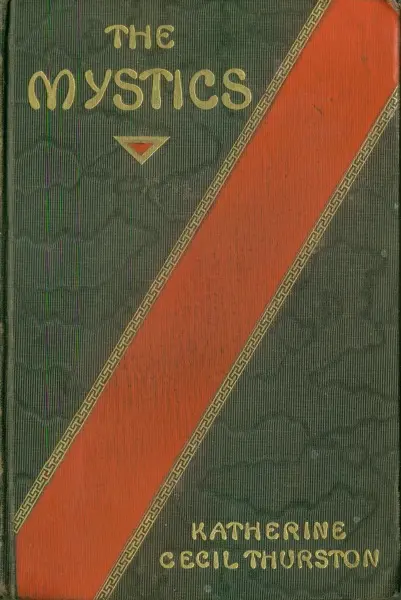
The Mystics: A Novel
Katherine Cecil Thurston
THE CLASSIC COLLECTION · 1905
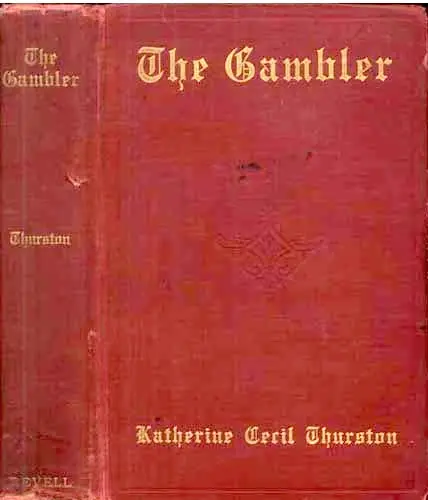
"The Gambler: A Novel" by Katherine Cecil Thurston is a work of fiction written in the early 20th century. The narrative follows James Milbanke, an English archaeologist, as he embarks on a journey to Ireland, where he is set to reconnect with an old friend, Denis Asshlin, who seems to be struggling with personal demons. As the story unfolds, themes of nostalgia, personal change, and the cultural contrasts between the English and the Irish emerge. At the start of the novel, we are introduced to Milbanke during his arrival in Ireland, where he reflects on his past and his long-standing friendship with Asshlin, who he has not seen in nearly thirty years. The journey is marked by the dreariness of a rainy landscape, evoking a sense of isolation. Once he reaches the Asshlin home, their reunion is filled with warmth but also hints at underlying tensions. Through dinner conversations, Milbanke feels a mix of nostalgia and unease about his friend’s life and his own evolving viewpoint, setting the stage for the complexities of their relationship that will develop throughout the story. As he interacts with Asshlin and his daughters, Clodagh and Nance, the unfolding drama around gambling, familial expectations, and personal struggles begins to take shape.
Introduction adapted from the source catalogue; source summaries may be automatically generated.
Free to read · English · 123,295 words · No account needed
MAKE TIME FOR A GOOD BOOK
On by default. Untick to stop anonymous reading totals. Each page counts after 10 seconds in view. How this works.
Anonymous counting is on unless you have switched it off.
"May I follow our hostess's suggestion? May I talk philosophy on the
balcony?"
She smiled. The slight strain, of which she had been conscious ever since the incident of the roulette, lifted suddenly, and her earlier sensation of elated excitement returned.
"Yes, if you like," she responded brightly. "The balcony sounds very tempting. And as for the philosophy, I can promise to listen--if I can't promise to understand."
She smiled afresh, and crossed the wide room, Deerehurst following
closely.
As she passed the group of statuary and stepped through the open window, Serracauld struck a chord or two on the piano, and an instant later, his voice--a full strong voice, intensely passionate and youthful--drifted across the salon and out into the night.
At the first note Clodagh halted, surprised and enchanted by the sound; and sinking silently into one of the balcony chairs, rested one arm on the iron railing.
The music Serracauld sang was French, and possessed much of the distinction that marks that nation's art. The song was a hymn to life--and its indispensable coadjutors, youth and love; and it went with a peculiar lilt that stirred the blood and stimulated the fancy. He sang it as it should be sung--easily and arrogantly; for, as frequently happens with those who possess voices, he could express in music thoughts, ideas, and emotions that never crossed his own selfish, somewhat narrow soul.
Clodagh, staring down into the dark waters in an attitude of wrapt attention, drank in the song to its last note; and as the final vibration died away, she looked round at Deerehurst with an expression infinitely softened and enhanced.
"How beautiful!" she said. "Oh, how beautiful!"
Deerehurst, who had seated himself beside her, leant forward and rested his own arm upon the balcony railing.
"It is not the song that is beautiful, Mrs. Milbanke," he said, "but the thoughts it has wakened in you."
Clodagh looked at him in silent question. She was still under the spell of the music, and saw nothing to resent in his cold gaze.
"You were the instrument," he went on in the same lowered voice. "The notes were not played upon the piano, but upon your brain. Your brain is a network of sensitive strings, waiting to be played on by every factor in life--music, colour, sunshine, emotion----" His tone sank.
Clodagh glanced quickly at his tall, thin figure, seated so close to
her own, and at the wax-like, inscrutable face showing through the
dusk.
"You seem to know me better than I know myself," she said uncertainly.
He watched her intently for a moment; then he leant forward, his long, pale fingers toying with the ribbon of his eyeglass.
Your reading position is saved on this browser. Take it to another device with a library code. Reading pages adapt to text, rather than matching a printed edition.
Katherine Cecil Thurston
Katherine Cecil Thurston
BEHIND THE BOOK
This eBook is for the use of anyone anywhere in the United States and most other parts of the world at no cost and with almost no restrictions whatsoever. You may copy it, give it away or re-use it under the terms of the Project Gutenberg License included with this eBook or online at www.gutenberg.org. If you are not located in the United States, you will have to check the laws of the country where you are located before using this eBook. Read the source licence.
The original source file, including credits and licence, is retained by this library. Request an original-format copy at no charge. Please include the book title and Project Gutenberg identifier #33490.
KEEP YOUR CURIOSITY GOING
Coulson Kernahan

Maurice Baring
Frances Wright
Cécile Tormay

Frederic Jesup Stimson

W. H. P. (William Henry Pope) Jarvis