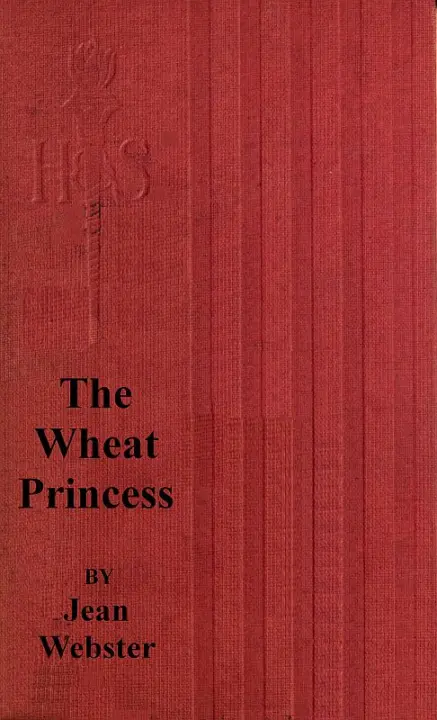
The Wheat Princess
Jean Webster
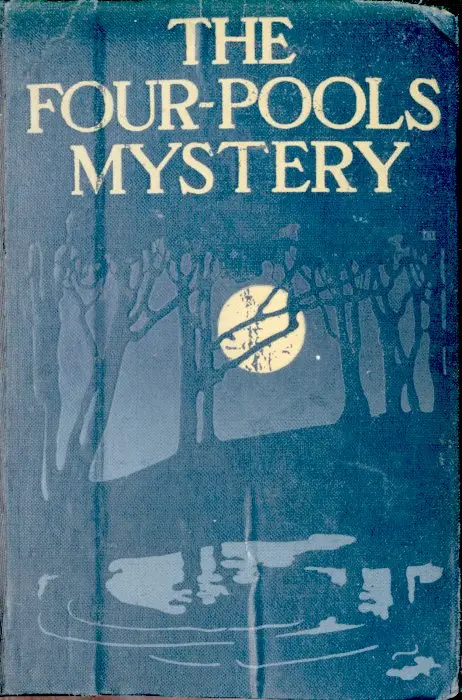
THE CLASSIC COLLECTION · 1907
"The Four-Pools Mystery" by Jean Webster is a novel written in the early 20th century. The story revolves around a young lawyer named Arnold Crosby, who becomes embroiled in the peculiar happenings at the Four-Pools Plantation, including the appearance of a ghost and a series of mysterious thefts. Central to the narrative is Radnor Gaylord, the plantation owner's son, whose reckless behavior and connections to the escalating supernatural occurrences draw Arnold into a web of family secrets and intrigue. The opening of the novel introduces Arnold Crosby, who is recently exhausted from a challenging forgery case when he decides to visit the Four-Pools Plantation to recuperate. Upon arriving, he is introduced to Radnor Gaylord, who despite his charm, has a somewhat checkered reputation in the community. As Arnold seeks to reconnect with his Southern roots, he is quickly swept into the plantation's mysteries involving ghostly apparitions and the theft of valuable bonds from a safe. With hints of familial tensions and the potential for scandal looming over Radnor, the stage is set for a blend of humor, mystery, and the exploration of personal integrity amid the backdrop of Southern culture.
Introduction adapted from the source catalogue; source summaries may be automatically generated.
Free to read · English · 58,641 words · No account needed
MAKE TIME FOR A GOOD BOOK
On by default. Untick to stop anonymous reading totals. Each page counts after 10 seconds in view. How this works.
Anonymous counting is on unless you have switched it off.
"One moment!" I said. "I should like to ask Mr. Clancy some questions."
The young man was turned over to me, plainly against his wishes.
"What proof have you, Mr. Clancy, that the bonds were not stolen while Mr. Gaylord was out of the house?"
"Well, my investigations led me to the belief that he stole them, and that being the case, it must have been done before he left the house."
"I see! And your investigations concerned themselves largely with a letter which you filched from Mr. Gaylord's coat pocket in the night, did they not?"
"Not entirely--the letter merely struck me as corroborative evidence, though I have since learned--"
"Mr. Clancy," I interrupted sternly, "did you not tell me at the time, that that letter was absolute proof of his guilt--yes or no?"
"I may have said so but--"
"Mr. Clancy, will you kindly repeat what was in that letter."
"It referred to some bonds; I don't know that I can recall the exact
words."
"Then I must request you to read it," I returned, picking it out from a bundle of papers on the table and handing it to him. "I am sorry to take up so much time with a matter that has nothing to do with the murder," I added to the coroner, "but you yourself brought up the subject and it is only fair to hear the whole story."
He nodded permission, and ordered Clancy to read the letter. The detective did so amidst an astonished hush. It struck everyone as a proof of guilt, and no one could understand why I had forced it to the front.
"Now Mr. Clancy," said I, "please tell the jury Mr. Gaylord's
explanation of this letter."
Clancy with a somewhat sheepish air gave the gist of what Radnor had
said.
"Did you believe that story when you first heard it?" I asked.
"No," said he, "I did not, because--"
"Very well! But you later went to the office of Jacoby, Haight & Co., and looked over the files of their correspondence with Radnor Gaylord and verified his statement in every particular, did you not?"
"Yes, I did, but still--"
"That is all I wish to ask, Mr. Clancy. I think the reason is evident," I added, turning to the jury, "why I was willing to pay in order to get rid of him. Nobody's character, nobody's correspondence, was safe while he was in the house."
Your reading position is saved on this browser. Take it to another device with a library code. Reading pages adapt to text, rather than matching a printed edition.
BEHIND THE BOOK
This eBook is for the use of anyone anywhere in the United States and most other parts of the world at no cost and with almost no restrictions whatsoever. You may copy it, give it away or re-use it under the terms of the Project Gutenberg License included with this eBook or online at www.gutenberg.org. If you are not located in the United States, you will have to check the laws of the country where you are located before using this eBook. Read the source licence.
The original source file, including credits and licence, is retained by this library. Request an original-format copy at no charge. Please include the book title and Project Gutenberg identifier #21264.
KEEP YOUR CURIOSITY GOING
Coulson Kernahan

Maurice Baring
Frances Wright
Cécile Tormay

Frederic Jesup Stimson

W. H. P. (William Henry Pope) Jarvis