THE CLASSIC COLLECTION✦An outlaw’s diary: the CommuneCLASSIC FREE BOOKS
An outlaw’s diary: the Commune
Cécile Tormay
THE CLASSIC COLLECTION · 1922
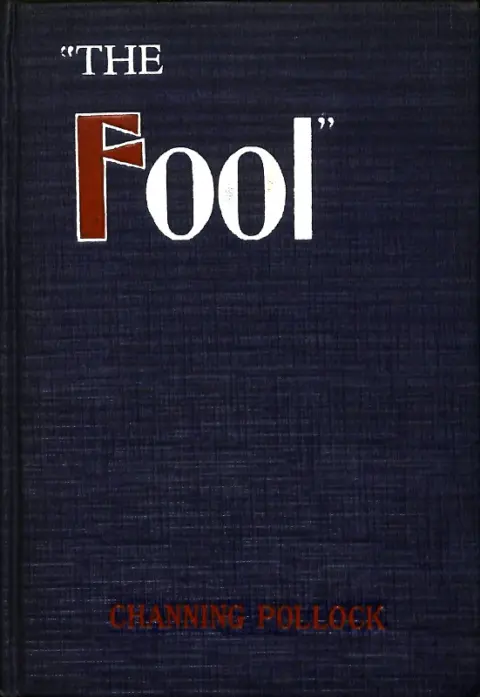
"The Fool: A Play in Four Acts" by Channing Pollock is a dramatic play written in the early 20th century. The narrative unfolds in the backdrop of post-World War I America, focusing on themes of social responsibility, moral dilemmas, and class struggles through its central character, Daniel Gilchrist, an assistant rector grappling with the expectations of his affluent congregation while confronting societal issues like labor strikes and poverty. The beginning of the play introduces us to several characters gathered in the Church of the Nativity on Christmas Eve, 1918. Mrs. Gilliam, her flapper daughter Dilly, and Mrs. Thornbury prepare for a church Christmas event while discussing superficial concerns about appearances and selfless philanthropy. As they interact, we are introduced to Gilchrist, who is depicted as a passionate and idealistic character. Tensions arise when the conversation shifts to class inequality, highlighting Gilchrist’s struggle to balance his beliefs with the expectations of the wealthy congregants and illustrating the social dynamics of the time. The opening sets the stage for the conflict and moral questions that will unfold throughout the play, establishing a rich exploration of societal challenges and personal ethics.
Introduction adapted from the source catalogue; source summaries may be automatically generated.
Free to read · English · 24,366 words · No account needed
MAKE TIME FOR A GOOD BOOK
On by default. Untick to stop anonymous reading totals. Each page counts after 10 seconds in view. How this works.
Anonymous counting is on unless you have switched it off.
[Who has turned down angrily at mention of the name]: Not Gilchrist!
No; just we six ... and, maybe, one or two more of our directors.
All right!
I wanna know what we gonna do--tonight!
We're going to get together. You fellows have got the wrong idea. We're not tyrants, or monsters. We're Christians, and we want to act like Christians. Only ... we've got to live, too. We've got to have the things we're used to, just as you have. But I think I can promise, if the strike's called off, you men will be kept, and put back just where you were.... Ring the bell, Jerry.
[JERRY does so. A pause.]
I guess you don't want me any more.
No.
Thanks.
[Exits L. A pause.]
[To HENNIG. Making conversation]: You live in Black River?
Yes.
Married?
You betcha! Prettiest girl in West Virginia! We only been married a year. I got her in the five-and-ten-cent store.... I mean, that's where she was working. She's at her sister's now ... up to Pittsburg. Left the day before I was elected to come here. [Proudly] I sent her a telegram!
You don't say so! [To JERRY] Anything the matter with that
bell?
The man's busy, I suppose. I'll show them out.
If you will.... Well, good-night!
[He shakes hands with HENNIG, and with STEDTMAN, but, when he comes to UMANSKI, that giant is immobile. His slow mind has been thinking out the earlier declaration.]
What about this here twelve-hour day?
We'll consider that after the strike's called off.
And the twenty-four-hour shift?
We'll consider that, too. Meanwhile--you go back just where you were!
Then what good we gain by strike?
Nothing's ever gained by quarreling. You'll find that out some day.
Some day something be gain! Some day we gonna win! This--he don't go
on always! You see!
[Insolently]: Are you ready?
[As HENNIG slips out R., UMANSKI looks at JERRY with
contempt.] You see! [Exits R.]
[Significantly,--in a loud whisper]: We'll be back later.
[He exits R.]
Swine!
[He exits R. GOODKIND, obviously worried by the interview, goes to the table, and rights the topmost paper. Looks at it. Sits, and examines other papers. The SERVANT enters R.]
Did you ring, sir?
Half an hour ago.
[Indicating a box]: I was signing for this. [GOODKIND, writing, doesn't look up.] Can I do anything for you, sir?
Yes.... Get me a drink.
Your reading position is saved on this browser. Take it to another device with a library code. Reading pages adapt to text, rather than matching a printed edition.
BEHIND THE BOOK
This eBook is for the use of anyone anywhere in the United States and most other parts of the world at no cost and with almost no restrictions whatsoever. You may copy it, give it away or re-use it under the terms of the Project Gutenberg License included with this eBook or online at www.gutenberg.org. If you are not located in the United States, you will have to check the laws of the country where you are located before using this eBook. Read the source licence.
The original source file, including credits and licence, is retained by this library. Request an original-format copy at no charge. Please include the book title and Project Gutenberg identifier #49181.
KEEP YOUR CURIOSITY GOING
Cécile Tormay

Moritz Busch
John L. Ransom
Frances Wright
Cécile Tormay

Mabel Potter Daggett