THE CLASSIC COLLECTION✦An American tragedy, v. 2CLASSIC FREE BOOKS
An American tragedy, v. 2
Theodore Dreiser
THE CLASSIC COLLECTION · 1912
"The Financier: A Novel" by Theodore Dreiser is a novel published in 1912. Based on real-life streetcar tycoon Charles Yerkes, it follows Frank Cowperwood's rise in Philadelphia's financial world. Starting with a profitable soap deal as a young man, Cowperwood climbs to wealth through investment and manipulation of municipal funds. When the Great Chicago Fire triggers a stock market crash in 1871, his corrupt dealings are exposed. As politicians use him as a scapegoat, Cowperwood faces bankruptcy and imprisonment while conducting an affair with his business partner's daughter.
Introduction adapted from the source catalogue; source summaries may be automatically generated.
Free to read · English · 198,296 words · No account needed
MAKE TIME FOR A GOOD BOOK
On by default. Untick to stop anonymous reading totals. Each page counts after 10 seconds in view. How this works.
Anonymous counting is on unless you have switched it off.
“You know,” he said to Steger, “I feel sorry for George. He’s such a fool. Still I did all I could.”
Cowperwood also watched Mrs. Stener out of the tail of his eye—an undersized, peaked, and sallow little woman, whose clothes fitted her abominably. It was just like Stener to marry a woman like that, he thought. The scrubby matches of the socially unelect or unfit always interested, though they did not always amuse, him. Mrs. Stener had no affection for Cowperwood, of course, looking on him, as she did, as the unscrupulous cause of her husband’s downfall. They were now quite poor again, about to move from their big house into cheaper quarters; and this was not pleasing for her to contemplate.
Judge Payderson came in after a time, accompanied by his undersized but stout court attendant, who looked more like a pouter-pigeon than a human being; and as they came, Bailiff Sparkheaver rapped on the judge’s desk, beside which he had been slumbering, and mumbled, “Please rise!” The audience arose, as is the rule of all courts. Judge Payderson stirred among a number of briefs that were lying on his desk, and asked, briskly, “What’s the first case, Mr. Protus?” He was speaking to his clerk.
During the long and tedious arrangement of the day’s docket and while the various minor motions of lawyers were being considered, this courtroom scene still retained interest for Cowperwood. He was so eager to win, so incensed at the outcome of untoward events which had brought him here. He was always intensely irritated, though he did not show it, by the whole process of footing delays and queries and quibbles, by which legally the affairs of men were too often hampered. Law, if you had asked him, and he had accurately expressed himself, was a mist formed out of the moods and the mistakes of men, which befogged the sea of life and prevented plain sailing for the little commercial and social barques of men; it was a miasma of misinterpretation where the ills of life festered, and also a place where the accidentally wounded were ground between the upper and the nether millstones of force or chance; it was a strange, weird, interesting, and yet futile battle of wits where the ignorant and the incompetent and the shrewd and the angry and the weak were made pawns and shuttlecocks for men—lawyers, who were playing upon their moods, their vanities, their desires, and their necessities. It was an unholy and unsatisfactory disrupting and delaying spectacle, a painful commentary on the frailties of life, and men, a trick, a snare, a pit and gin. In the hands of the strong, like himself when he was at his best, the law was a sword and a shield, a trap to place before the feet of the unwary; a pit to dig in the path of those who might pursue. It was anything you might choose to make of it—a door to illegal opportunity; a cloud of dust to be cast in the eyes of those who might choose, and rightfully, to see; a veil to be dropped arbitrarily between truth and its execution, justice and its judgment, crime and punishment. Lawyers in the main were intellectual mercenaries to be bought and sold in any cause. It amused him to hear the ethical and emotional platitudes of lawyers, to see how readily they would lie, steal, prevaricate, misrepresent in almost any cause and for any purpose. Great lawyers were merely great unscrupulous subtleties, like himself, sitting back in dark, close-woven lairs like spiders and awaiting the approach of unwary human flies. Life was at best a dark, inhuman, unkind, unsympathetic struggle built of cruelties and the law, and its lawyers were the most despicable representatives of the whole unsatisfactory mess. Still he used law as he would use any other trap or weapon to rid him of a human ill; and as for lawyers, he picked them up as he would any club or knife wherewith to defend himself. He had no particular respect for any of them—not even Harper Steger, though he liked him. They were tools to be used—knives, keys, clubs, anything you will; but nothing more. When they were through they were paid and dropped—put aside and forgotten. As for judges, they were merely incompetent lawyers, at a rule, who were shelved by some fortunate turn of chance, and who would not, in all likelihood, be as efficient as the lawyers who pleaded before them if they were put in the same position. He had no respect for judges—he knew too much about them. He knew how often they were sycophants, political climbers, political hacks, tools, time-servers, judicial door-mats lying before the financially and politically great and powerful who used them as such. Judges were fools, as were most other people in this dusty, shifty world. Pah! His inscrutable eyes took them all in and gave no sign. His only safety lay, he thought, in the magnificent subtley of his own brain, and nowhere else. You could not convince Cowperwood of any great or inherent virtue in this mortal scheme of things. He knew too much; he knew himself.
Your reading position is saved on this browser. Take it to another device with a library code. Reading pages adapt to text, rather than matching a printed edition.
Theodore Dreiser
Theodore Dreiser
Theodore Dreiser
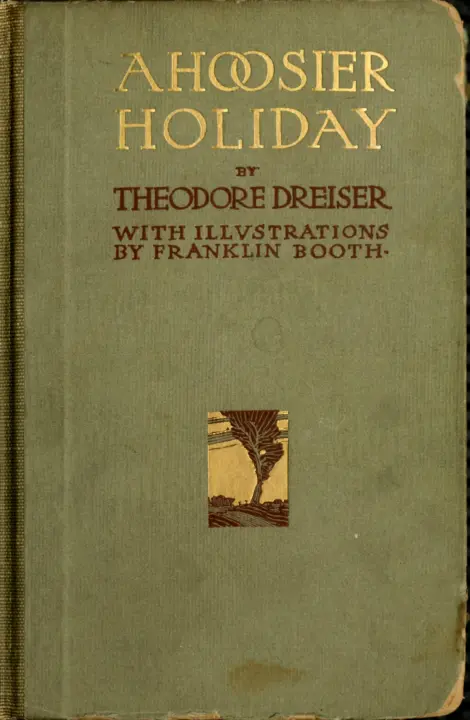
Theodore Dreiser
BEHIND THE BOOK
This eBook is for the use of anyone anywhere in the United States and most other parts of the world at no cost and with almost no restrictions whatsoever. You may copy it, give it away or re-use it under the terms of the Project Gutenberg License included with this eBook or online at www.gutenberg.org. If you are not located in the United States, you will have to check the laws of the country where you are located before using this eBook. Read the source licence.
The original source file, including credits and licence, is retained by this library. Request an original-format copy at no charge. Please include the book title and Project Gutenberg identifier #1840.
KEEP YOUR CURIOSITY GOING
Coulson Kernahan

Maurice Baring
Frances Wright
Cécile Tormay

Frederic Jesup Stimson

W. H. P. (William Henry Pope) Jarvis