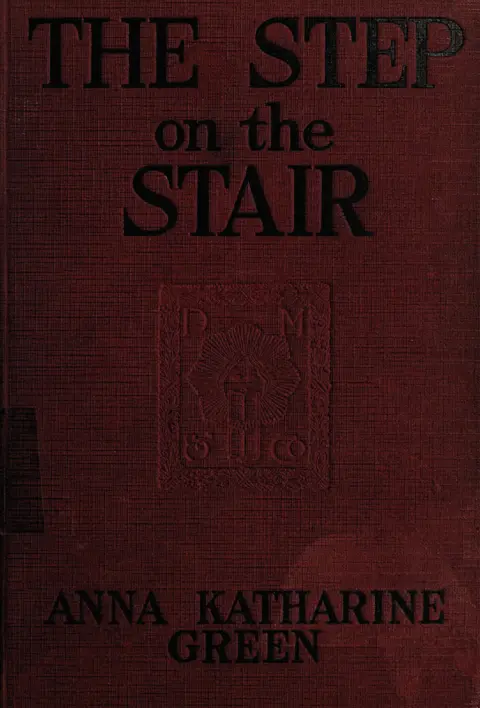
The step on the stair
Anna Katharine Green
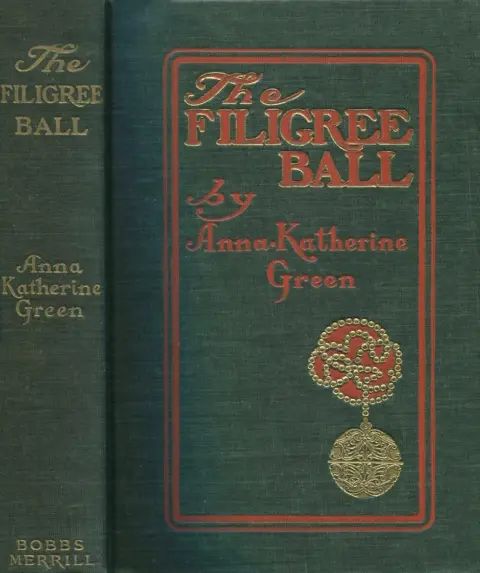
THE CLASSIC COLLECTION · 1903
"The Filigree Ball" by Anna Katharine Green is a detective novel written during the late 19th century. The book centers around a complex murder mystery involving the Moore house, a historic dwelling with a dark reputation, and its inhabitants, particularly the tragic figure of Veronica Moore, who has recently been married. The story promises to unravel themes of family secrets, societal pressures, and perhaps a hint of supernatural intrigue as it explores the events leading to a shocking death. The opening of the novel introduces the main character, a detective who aspires to prove himself, as he becomes involved in the Jeffrey-Moore affair after hearing about strange occurrences in the supposedly empty Moore house. The narrative quickly establishes an eerie atmosphere as he encounters Uncle David Moore, a cantankerous old man with a strong connection to the house and its troubled history. Tension builds around the tragic wedding of Veronica, during which a guest dies mysteriously, causing unease among the attendees. By the end of the opening portion, the detective discovers a young woman, identified as Veronica, lying dead in the forbidden room of the house, igniting suspicions of murder masked as suicide. The intricate plot set forth in these initial chapters hints at deep emotional and psychological conflicts as the detective seeks the truth against a backdrop of a society gripped by rumors and fear.
Introduction adapted from the source catalogue; source summaries may be automatically generated.
Free to read · English · 90,837 words · No account needed
MAKE TIME FOR A GOOD BOOK
On by default. Untick to stop anonymous reading totals. Each page counts after 10 seconds in view. How this works.
Anonymous counting is on unless you have switched it off.
The coroner, taken aback by this direct attack from one who had hitherto borne all his innuendoes with apparent patience, lost countenance for a moment, but, remembering that in his official capacity he was more than a match for the elegant gentleman, who under other circumstances would have found it only too easy to put him to the blush, he observed with dignity:
“Mr. Jeffrey, you are on oath. We certainly have no reason for not
believing you.”
Mr. Jeffrey bowed. He was probably sorry for his momentary loss of self-control, and gravely, but with eyes bent downward, answered with the abrupt phrase:
“Well, then, I will say no.”
The coroner shifted his ground.
“Will you make the same reply when I ask if the like forbearance was shown toward your wife’s name in the conversation you had with Miss Tuttle immediately afterward?”
A halt in the eagerly looked-for reply; a hesitation, momentary indeed, but pregnant with nameless suggestions, caused his answer, when it did come, to lose some of the emphasis he manifestly wished to put into it.
“Miss Tuttle was Mrs. Jeffrey’s half-sister. The bond between them was strong. Would she—would I—be apt to speak of my young wife with bitterness?”
“That is not an answer to my question, Mr. Jeffrey. I must request a
more positive reply.”
Miss Tuttle made a move. The strain on all present was so great we could but notice it. He noticed it too, for his brows came together with a quick frown, as he emphatically replied:
“There were no recriminations uttered. Mrs. Jeffrey had displeased me and I said so, but I did not forget that I was speaking of my wife and to her sister.”
As this was in the highest degree non-committal, the coroner could be
excused for persisting.
“The conversation, then, was about your wife?”
“It was.”
“In criticism of her conduct?”
“Yes.”
“At the ambassador’s ball?”
“Yes.”
Mr. Jeffrey was a poor hand at lying. That last “yes” came with great
effort.
The coroner waited, possibly for the echo of this last “yes” to cease; then he remarked with a coldness which lifted at once the veil from his hitherto well disguised antagonism to this witness.
“If you will recount to us anything which your wife said or did on that evening which, in your mind, was worthy of all this coil, it might help us to understand the situation.”
But the witness made no attempt to do so, and while many of us were ready to pardon him this show of delicacy, others felt that under the circumstances it would have been better had he been more open.
Your reading position is saved on this browser. Take it to another device with a library code. Reading pages adapt to text, rather than matching a printed edition.
Anna Katharine Green

Anna Katharine Green
Anna Katharine Green
Anna Katharine Green
BEHIND THE BOOK
This eBook is for the use of anyone anywhere in the United States and most other parts of the world at no cost and with almost no restrictions whatsoever. You may copy it, give it away or re-use it under the terms of the Project Gutenberg License included with this eBook or online at www.gutenberg.org. If you are not located in the United States, you will have to check the laws of the country where you are located before using this eBook. Read the source licence.
The original source file, including credits and licence, is retained by this library. Request an original-format copy at no charge. Please include the book title and Project Gutenberg identifier #2371.
KEEP YOUR CURIOSITY GOING
Coulson Kernahan

Maurice Baring
Frances Wright
Cécile Tormay

Frederic Jesup Stimson

W. H. P. (William Henry Pope) Jarvis