THE CLASSIC COLLECTION✦An outlaw’s diary: the CommuneCLASSIC FREE BOOKS
An outlaw’s diary: the Commune
Cécile Tormay
THE CLASSIC COLLECTION · 1921
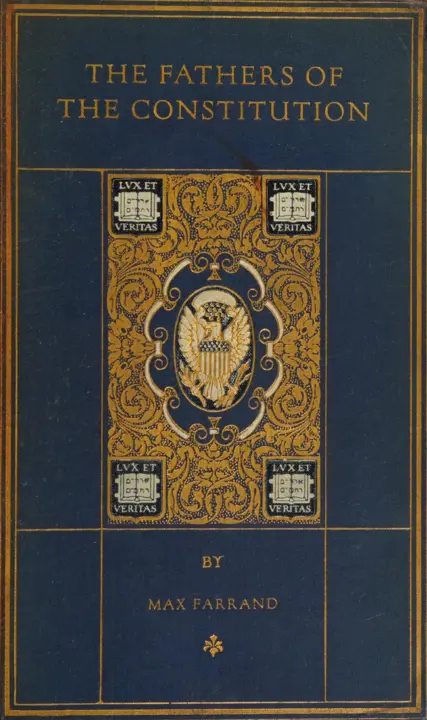
"The Fathers of the Constitution: A Chronicle of the Establishment of the Union" by Max Farrand is a historical account likely written in the early 20th century. The book covers the critical events surrounding the formation of the United States government, focusing on the debates, compromises, and decisions made by the Founding Fathers as they worked to establish a functioning union after gaining independence from Britain. At the start of the book, the author sets the stage by discussing the status of the United States at the conclusion of the Revolution. He explains how, despite the formal recognition of independence from Great Britain, the new nation struggled with issues of legitimacy and respect from other countries. Key figures, including Benjamin Franklin, John Adams, and John Jay, are introduced as influential commissioners involved in negotiating the Treaty of Paris, emphasizing their differing personalities and approaches. The narrative illustrates the challenges faced in achieving international recognition and establishing a cohesive governmental framework during the subsequent years of uncertainty and disunity, highlighting the precarious situation that necessitated the eventual crafting of the Constitution.
Introduction adapted from the source catalogue; source summaries may be automatically generated.
Free to read · English · 52,498 words · No account needed
MAKE TIME FOR A GOOD BOOK
On by default. Untick to stop anonymous reading totals. Each page counts after 10 seconds in view. How this works.
Anonymous counting is on unless you have switched it off.
INDEX A Adams, John, on American Peace Commission, 9 et seq.; personal characteristics, 10; negotiates commerical treaty with the Netherlands, 11; on fisheries question, 13-14; on settlement of commercial indebtedness, 14-15; on granting compensation to Loyalists, 20; complains of trade restriction for New England, 26. Adams, Samuel, and the Constitution, 151, 152. Albany Congress (1754), 49, 50. Annapolis Trade Convention (1786), 100-106. Anti-Federalist party, 147. Articles of Confederation, adoption (1777), 49-50; ratification (1781), 50, 57-59; based on Franklin's plan of Union, 51-52; provisions, 52-54, 67-68, 86, 100; questions of land ownership delay ratification, 56-57, 58; financial power of Congress under, 86; failure of Commercial amendment of 1784, 99; relation of Constitution, 125, 131, 144; defects corrected in Constitution, 142; attempt at revision, 144-145; text, 175-189. Assenisipia, 69. B Bancroft, George, History of the Formation of the Constitution, cited, 103 (note). Biddle, Charles, Autobiography, on the Constitution, 141. Bowdoin, James, Governor of Massachusetts, and Shays' Rebellion, 94, 95. Bryce, Lord, cited, 13 (note). C Cambridge (Mass.), Shays' Rebellion at, 94. Canada, Loyalists go to, 19; Articles of Confederation on admitting, 67. Channing, Edward, History of the United States, cited, 21 (note), 61 (note). Cherronesus, 69. Combe, George, Tour of the United States, quoted, 45. Commerce, before Revolution, 24; conditions after Revolution, 24-27; commercial treaties, 26; development of trade with Far East, 28; phases of United States foreign trade, 28-29; domestic trade, 29-30; policy of reprisal, 97-99. Committees of Correspondence, 49. Confederation, the, 35 et seq., 108; see also Articles of Confederation. Congress, Continental, advises States to adopt governments, 38; prints constitutions, 41; Declaration of Independence, 49, 63, 143-144, 167-174; Articles of Confederation, 49-50, 51, see also Articles of Confederation; Franklin's plan of union, 50-51; composition, 85; financial problems, 85-86. Congress, Federal, 52-53; powers and duties, 53-54; and Northwest Territory, 62; national system of coinage, 63-64; Land Ordinance (1785), 64-66, 71; Jefferson's Ordinance of 1784, 69-71, 75; Ordinance of 1787, 72-80, 190-200; inefficiency, 81-84, 127; Revenue Amendment, 87; financial crisis, 87-88; commercial amendment of 1784, 98-99; calls Federal Convention, 106; reception of Constitution, 145-146; votes that presidential electors be chosen (1788), 63. Congress, United States, Constitutional powers and limitations, 127-129, 130, 131, 136; objection to excessive power of, 161; revenue act (1789), 159. Connecticut, State government, 44; ratification of Constitution, 149-150. Constitution, development of, 108 et seq., 125 et seq.; great compromise of, 121-123, 127; transmitted to Congress, 145-146; contest over ratification, 146 et seq.; framed by propertied interests, 162-163; text, 201-218; bibliography, 221-222. Cook, Captain James, 28. Cornwallis, General Edward, surrender at Yorktown (1781), 5. Crevècœur, letter to Jefferson, 165. Cutler, Manasseh, 73-74. D Day, Clive, Encyclopedia of American Government, cited, 26 (note). Declaration of Independence, adopted, 49; Jefferson drafts, 63; charges against the King, 143-144; text, 167-174. Delaware, and western land policy, 57; Annapolis Trade Convention, 100; ratification of Constitution, 149. Dickerson, Senator, of New Jersey, quoted, 78. Dickerson, John, chairman of committee to prepare Articles of Confederation, 49, 51, 114; against centralized government, 114; District of Columbia, fear of a fortified stronghold, 161. Duer, Colonel William, 74. Dunn, J. P., Jr., Indiana: A Redemption from Slavery, quoted, 71. Dunning, W. A., The British Empire and the United States, cited, 13 (note). E Elliot's Debates on the Federal Constitution, cited, 160 (note). Ellsworth, Oliver, delegate to the Federal Convention, 115, 124; on slavery, 130; report on Rhode Island's ratification of the Constitution, 159. England, see Great Britain. Executive, see president. F Federal Convention, 106-107, 108 et seq.; Records, cited, 30 (note). Federalist, The, 157. Federalist party, 147. Finance, question of settlement of debts, 14-15, 147-148; conditions of currency, 31-32; national system of coinage, 63-64; Revenue Amendment, 87; financial crisis, 87-88; revenue act (1789), 159. Fish, C. R., American Diplomacy, quoted, 27. Fisheries, 13-14, 25. Fiske, John, The Critical Period of American History, quoted, 81. France, attitude toward United States, 4-5; relationship of United States with, 6-8; treaty with United States (1778), 7; excludes United States shipping, 26-27. Franklin, Benjamin, authorized to negotiate consular convention with France, 5; on Peace Commission, 8-9, 11-12, 21; personal characteristics, 9; on settlement of debts, 14; Albany plan, 50; presents plan of Union to Continental Congress (1775), 50-52; in Federal Convention, 113, 120; on the new republic, 134-135; personal charge against, 161; bibliography, 222. French and Indian War, effect on settlement, 56. G Georgia, ratification of Constitution, 149. Germany, American missionary societies, 3. Gerry, Elbridge, 115, 132, 135. Gorham, Nathaniel, 113-114, 124. Grayson, William, of Virginia, 64; quoted, 76-77. Great Britain, attitude toward former colonies, 3; American missionary societies, 3; admits independence of colonies, 6; France and, 7; Spain and, 7; and United States boundary lines, 12-13; and fisheries, 13-14; relation to American trade, 24-28, 97-98; compact theory of government in, 39; military posts retained by, 84-85. Grinsby, H. B., quoted, 15-16. H Hamilton, Alexander, at Annapolis Trade Convention, 104, 105; personal characteristics, 104-105; at Federal Convention, 115-116, 120; on Committee to revise constitution, 140; and The Federalist, 156-157; influence in New York convention, 157; bibliography, 222. Hancock, John, 150, 151-152. Henry, Prince, of Prussia, approached on subject of becoming king of United States, 134. Henry Patrick, 61, 63, 155. Hopkinson, letter to Jefferson, 161. Hutchins, Thomas, Geographer of the United States, 64. I Illinoia, 69. Illinois admitted as State (1818), 79. Independent Gazetteer, The, 156. Indian Queen Tavern, delegates to Federal Convention at, 109. Indiana admitted as a State (1816), 79. J Jameson, J. F., quoted, 59-60. Jay, John, on reciprocity of consular convention with France, 5; Peace Commissioner, 10, 11; personal characteristics, 10-11; sent to Spain, 11; on settlement of debts, 15; on compensation to Loyalists, 20; and The Federalist, 156-157. Jefferson, Ferdinand, quoted, 174. Jefferson, Thomas, on Peace Commission, 10; and land policy, 62-64; life and characteristics, 62-63; Ordinance of 1784, 67, 69-71, 75; on value of Continental scrip, 88-89; opinion of Federal Convention, 109, 116; spokesman for colonies, 143; on ratification of Constitution, 152; Hopkinson's letter to, 161; Crèvocœur's letter to, 165; bibliography, 222. Jefferson's Ordinance of 1784, see Ordinance of 1784. Jennifer, Daniel of St. Thomas, 153-154. Johnson, Dr., W. S., 115, 140. Judiciary, 131-133. K Kames, Lord, Franklin corresponds with, 6. Kent, Chancellor, 61. Kercheval, Samuel, History of the Valley of Virginia, quoted, 33-34. King, Rufus, in Federal Convention, 113, 132, 140; on three-fifths rule, 122; on form of executive, 134. Knox, Henry, 61. L Lafayette, Marquis de, Washington's letter to, 164-165. La Luzerne, Chevalier de, French minister in Philadelphia, 7. Land, question of ownership of western, 56-57; cession to United States by States, 58-59; American interest in, 59-62; Jefferson and land policy, 62-64; plan for sale under Ordinance of 1785, 65-66. Land Ordinance of 1785, 64-65, 71. Lansing, John, 116. Laurens, Henry, 10. Lecky, W. E. H., The American Revolution, cited, 32 (note). Lincoln, General Benjamin, and Shays' Rebellion, 94; letter to Washington, 152-153. Lingelbach, W. E., cited, 3 (note). Loyalists, question of compensation of, 16-17, 19-20; groups comprising, 17; treatment of, 18-19; Commissioners agree to restitution, 20. M McMaster, J. B., History of the People of the United States, quoted, 31; Acquisition of Industrial, Popular, and Political Rights of Man in America, quoted, 45. Madison, James, describes trade situation, 30; on violation of federal authority by Virginia, 100-101; personal characteristics; 103-104; and Annapolis Trade Convention, 104; quoted, 108; Washington, and, 111; for strong central government, 115; in Federal Convention, 111, 132, 140; supports Constitution, 155; and The Federalist, 156-157. Martin, Luther, 116, 132, 153. Maryland, and land claims, 57, 58; suggestion as to power of Congress over western land, 68; agreement with Virginia, 100, 104; ratification of Constitution, 153-154. Mason, George, 112, 132, 155. Massachusetts, State Constitution submitted to people for approval, 46; Shays' Rebellion (1786), 91-96; ratification of constitution, 150-153. Mayflower Compact, 140. Metropotamia, 69. Michigania, 69. Mississippi River, right of navigation declared, 14. Monroe, James, invests in western land, 61; Grayson writes to, 76. Morris, Gouverneur, invests in western land, 61; quoted, 108, 140; in Federal Convention, 112-113, 132, 140; and Washington, 113 (note). Morris, Robert, invests in western land, 61. N Navigation Acts, 24, 27. Netherlands, the, commerical treaty with, 11. New England, prosperity due to commerce, 24; effect of trade restrictions on, 26; "plantation covenants", 40; system of land grant, 65; interest in trade, 97; favors navigation acts, 129. New England Confederation (1643), 48. New Hampshire, Vermont withdraws from New York and, 68; and Federal Convention, 106-107; ratification of Constitution, 154-155, 157. New Jersey, ratification of Constitution, 149. New Jersey Plan, 118, 119, 121, 125-126. New York cession of western land claims to United States, 58, 59; Vermont, withdraws from New Hampshire and, 68; refuses to accede to Revenue Amendment, 88; ratification of Constitution, 150, 156-158. New York City chosen as seat of government, 163. Newburg on the Hudson, mutinous Revolutionary soldiers at, 81-82. Newfoundland, fisheries, 13. North Carolina, ratification of constitution, 158. Northwest Ordinance, 55 et seq.; see also Land Ordinance of 1785, Ordinance of 1784, Ordinance of 1787. Northwest Territory, settlement, 55-56; States relinquish claims, 57-59; question of land sale and government, 62 et seq. O Ohio admitted as State (1802), 78. Ohio Company of Associates, 72. Ordinance of 1784, 67, 69-71, 75. Ordinance of 1785, see Land Ordinance of 1785. Ordinance of 1787, Congress adopts, 72; stimulus from Ohio Company, 72-74; authorship, 75; provisions, 75-77; successful operation, 77-80; text, 190-200. Oregon, question of military occupation (1825), 77-78. Otto, Louis, French Chargé d'Affaires, letter to Vergennes, 100-103. P Panic of 1785, 30-31. Patterson, William, against plan of centralized government, 114. Pelisipia, 69. Pennsylvania, invited to form commercial policy with other States, 100; ratification of Constitution, 148-149. Philadelphia, enthusiasm for Constitution in, 148-149. Philadelphia Convention, see Federal Convention. Pilgrim Fathers, Mayflower Compact, 40. Pinckney, Charles, 114, 126. Pinckney, General C. C, 114. Political parties, 146-147; see also names of parties. Polypotamia, 69. Pontiac's Conspiracy, effect on settlement, 56. Potomac River, agreement between Virginia and Maryland regarding, 100. President, creation of office, 133-134; President modeled after State governorships, 134; election of, 136-137; third term, 137-138; powers, 138; Washington chosen as first, 138-139. Princeton, Congress flees to, 84. Proclamation of 1763, 56, 57. R Randolph, Edmund, 112, 124; quoted 134. Read, W. T., Life and Correspondence of George Read, quoted, 113 (note). "Revolution of 1789," 144. Revolutionary War, effect on American people, 22; economic conditions after, 23 et seq. Rhode Island, State government, 44; and question of western land ownership, 57; rejects tariff provision (1782), 86; currency trouble (1786), 89-90; attitude toward Shays' Rebellion, 95; recognition of bad trade conditions, 96; and Federal Convention, 106; ratification of Constitution, 158, 159. Roads, see Transportation. Rousseau, J. J., Contrat Social, 39-40. Russia, trade with, 28. Rutledge, John, 114, 124, 125. S St. Clair, General Arthur, Cutler endorses for governorship of New York, 74. Saratoga, 69. Scioto Associates, 74. Shays, Daniel, 94. Shays' Rebellion (1786), 91-96. Sherman, Roger, 115. Slavery, Ordinance of 1784 on, 70; Ordinance of 1787 on, 76-77; counting of slaves in enumerating population, 121-122; attitude of Federal Convention delegates toward, 130. Slave trade, compromise concerning, 129-130. South, system of land grant, 65; need for slaves, 129. South Carolina, class control in, 45; ratification of constitution, 154. Spain, France and, 7-8; and United States, 8; possessions in America, 8; Jay sent to, 11; excludes United States shipping, 26. Stamp Act Congress (1765), 49. Stark, J. H., quoted, 18-19. State governments, establishment of, 38; constitutions, 41-43; identical with colonial, 44; aristocratic tendencies, 44-45, 47-48; democratic tendencies, 46-47, 48. Steiner, B. C., Connecticut's Ratification of the State Constitution, quoted, 159-160. Suffrage, 36-37, 45. Supreme Court established, 131; see also Judiciary. Sylvania, 69. T Thieriot, Saxon Commissioner of Commerce to America, quoted, 3, 4-5. Tory party, 146. Transportation, 29-30; see also, Commerce. Treaty of Peace (1783), 1 et seq.; ratified, 21; determines boundaries, 12-13, 56; bibliography of diplomatic history connected with, 56. Trevett vs. Weeden (1786), 90-91. Tuckerman, Henry, America and her Commentators, cited, 33 (note). U United Empire Loyalists, 19. United States, named, 1; status as new republic, 1-5; population, 2-3, 35, 55-56; boundaries, 12-13, 56; economic conditions after Revolution, 23 et seq.; commercial treaties, 26; aristocratic control in, 36, 44-45; suffrage after the Revolution, 36-37; political genius in, 37-38; see also names of States, States governments. V Vergennes, Comte de, French Minister, Franklin and, 21; Otto's letter to, 101-103. Vermont, withdraws from New York and New Hampshire, 68; attitude in Shays' Rebellion, 95. Vincennes, effect of Ordinance of 1784 on, 71. Virginia, abolishes primogeniture, 46; cession of western claims to United States, 58, 59, 62; agreement with Maryland, 100; Annapolis Trade Convention, 100-101, 103-104; ratification of Constitution, 150, 155-156, 157. Virginia Resolutions, see Virginia Plan. W Warden, John, Gringsby's story of, 15-16. Warville, Brissot de, quoted, 32-33. Washington, George, invests in western land, 61; influence over disaffected soldiers, 82-83; in Federal Convention, 110-111; and Madison, 111; and Morris, 113; chosen as President, 139; Lincoln's letter to, 152-153; supports Constitution, 155; personal charge against, 161; letter to Lafayette, 164-165; inauguration, 166. Washington, name given division of Northwest Territory, 69. Webster, Daniel, on Ordinance of 1787, 79-80. West Indies, trade, with, 23, 27, 97. Whig Party, 146-147. Wilson, James, 61, 108, 112, 115, 124, 132. Wythe, George, 63, 112. Y Yates, Robert, 115.
Your reading position is saved on this browser. Take it to another device with a library code. Reading pages adapt to text, rather than matching a printed edition.
BEHIND THE BOOK
This eBook is for the use of anyone anywhere in the United States and most other parts of the world at no cost and with almost no restrictions whatsoever. You may copy it, give it away or re-use it under the terms of the Project Gutenberg License included with this eBook or online at www.gutenberg.org. If you are not located in the United States, you will have to check the laws of the country where you are located before using this eBook. Read the source licence.
The original source file, including credits and licence, is retained by this library. Request an original-format copy at no charge. Please include the book title and Project Gutenberg identifier #3032.
KEEP YOUR CURIOSITY GOING
Cécile Tormay

Moritz Busch
John L. Ransom
Frances Wright
Cécile Tormay

Mabel Potter Daggett