THE CLASSIC COLLECTION✦An outlaw’s diary: the CommuneCLASSIC FREE BOOKS
An outlaw’s diary: the Commune
Cécile Tormay
THE CLASSIC COLLECTION · 1921
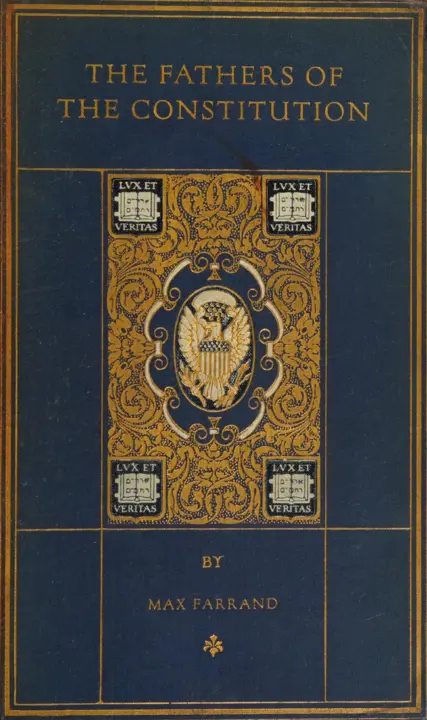
"The Fathers of the Constitution: A Chronicle of the Establishment of the Union" by Max Farrand is a historical account likely written in the early 20th century. The book covers the critical events surrounding the formation of the United States government, focusing on the debates, compromises, and decisions made by the Founding Fathers as they worked to establish a functioning union after gaining independence from Britain. At the start of the book, the author sets the stage by discussing the status of the United States at the conclusion of the Revolution. He explains how, despite the formal recognition of independence from Great Britain, the new nation struggled with issues of legitimacy and respect from other countries. Key figures, including Benjamin Franklin, John Adams, and John Jay, are introduced as influential commissioners involved in negotiating the Treaty of Paris, emphasizing their differing personalities and approaches. The narrative illustrates the challenges faced in achieving international recognition and establishing a cohesive governmental framework during the subsequent years of uncertainty and disunity, highlighting the precarious situation that necessitated the eventual crafting of the Constitution.
Introduction adapted from the source catalogue; source summaries may be automatically generated.
Free to read · English · 52,498 words · No account needed
MAKE TIME FOR A GOOD BOOK
On by default. Untick to stop anonymous reading totals. Each page counts after 10 seconds in view. How this works.
Anonymous counting is on unless you have switched it off.
9 To constitute Tribunals inferior to the supreme Court;
10 To define and punish Piracies and Felonies committed on the high Seas, and Offences against the Law of Nations;
11 To declare War, grant Letters of Marque and Reprisal, and make Rules concerning Captures on Land and Water;
12 To raise and support Armies, but no Appropriation of Money to that Use shall be for a longer Term than two Years;
13 To provide and maintain a Navy;
14 To make Rules for the Government and Regulation of the land and naval
Forces;
15 To provide for calling forth the Militia to execute the Laws of the Union, suppress Insurrections and repel Invasions;
16 To provide for organizing, arming, and disciplining, the Militia, and for governing such Part of them as may be employed in the Service of the United States, reserving to the States respectively, the Appointment of the Officers, and the Authority of training the Militia according to the discipline prescribed by Congress;
17 To exercise exclusive Legislation in all Cases whatsoever, over such District (not exceeding ten Miles square) as may, by Cession of particular States, and the Acceptance of Congress, become the Seat of the Government of the United States, and to exercise like Authority over all places purchased by the Consent of the Legislature of the State in which the Same shall be, for the Erection of Forts, Magazines, Arsenals, dock-Yards, and other needful Buildings;--And
18 To make all Laws which shall be necessary and proper for carrying into Execution the foregoing Powers, and all other Powers vested by this Constitution in the Government of the United States, or in any Department or Officer thereof.
Section. 9. 1 The Migration or Importation of such Persons as any of the States now existing shall think proper to admit, shall not be prohibited by the Congress prior to the Year one thousand eight hundred and eight, but a Tax or duty may be imposed on such Importation, not exceeding ten dollars for each Person.
2 The Privilege of the Writ of Habeas Corpus shall not be suspended, unless when in Cases of Rebellion or Invasion the public Safety may require it.
3 No Bill of Attainder or expost facto Law shall be passed.
4 No Capitation, or other direct, tax shall be laid, unless in
Proportion to the Census or Enumeration herein before directed to be
taken.
5 No Tax or Duty shall be laid on Articles exported from any State.
6 No Preference shall be given by any Regulation of Commerce or Revenue to the Ports of one State over those of another; nor shall Vessels bound to, or from, one State, be obliged to enter, clear, or pay Duties in another.
Your reading position is saved on this browser. Take it to another device with a library code. Reading pages adapt to text, rather than matching a printed edition.
BEHIND THE BOOK
This eBook is for the use of anyone anywhere in the United States and most other parts of the world at no cost and with almost no restrictions whatsoever. You may copy it, give it away or re-use it under the terms of the Project Gutenberg License included with this eBook or online at www.gutenberg.org. If you are not located in the United States, you will have to check the laws of the country where you are located before using this eBook. Read the source licence.
The original source file, including credits and licence, is retained by this library. Request an original-format copy at no charge. Please include the book title and Project Gutenberg identifier #3032.
KEEP YOUR CURIOSITY GOING
Cécile Tormay

Moritz Busch
John L. Ransom
Frances Wright
Cécile Tormay

Mabel Potter Daggett