
The Writing of News A Handbook with Chapters on Newspaper Correspondence and Copy Reading
Charles G. (Charles Griffith) Ross
THE CLASSIC COLLECTION · 1900
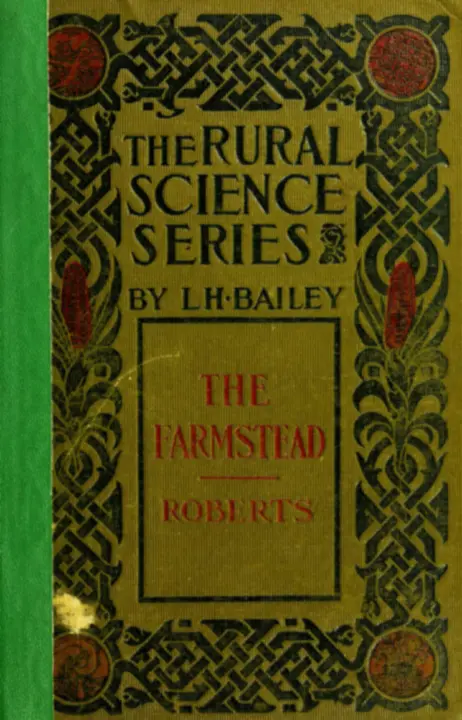
"The Farmstead: The Making of the Rural Home and the Lay-out of the Farm" by Isaac Phillips Roberts is a comprehensive examination of rural living and agricultural practices written in the early 20th century. This work combines elements of a practical guide and a philosophical reflection on farm life, emphasizing not only the physical aspects of farming but also its social and economic dimensions. The book aims to advocate for the potential benefits of country living, illustrating how it can foster strong family bonds and promote healthy living environments. The opening of the book presents a nuanced argument for rural life, contrasting it with urban living. Roberts discusses the advantages of farm life, such as the expansive natural beauty, the cultivation of physical strength, and the opportunities for children's growth through practical experiences. He emphasizes that, despite the challenges faced by farmers regarding income and market pressures, rural homes are rich environments that can nurture strong familial relationships and a sense of community. Ultimately, the author sets the stage for exploring how well-planned farms can secure a comfortable existence, balancing both economic viability and enriching home life.
Introduction adapted from the source catalogue; source summaries may be automatically generated.
Free to read · English · 68,405 words · No account needed
MAKE TIME FOR A GOOD BOOK
On by default. Untick to stop anonymous reading totals. Each page counts after 10 seconds in view. How this works.
Anonymous counting is on unless you have switched it off.
For all such things as lilacs, mock oranges, Japan quinces, and bushes that are found along the roadsides, two or three feet apart is about right. Some will die anyway. Cut them back one-half when they are planted. They will look thin and stiff for two or three years; but after that they will crowd the spaces full, lop over on the sod, and make a billow of green. Prepare the land well, plant carefully, and let the bushes alone.
We now come to the details,--the particular kinds of plants to use. One great principle will simplify the matter: the main planting should be for foliage effects. That is, think first of giving the place a heavy border-mass. Flowers are mere decorations.
Select those trees and shrubs which are the commonest, because they are cheapest, hardiest and most likely to grow. There is no farm so poor that enough plants cannot be secured, without money, for the home yard. You will find the plants in the woods, in old yards, along the fences. It is little matter if no one knows their names. What is handsomer than a tangled fence-row?
Scatter in a few trees along the fence and about the buildings, particularly if the place is large and bare. Maples, basswood, elms, ashes, buttonwood, pepperidge, oaks, beeches, birches, hickories, poplars, a few trees of pine or spruce or hemlock,--any of these are excellent. If the country is bleak, a rather heavy planting of evergreens about the border, in the place of so much shrubbery, is excellent.
For shrubs, use the common things to be found in the woods and swales, together with roots, which can be had in every old yard. Willows, osiers, witch-hazel, dogwood, wild roses, thorn apples, haws, elders, sumac, wild honeysuckles,--these and others can be found in abundance. From old yards can be secured snowballs, spireas, lilacs, forsythias, mock oranges, roses, snowberries, barberries, flowering currants, honeysuckles, and the like.
Vines can be used to excellent purpose on the outbuildings or on the porches. The common wild Virginia creeper is the most serviceable. On brick or stone houses the Boston ivy or Japanese ampelopsis may be used, unless the location is very bleak. This is not hardy in the northern parts of the country. Honeysuckles, clematis and bitter-sweet are also attractive. Bowers are always interesting to children; and actinidia and akebia (to be had at nurseries) are best for this purpose.
If a regular flower garden is wanted, place at the side or rear of the place, where a liberal piece of land can be devoted to it.
Your reading position is saved on this browser. Take it to another device with a library code. Reading pages adapt to text, rather than matching a printed edition.
BEHIND THE BOOK
This eBook is for the use of anyone anywhere in the United States and most other parts of the world at no cost and with almost no restrictions whatsoever. You may copy it, give it away or re-use it under the terms of the Project Gutenberg License included with this eBook or online at www.gutenberg.org. If you are not located in the United States, you will have to check the laws of the country where you are located before using this eBook. Read the source licence.
The original source file, including credits and licence, is retained by this library. Request an original-format copy at no charge. Please include the book title and Project Gutenberg identifier #68243.
KEEP YOUR CURIOSITY GOING
Charles G. (Charles Griffith) Ross
Hannah Webster Foster

Emily Lawless
Edwin Hamlin Carr

Charles De Lano Hine
Andrew Ure