Adrift in the Arctic ice pack
Elisha Kent Kane
THE CLASSIC COLLECTION · 1859
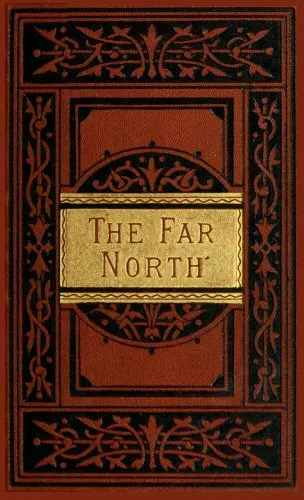
"The Far North: Exploration in the Arctic Regions" by Elisha Kent Kane is a historical account written in the mid-19th century. The narrative details Kane’s experiences as the commander of the Second Grinnell Expedition, sent to find the ill-fated Sir John Franklin and his crew who disappeared while searching for the Northwest Passage. The book explores themes of perseverance, the challenges of Arctic exploration, and the personal and collective trials faced by Kane and his crew. At the start of the account, Kane outlines the mission's origins, including Franklin's earlier expedition and the ensuing search efforts sparked by the mystery of his disappearance. Kane is appointed to lead the expedition, organizing the crew and preparations for the dangerous Arctic journey. The opening sections delve into the logistical and exploratory challenges of navigating through treacherous icy waters, establishing a base, and setting out for search missions, setting a tone of determination and camaraderie amidst the harsh realities of Arctic conditions. The narrative promises to capture not just the scientific observations but the human spirit in the face of adversity.
Introduction adapted from the source catalogue; source summaries may be automatically generated.
Free to read · English · 69,791 words · No account needed
MAKE TIME FOR A GOOD BOOK
On by default. Untick to stop anonymous reading totals. Each page counts after 10 seconds in view. How this works.
Anonymous counting is on unless you have switched it off.
"August 20.--Rest for all hands. The daily prayer is no longer, 'Lord, accept our gratitude, and bless our undertaking,' but, 'Lord, accept our gratitude, and restore us to our homes.' The ice shows no change: after a boat and foot journey around the entire south eastern curve of the bay, no signs!"
My attempt to reach Beechy Island had disclosed, as I thought it would, the impossibility of reaching the settlements of Greenland.
Everything before us was now involved in gloomy doubt. Hopeful as I had been, it was impossible not to feel that we were near the climax of the expedition.
I determined to place upon Observatory Island a large signal-beacon or cairn, and to bury under it documents which, in case of disaster to our party, would convey to any who might seek us intelligence of our proceedings and our fate. The memory of the first winter-quarters of Sir John Franklin, and the painful feelings with which, while standing by the graves of his dead, I had five years before Sought for written signs pointing to the fate of the living, me careful to avoid a similar neglect.
A conspicuous spot was selected upon a cliff looking out upon the icy desert, and on a broad face of rock the words--
were painted in letters which could be read at a distance. A pyramid of heavy stones, perched above it, was marked with the Christian symbol of the cross. It was not without a holier sentiment than that of mere utility that I placed under this the coffins of our two poor comrades. It was our beacon, and their gravestone.
[Sidenote: Memorials Placed]
Near this a hole was worked into the rock, and a paper, enclosed in glass, sealed in with melted lead. It read as follows:--
"Brig 'Advance,' August 14, 1854.
"E. K. Kane, with his comrades, Henry Brooks, John Wall Wilson, James M'Gary, I. I. Hayes, Christian Ohlsen, Amos Bonsall, Henry Goodfellow, August Sontag, William Morton, J. Carl Petersen, George Stephenson, Jefferson Temple Baker, George Riley, Peter Schubert, George Whipple, John Blake, Thomas Hickey, William Godfrey, and Hans Christian, members of the Second Grinnell Expedition in search of Sir John Franklin and the missing crews of the Erebus and Terror, were forced into this harbour while endeavouring to bore the ice to the north and east.
"They were frozen in on the 8th of September 1853, and liberated----
Your reading position is saved on this browser. Take it to another device with a library code. Reading pages adapt to text, rather than matching a printed edition.
Elisha Kent Kane
BEHIND THE BOOK
This eBook is for the use of anyone anywhere in the United States and most other parts of the world at no cost and with almost no restrictions whatsoever. You may copy it, give it away or re-use it under the terms of the Project Gutenberg License included with this eBook or online at www.gutenberg.org. If you are not located in the United States, you will have to check the laws of the country where you are located before using this eBook. Read the source licence.
The original source file, including credits and licence, is retained by this library. Request an original-format copy at no charge. Please include the book title and Project Gutenberg identifier #52631.
KEEP YOUR CURIOSITY GOING
Wilfrid Scawen Blunt
Wilfrid Scawen Blunt

E. W. (Edgar Watson) Howe
Cécile Tormay

Moritz Busch
John L. Ransom