THE CLASSIC COLLECTION✦Max CarradosCLASSIC FREE BOOKS
Max Carrados
Ernest Bramah
THE CLASSIC COLLECTION · 1924
Max Carrados is a fictional blind detective in a series of mystery stories by Ernest Bramah, first published in 1914.
George Orwell wrote that, together with those of Doyle and R. Austin Freeman, Max Carrados and The Eyes of Max Carrados "are the only detective stories since Poe that are worth re-reading." (This summary is from Wikipedia.)
Introduction adapted from the source catalogue; source summaries may be automatically generated.
Free to read · English · 95,191 words · No account needed
MAKE TIME FOR A GOOD BOOK
On by default. Untick to stop anonymous reading totals. Each page counts after 10 seconds in view. How this works.
Anonymous counting is on unless you have switched it off.
“By the by,” he remarked, after he had turned to leave, “I wonder if you happen to have a room a little--just a little--farther away from the drawing-room?”
“Certainly, sir,” replied the clerk. “Does the playing annoy you? They do keep it up rather late sometimes, don’t they?”
“No, it doesn’t annoy me,” admitted Carrados; “on the contrary, I am passionately fond of it. But it tempts me into lying awake listening when I ought to be asleep.”
The young lady laughed pleasantly. It was her business to be agreeable.
“You are considerate!” she rippled. “Well, there’s the further corridor; or, of course, a floor above----”
“The floor above would do nicely. Not on the front if possible. The sea
is rather noisy.”
“Second floor, west corridor.” She glanced at her keyboard. “No. 15?”
“Is that the side overlooking the----?”
“The High Street,” she prompted.
“I am such a poor sleeper,” he apologised.
“No. 21 on the other side, overlooking the gardens?” she suggested.
“I am sure that will do admirably,” he said, with the gratitude that is always so touching from the blind. “Thank you for taking so much trouble to pick it for me. Good-night.”
“I will have your things transferred to-morrow,” she nodded after him.
An hour later Mr Slater, generally the last man to leave the lounge, strolled across to the office for his key.
“No. 22, sir, isn’t it?” she hazarded, unhooking it without waiting for
the number.
“Good little girl,” he assented approvingly. “What a brain beneath that fascinating aureola. Eh bien, au revoir, petite! You ought to be about snuffing the candle yourself, my dear.”
The young lady laughed just as pleasantly. It was her business to be
equally agreeable to all.
Mr Carrados was sitting in an alcove of the lounge on the following morning when Parkinson brought him a letter. It proved to be the extract from The Times, written on the special typewriter. The day was bright and inviting and the room was deserted. On his master’s instruction Parkinson sat down and waited while the blind man rapidly deciphered the half-dozen sheets of typewriting.
“You have been with me to the Old Bailey several times,” remarked Carrados, as he slowly replaced the document. “Do you remember an occasion in February 1906?”
Parkinson looked unnecessarily wise, but was unable to acquiesce. Carrados gave him another guide.
“A man named Frankworth was sentenced to eighteen months’ imprisonment for an ingenious system of theft. He had also fraudulently disposed of information to trade rivals of his employer.”
“I apprehend the circumstances now, sir.”
“Can you recall the appearance of the prisoner?”
Your reading position is saved on this browser. Take it to another device with a library code. Reading pages adapt to text, rather than matching a printed edition.
Ernest Bramah
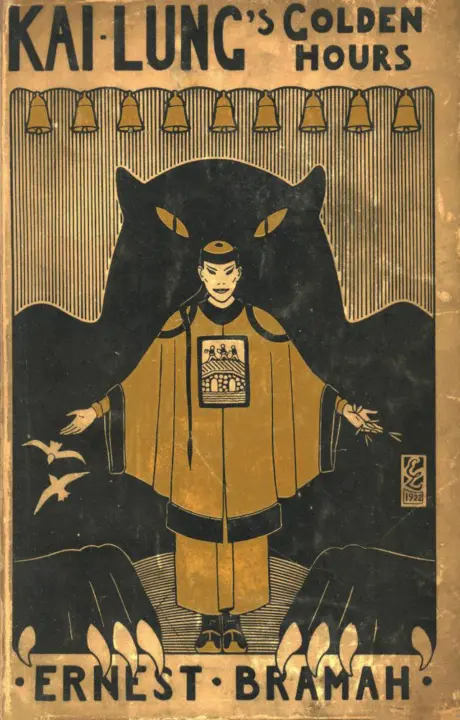
Ernest Bramah
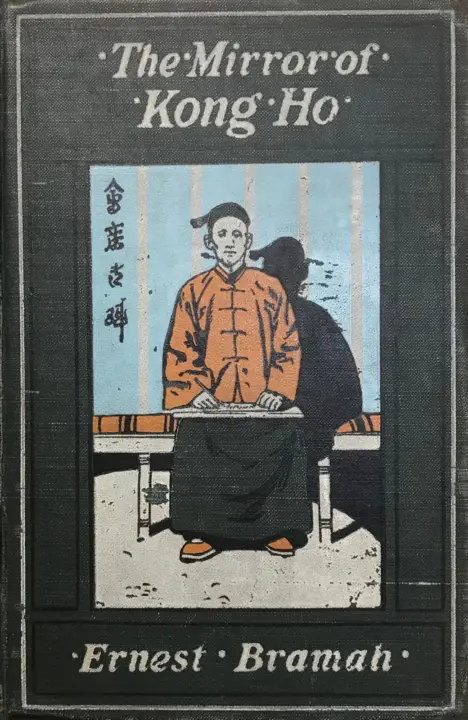
Ernest Bramah
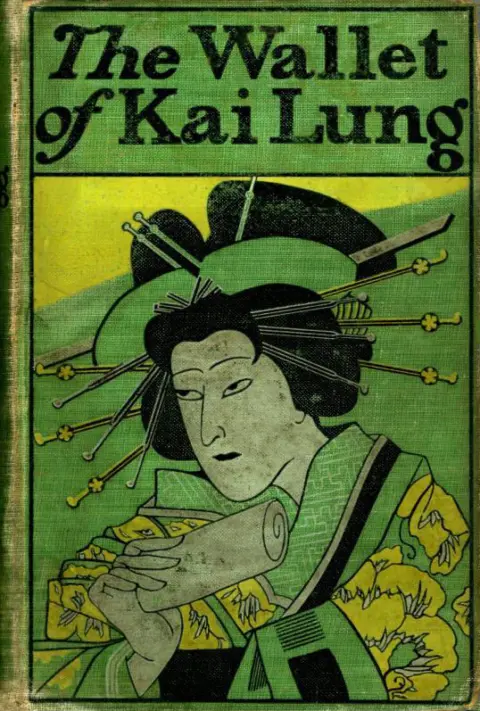
Ernest Bramah
BEHIND THE BOOK
This eBook is for the use of anyone anywhere in the United States and most other parts of the world at no cost and with almost no restrictions whatsoever. You may copy it, give it away or re-use it under the terms of the Project Gutenberg License included with this eBook or online at www.gutenberg.org. If you are not located in the United States, you will have to check the laws of the country where you are located before using this eBook. Read the source licence.
The original source file, including credits and licence, is retained by this library. Request an original-format copy at no charge. Please include the book title and Project Gutenberg identifier #77788.
KEEP YOUR CURIOSITY GOING
Coulson Kernahan

Maurice Baring
Frances Wright
Cécile Tormay

Frederic Jesup Stimson

W. H. P. (William Henry Pope) Jarvis