THE CLASSIC COLLECTION✦Max CarradosCLASSIC FREE BOOKS
Max Carrados
Ernest Bramah
THE CLASSIC COLLECTION · 1924
Max Carrados is a fictional blind detective in a series of mystery stories by Ernest Bramah, first published in 1914.
George Orwell wrote that, together with those of Doyle and R. Austin Freeman, Max Carrados and The Eyes of Max Carrados "are the only detective stories since Poe that are worth re-reading." (This summary is from Wikipedia.)
Introduction adapted from the source catalogue; source summaries may be automatically generated.
Free to read · English · 95,191 words · No account needed
MAKE TIME FOR A GOOD BOOK
On by default. Untick to stop anonymous reading totals. Each page counts after 10 seconds in view. How this works.
Anonymous counting is on unless you have switched it off.
“‘Mrs Carrados,’ I shall say--if ever there is a Mrs Carrados, Max--‘Mrs Carrados, two things are necessary for your domestic happiness. In the first place, pack up your husband’s tetradrachms in a brown-paper parcel and send them with your compliments to the British Museum. In the second, at the earliest possible opportunity, exact from him an oath that he will never touch another Greek coin as long as you both live.’”
“If ever there is a Mrs Carrados,” was the quick retort, “I shall probably be independent of the consolation of Greek coins as, also, Louis, of the distraction of criminal investigation. In the meantime, what are you going to tell me about this case?”
Mr Carlyle at once became alert. He would have become absolutely professional had not Carrados tactfully obtruded the cigar-box. The digression, and the pleasant aroma that followed it, brought him back again to the merely human.
“It began, like a good many other cases, with an anonymous letter.” He took a slip of paper from his pocket-book and handed it to Carrados. “Here is a copy.”
“A copy!” The blind man ran his finger lightly along the lines and read aloud what he found there:
“A friend warns you that an attempt is being successfully made on behalf of another Power to obtain naval information of vital importance. You have a traitor within your gates.”
Then he crumpled up the paper and dropped it half-contemptuously into the waste-paper basket. “A copy is no use to us, Louis,” he remarked. “Indeed it is worse than useless; it is misleading.”
“That is all they had here. The original was addressed to the Admiral-Superintendent at the Kingsmouth Dockyard. This was sent up with the report. But I am assured that the other contained no clue to the writer’s identity.”
“Not even a watermark, ‘Jones, stationer, High Street, Kingsmouth’!” said Carrados dryly. “Really, Louis! Every piece of paper contains at least four palpable clues.”
“And what are they, pray?”
“A smell, a taste, an appearance and a texture. This one, in addition, bears ink, and with it all the characteristics of an individual handwriting.”
“In capitals, Max,” Mr Carlyle reminded him. “Our anonymous friend is up
to that.”
“Yes; I wonder who first started that venerable illusion.”
“Illusion?”
“Certainly an illusion. Capitals, or ‘printed handwriting’ as one sees them called, are just as idiomorphic as a cursive form.”
“But much less available for comparison. How are you going to obtain a specimen of anyone’s printed handwriting for comparison?”
Carrados reflected silently for a moment.
“I think I should ask anyone I suspected to do one for me,” he replied.
Your reading position is saved on this browser. Take it to another device with a library code. Reading pages adapt to text, rather than matching a printed edition.
Ernest Bramah
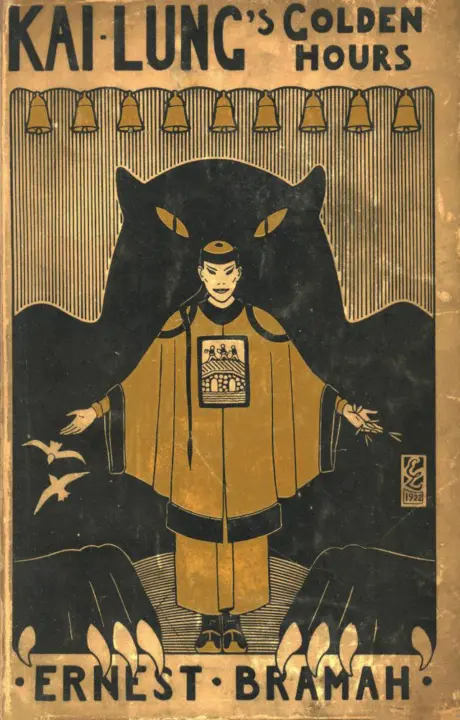
Ernest Bramah
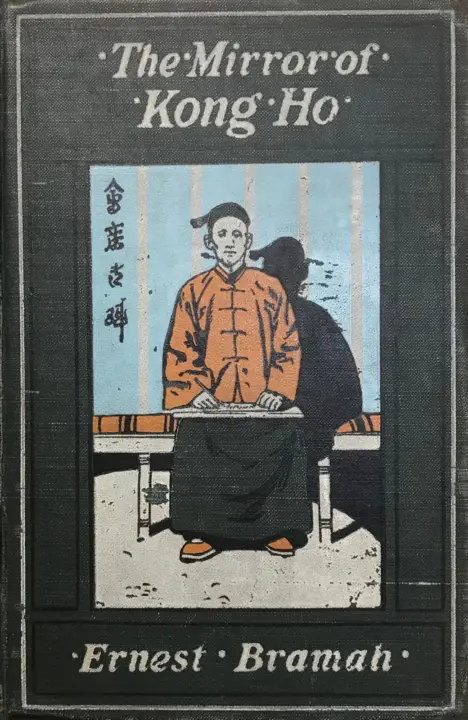
Ernest Bramah
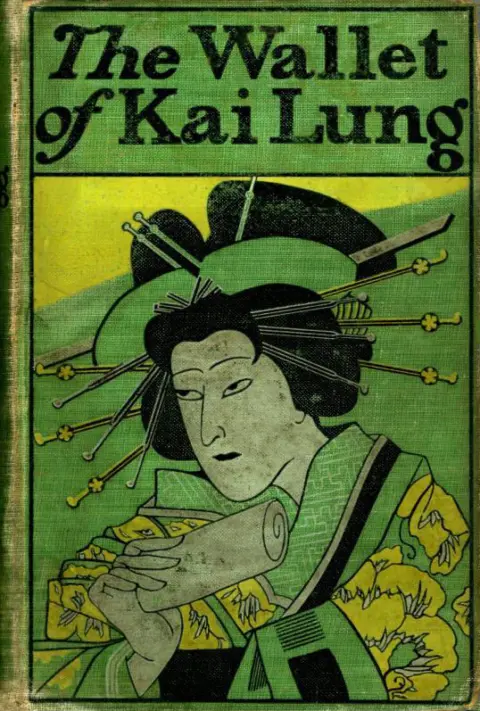
Ernest Bramah
BEHIND THE BOOK
This eBook is for the use of anyone anywhere in the United States and most other parts of the world at no cost and with almost no restrictions whatsoever. You may copy it, give it away or re-use it under the terms of the Project Gutenberg License included with this eBook or online at www.gutenberg.org. If you are not located in the United States, you will have to check the laws of the country where you are located before using this eBook. Read the source licence.
The original source file, including credits and licence, is retained by this library. Request an original-format copy at no charge. Please include the book title and Project Gutenberg identifier #77788.
KEEP YOUR CURIOSITY GOING
Coulson Kernahan

Maurice Baring
Frances Wright
Cécile Tormay

Frederic Jesup Stimson

W. H. P. (William Henry Pope) Jarvis