THE CLASSIC COLLECTION✦The blue scarabCLASSIC FREE BOOKS
The blue scarab
R. Austin (Richard Austin) Freeman
THE CLASSIC COLLECTION · 1911
"The Eye of Osiris" by R. Austin Freeman is a detective novel written in the early 20th century. The story introduces John Thorndyke, a medical jurist and enthusiast in forensic medicine, who captivates his students with intriguing real-world cases. At the center of the mystery is the disappearance of John Bellingham, an archeologist who vanished under curious circumstances, and the subsequent complications surrounding his estate due to an eccentric will that poses legal challenges for his family. At the start of the narrative, the scene is set in a medical lecture hall where Dr. Thorndyke discusses the perplexing case of John Bellingham, whose last known whereabouts were at his relative’s house, where he mysteriously disappeared. Students are drawn into the intricate legal ramifications that arise from his vanishing, compounded by the discovery of a scarab that adds another layer of mystery. As the story unfolds, readers encounter various characters, including Bellingham’s brother and daughter, who are embroiled in tense discussions about inheritance and the implications of Bellingham's will, hinting at familial tensions and the broader context of an unsolved mystery. The opening effectively engages readers with its blend of detailed character interaction, legal intrigue, and the promise of a deeper investigation into both personal and supernatural realms connected to Egyptian artifacts.
Introduction adapted from the source catalogue; source summaries may be automatically generated.
Free to read · English · 94,589 words · No account needed
MAKE TIME FOR A GOOD BOOK
On by default. Untick to stop anonymous reading totals. Each page counts after 10 seconds in view. How this works.
Anonymous counting is on unless you have switched it off.
"We will all come with you," said Thorndyke; "but you will, naturally, make the arrest in the way that seems best to you."
"It's a regular procession," grumbled the inspector; but he made no more definite objection, and we started forth on our quest.
The distance from the Temple to Lincoln's Inn is not great. In five minutes we were at the gateway in Chancery Lane, and a couple of minutes later saw us gathered round the threshold of the stately old house in New Square.
"Seems to be a light in the first-floor front," said Badger. "You'd better move away before I ring the bell."
But the precaution was unnecessary. As the inspector advanced to the bell-pull a head was thrust out of the open window immediately above the street door.
"Who are you?" inquired the owner of the head in a voice which I recognized as that of Mr. Jellicoe.
"I am Inspector Badger of the Criminal Investigation Department. I wish to see Mr. Arthur Jellicoe."
"Then look at me. I am Mr. Arthur Jellicoe."
"I hold a warrant for your arrest, Mr. Jellicoe. You are charged with the murder of Mr. John Bellingham, whose body has been discovered in the British Museum."
"By whom?"
"By Doctor Thorndyke."
"Indeed," said Mr. Jellicoe. "Is he here?"
"Yes."
"Ha! and you wish to arrest me, I presume?"
"Yes. That is what I am here for."
"Well, I will agree to surrender myself subject to certain conditions."
"I can't make any conditions, Mr. Jellicoe."
"No, I will make them, and you will accept them. Otherwise you will
not arrest me."
"It's no use for you to talk like that," said Badger. "If you don't let me in I shall have to break in. And I may as well tell you," he added mendaciously, "that the house is surrounded."
"You may accept my assurance," Mr. Jellicoe replied calmly, "that you will not arrest me if you do not accept my conditions."
"Well, what are you conditions?" demanded Badger.
"I desire to make a statement," said Mr. Jellicoe.
"You can do that, but I must caution you that anything you say may be used in evidence against you."
"Naturally. But I wish to make the statement in the presence of Doctor Thorndyke, and I desire to hear a statement from him of the method of investigation by which he discovered the whereabouts of the body. That is to say, if he is willing."
"If you mean that we should mutually enlighten one another, I am very willing indeed," said Thorndyke.
Your reading position is saved on this browser. Take it to another device with a library code. Reading pages adapt to text, rather than matching a printed edition.
R. Austin (Richard Austin) Freeman
R. Austin (Richard Austin) Freeman
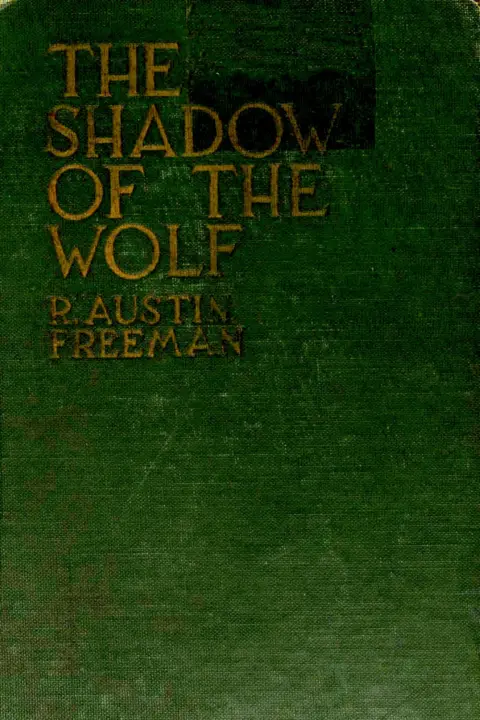
R. Austin (Richard Austin) Freeman
BEHIND THE BOOK
This eBook is for the use of anyone anywhere in the United States and most other parts of the world at no cost and with almost no restrictions whatsoever. You may copy it, give it away or re-use it under the terms of the Project Gutenberg License included with this eBook or online at www.gutenberg.org. If you are not located in the United States, you will have to check the laws of the country where you are located before using this eBook. Read the source licence.
The original source file, including credits and licence, is retained by this library. Request an original-format copy at no charge. Please include the book title and Project Gutenberg identifier #24201.
KEEP YOUR CURIOSITY GOING
Coulson Kernahan

Maurice Baring
Frances Wright
Cécile Tormay

Frederic Jesup Stimson

W. H. P. (William Henry Pope) Jarvis