THE CLASSIC COLLECTION✦The blue scarabCLASSIC FREE BOOKS
The blue scarab
R. Austin (Richard Austin) Freeman
THE CLASSIC COLLECTION · 1911
"The Eye of Osiris" by R. Austin Freeman is a detective novel written in the early 20th century. The story introduces John Thorndyke, a medical jurist and enthusiast in forensic medicine, who captivates his students with intriguing real-world cases. At the center of the mystery is the disappearance of John Bellingham, an archeologist who vanished under curious circumstances, and the subsequent complications surrounding his estate due to an eccentric will that poses legal challenges for his family. At the start of the narrative, the scene is set in a medical lecture hall where Dr. Thorndyke discusses the perplexing case of John Bellingham, whose last known whereabouts were at his relative’s house, where he mysteriously disappeared. Students are drawn into the intricate legal ramifications that arise from his vanishing, compounded by the discovery of a scarab that adds another layer of mystery. As the story unfolds, readers encounter various characters, including Bellingham’s brother and daughter, who are embroiled in tense discussions about inheritance and the implications of Bellingham's will, hinting at familial tensions and the broader context of an unsolved mystery. The opening effectively engages readers with its blend of detailed character interaction, legal intrigue, and the promise of a deeper investigation into both personal and supernatural realms connected to Egyptian artifacts.
Introduction adapted from the source catalogue; source summaries may be automatically generated.
Free to read · English · 94,589 words · No account needed
MAKE TIME FOR A GOOD BOOK
On by default. Untick to stop anonymous reading totals. Each page counts after 10 seconds in view. How this works.
Anonymous counting is on unless you have switched it off.
"No--at least, not until Mr. Hurst had gone to London."
"When you did go in, was the window fastened?"
"Yes."
"Could it have been fastened from the outside?"
"No; there is no handle outside."
"What furniture is there in the study?"
"There is a writing-table, a revolving-chair, two easy chairs, two large book-cases, and a wardrobe that Mr. Hurst keeps his overcoats and hats in."
"Does the wardrobe lock?"
"Yes."
"Was it locked when you went in?"
"I'm sure I don't know. I don't go about trying the cupboards and
drawers."
"What furniture is there in the drawing-room?"
"A cabinet, six or seven chairs, a Chesterfield sofa, a piano, a silver-table, and one or two occasional tables."
"Is the piano a grand or upright?"
"It is an upright grand."
"In what position is it placed?"
"It stands across a corner near the window."
"Is there sufficient room behind it for a man to conceal himself?"
Miss Dobbs was amused and did not dissemble. "Oh, yes," she sniggered, "there's plenty of room for a man to hide behind it."
"When you searched the drawing-room, did you look behind the piano?"
"No, I didn't," Miss Dobbs replied scornfully.
"Did you look under the sofa?"
"Certainly not!"
"What did you do then?"
"We opened the door and looked into the room. We were not looking for a cat or a monkey; we were looking for a middle-aged gentleman."
"And am I to take it that your search over the rest of the house was conducted in a similar manner?"
"Certainly. We looked into the rooms, but we did not search under the beds or in the cupboards."
"Are all the rooms in the house in use as living or sleeping rooms?"
"No; there is one room on the second floor that is used as a store and lumber-room, and one on the first floor that Mr. Hurst uses to store trunks and things that he is not using."
"Did you look in those rooms when you searched the house?"
"No."
"Have you looked in them since?"
"I have been in the lumber-room since, but not in the other. It is
always kept locked."
At this point an ominous flattening became apparent in his lordship's eyelids, but these symptoms passed when Mr. Heath sat down and indicated that he had no further questions to ask.
Miss Dobbs once more prepared to step down from the witness box, when Mr. Loram shot up like a jack-in-the-box.
Your reading position is saved on this browser. Take it to another device with a library code. Reading pages adapt to text, rather than matching a printed edition.
R. Austin (Richard Austin) Freeman
R. Austin (Richard Austin) Freeman
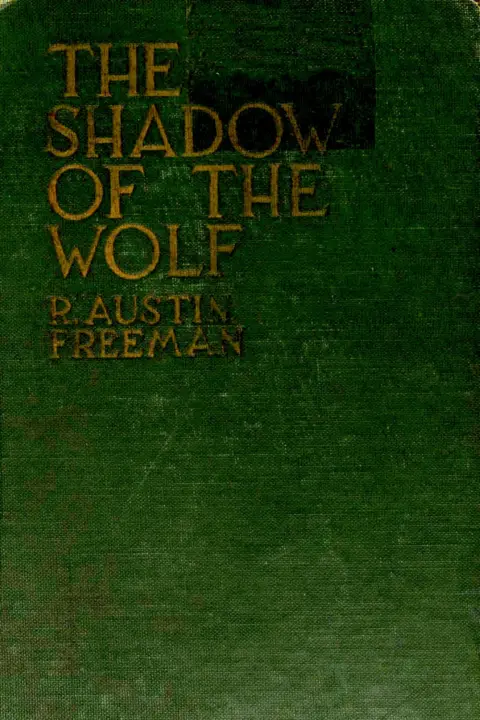
R. Austin (Richard Austin) Freeman
BEHIND THE BOOK
This eBook is for the use of anyone anywhere in the United States and most other parts of the world at no cost and with almost no restrictions whatsoever. You may copy it, give it away or re-use it under the terms of the Project Gutenberg License included with this eBook or online at www.gutenberg.org. If you are not located in the United States, you will have to check the laws of the country where you are located before using this eBook. Read the source licence.
The original source file, including credits and licence, is retained by this library. Request an original-format copy at no charge. Please include the book title and Project Gutenberg identifier #24201.
KEEP YOUR CURIOSITY GOING
Coulson Kernahan

Maurice Baring
Frances Wright
Cécile Tormay

Frederic Jesup Stimson

W. H. P. (William Henry Pope) Jarvis