
The Cruise of the “Janet Nichol” Among the South Sea Islands: A Diary
Fanny Van de Grift Stevenson
THE CLASSIC COLLECTION · 1885
"The Dynamiter" by Robert Louis Stevenson and Fanny Van de Grift Stevenson is a novella written in the late 19th century that blends elements of adventure and intrigue, framed within the context of crime and social commentary. The narrative centers around various characters conjoined by the overarching theme of the pursuit of personal fortunes and the murky realm of criminality, engaging readers with tales of adventure and moral dilemmas. The opening of "The Dynamiter" introduces a chance meeting between two friends, Paul Somerset and Edward Challoner, in London, where they both share their dwindling fortunes. They soon find themselves leading a life filled with intrigue and coincidences. The discussion turns toward their mutual struggles, leading Somerset to propose an amateur detective adventure that entangles them deeper into a web of criminality connected to a recent explosive event involving a young woman in distress. Their humorous banter sets a lively tone, while the description of their surroundings and the various characters they encounter hints at a world filled with both danger and opportunity. Through this prologue, the stage is set for a series of escapades characterized by personal conflicts and tantalizing quests, inviting readers to ponder the complexities of society and personal choices.
Introduction adapted from the source catalogue; source summaries may be automatically generated.
Free to read · English · 76,136 words · No account needed
MAKE TIME FOR A GOOD BOOK
On by default. Untick to stop anonymous reading totals. Each page counts after 10 seconds in view. How this works.
Anonymous counting is on unless you have switched it off.
The tossing of a penny decided the only remaining point; and the more imaginative canvas received the suffrages of fortune, and appeared first in the window of the mansion. It was of a high fancy, the legend eloquently writ, the scheme of colour taking and bold; and but for the imperfection of the artist’s drawing, it might have been taken for a model of its kind. As it was, however, when viewed from his favourite point against the garden railings, and with some touch of distance, it caused a pleasurable rising of the artist’s heart. ‘I have thrown away,’ he ejaculated, ‘an invaluable motive; and this shall be the subject of my first academy picture.’
The fate of neither of these works was equal to its merit. A crowd would certainly, from time to time, collect before the area-railings; but they came to jeer and not to speculate; and those who pushed their inquiries further, were too plainly animated by the spirit of derision. The racier of the two cartoons displayed, indeed, no symptom of attractive merit; and though it had a certain share of that success called scandalous, failed utterly of its effect. On the day, however, of the second appearance of the companion work, a real inquirer did actually present himself before the eyes of Somerset.
This was a gentlemanly man, with some marks of recent merriment, and his voice under inadequate control.
‘I beg your pardon,’ said he, ‘but what is the meaning of your
extraordinary bill?’
‘I beg yours,’ returned Somerset hotly. ‘Its meaning is sufficiently explicit.’ And being now, from dire experience, fearful of ridicule, he was preparing to close the door, when the gentleman thrust his cane into the aperture.
‘Not so fast, I beg of you,’ said he. ‘If you really let apartments, here is a possible tenant at your door; and nothing would give me greater pleasure than to see the accommodation and to learn your terms.’
His heart joyously beating, Somerset admitted the visitor, showed him over the various apartments, and, with some return of his persuasive eloquence, expounded their attractions. The gentleman was particularly pleased by the elegant proportions of the drawing-room.
‘This,’ he said, ‘would suit me very well. What, may I ask, would be your terms a week, for this floor and the one above it?’
‘I was thinking,’ returned Somerset, ‘of a hundred pounds.’
‘Surely not,’ exclaimed the gentleman.
‘Well, then,’ returned Somerset, ‘fifty.’
The gentleman regarded him with an air of some amazement. ‘You seem to be strangely elastic in your demands,’ said he. ‘What if I were to proceed on your own principle of division, and offer twenty-five?’
Your reading position is saved on this browser. Take it to another device with a library code. Reading pages adapt to text, rather than matching a printed edition.
Fanny Van de Grift Stevenson
Robert Louis Stevenson

Robert Louis Stevenson
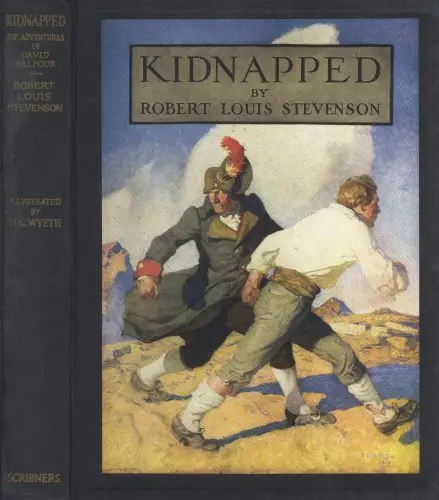
Robert Louis Stevenson
BEHIND THE BOOK
This eBook is for the use of anyone anywhere in the United States and most other parts of the world at no cost and with almost no restrictions whatsoever. You may copy it, give it away or re-use it under the terms of the Project Gutenberg License included with this eBook or online at www.gutenberg.org. If you are not located in the United States, you will have to check the laws of the country where you are located before using this eBook. Read the source licence.
The original source file, including credits and licence, is retained by this library. Request an original-format copy at no charge. Please include the book title and Project Gutenberg identifier #647.
KEEP YOUR CURIOSITY GOING
Coulson Kernahan

Maurice Baring
Frances Wright
Cécile Tormay

Frederic Jesup Stimson

W. H. P. (William Henry Pope) Jarvis