THE CLASSIC COLLECTION✦Peeps at People Being Certain Papers from the Writings of Anne Warrington WitherupCLASSIC FREE BOOKS
Peeps at People Being Certain Papers from the Writings of Anne Warrington Witherup
John Kendrick Bangs
THE CLASSIC COLLECTION · 1899
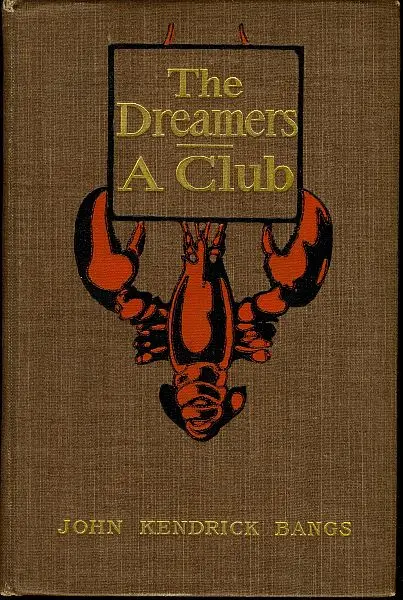
"The Dreamers: A Club" by John Kendrick Bangs is a humorous fiction work written in the late 19th century. The narrative follows a group of eccentric characters, including Bedford Parke and Tenafly Paterson, as they form a literary club called "The Dreamers," wherein they explore creative writing through shared storytelling inspired by their dreams. The club is designed to build camaraderie and literary prowess among its members, who each bring their quirks and aspirations to the gathering. At the start of the book, the concept of the club is introduced through a lively discussion among the characters, who are eager to bring their literary ambitions to fruition. They decide that their gatherings will involve a dinner where they will indulge in foods that supposedly inspire dreams, leading to tales that they'll share at subsequent meetings. The opening section sets the comedic tone as various members express their ideas about literature, while also poking fun at their own pretensions and ambitions. Through witty dialogue and relatable musings on writing and creativity, the reader is drawn into the absurd yet charming world of the Dreamers as they embark on their unique literary journey.
Introduction adapted from the source catalogue; source summaries may be automatically generated.
Free to read · English · 29,071 words · No account needed
MAKE TIME FOR A GOOD BOOK
On by default. Untick to stop anonymous reading totals. Each page counts after 10 seconds in view. How this works.
Anonymous counting is on unless you have switched it off.
"Search Subig Bay," I ordered.
"Who's this?" came the answer from the other end.
"Never mind who I am," said I. "Search Subig Bay for Spaniards."
"Hello!" said the Boston.
"Who the deuce are you?" cried the Concord.
"I'm seventeen-five-six," I replied, with some sarcasm, for that was not
my number.
"I want sixteen-two-one," retorted the Boston.
"Ring off," said the Concord. "What do you mean by giving me
seventeen-five-six?"
"Hello, Boston and Concord," I put in in commanding tones. "I'm
Dewey."
This is the only false statement I ever made, but it was in the interests of my country, and my reply was electrical in its effect. The Boston immediately blew off steam, and the Concord sounded all hands to quarters.
"What do you want, Commodore?" they asked simultaneously.
"Search Subig Bay for Spaniards, as I have already ordered you," I replied, "and woe be unto you if you don't find any."
"What do you want 'em for, Commodore?" asked the Boston.
"To engage, you idiot," I replied, scornfully. "What did you suppose--to
teach me Spanish?"
Both vessels immediately piped all hands on deck and set off. Two hours later they returned, and the telephone subaltern reported, "No Spaniards found."
"Why not?" I demanded.
"All gone to Cuba," replied the Boston. "Shall we pipe all hands to
Cuba?"
"Wires too short to penetrate without a bust," replied the Concord.
"On to Manila!" was my answer. "Ding the torpedoes--go ahead! Give us Spaniards or give us death!"
These words inspired every ship in the line, and we immediately strained forward, except the McCulloch, which I despatched at once to Hong-kong to cable my last words to you in time for the Adirondack edition of your Sunday issue leaving New York Thursday afternoon.
The rest of us immediately proceeded. In a short while, taking advantage of the darkness for which I had provided by turning the clock back so that the sun by rising at the usual hour should not disclose our presence, we turned Corregidor and headed up the Boca Grande towards Manila. As we were turning Corregidor the telephone-bell rang, and somebody who refused to give his name, but stating that he was aboard the Petrel, called me up.
"Hello!" said I.
"Is this Dewey?" said the Petrel.
"Yes," said I.
"There are torpedoes ahead," said the Petrel.
"What of it?" said I.
"How shall we treat 'em?"
"Blow 'em off--to soda water," I answered, sarcastically.
"Thank you, sir," the Petrel replied, as she rang off.
Then somebody from the Baltimore rang me up.
"Commodore Dewey," said the Baltimore, "there are mines in the
harbor."
"Well, what of it?" I replied.
"What shall we do?" asked the Baltimore.
Your reading position is saved on this browser. Take it to another device with a library code. Reading pages adapt to text, rather than matching a printed edition.
John Kendrick Bangs
John Kendrick Bangs
John Kendrick Bangs
John Kendrick Bangs
BEHIND THE BOOK
This eBook is for the use of anyone anywhere in the United States and most other parts of the world at no cost and with almost no restrictions whatsoever. You may copy it, give it away or re-use it under the terms of the Project Gutenberg License included with this eBook or online at www.gutenberg.org. If you are not located in the United States, you will have to check the laws of the country where you are located before using this eBook. Read the source licence.
The original source file, including credits and licence, is retained by this library. Request an original-format copy at no charge. Please include the book title and Project Gutenberg identifier #35374.
KEEP YOUR CURIOSITY GOING
Coulson Kernahan

Maurice Baring
Frances Wright
Cécile Tormay

Frederic Jesup Stimson

W. H. P. (William Henry Pope) Jarvis