THE CLASSIC COLLECTION✦A dead man’s diaryCLASSIC FREE BOOKS
A dead man’s diary
Coulson Kernahan
THE CLASSIC COLLECTION · 1928
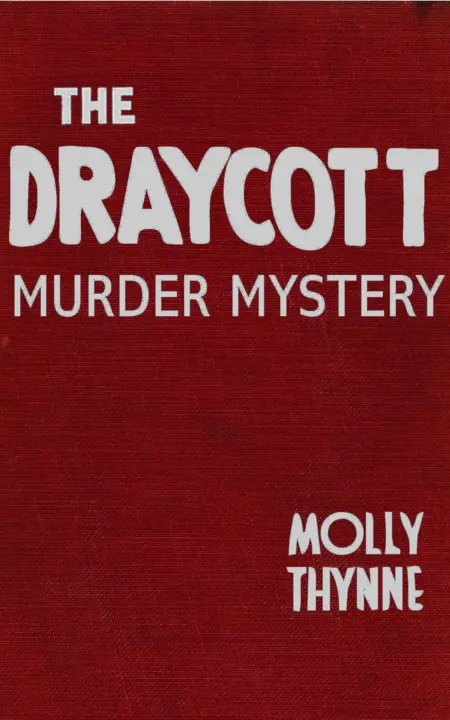
"The Draycott Murder Mystery" by Molly Thynne is a detective novel written in the late 1920s. The story unfolds in a small, isolated village in northern England, setting the stage for a suspenseful exploration of a murder case involving a woman found dead in a farmhouse. The central character so far is John Leslie, who discovers the body and becomes embroiled in the investigation, casting suspicion on himself. The opening of the novel introduces a stormy evening in the village of Keys, where the violent weather sets a foreboding atmosphere as John Leslie returns home to find a woman dead in his sitting room. The narrative captures the initial tension as he grapples with the shocking sight, and it quickly escalates as the police arrive, leading to a series of inquiries into his alibi and the circumstances surrounding the woman's death. Not only does the discovery raise questions about John's innocence, but it also leaves readers wondering about the mysterious identity of the murdered woman, hinted to be connected to the local society. The unfolding drama promises intrigue and complexity, engaging readers with both the investigation and the interplay of trust among the characters.
Introduction adapted from the source catalogue; source summaries may be automatically generated.
Free to read · English · 84,578 words · No account needed
MAKE TIME FOR A GOOD BOOK
On by default. Untick to stop anonymous reading totals. Each page counts after 10 seconds in view. How this works.
Anonymous counting is on unless you have switched it off.
“Have you got the doctor?” was his first question.
“Couldn’t get him, sir,” Gunnet answered. “He was out when I telephoned, but I left word for him to come up the instant he returned to inspect the deceased.”
Overshadowed as his spirits were by the whole unpleasant affair, Leslie could not resist an internal chuckle at this new aspect of Gunnet. The easy-going, rather garrulous villager had already draped himself in the majesty of the Law and was expressing himself accordingly.
Gunnet led the way into the sitting-room. Leslie had placed the lamp on the mantelpiece before making his hasty expedition to the police station and it still burned there, lighting up the writing-table with its tragic burden.
The Sergeant bent down and felt the cold cheek of the woman who lay across it. Then he lifted her eyelid and looked under the soft, bobbed hair that fell round her face.
“Dead, all right,” he said. “She’s just as you found her?”
Leslie stepped forward into the ring of light.
“I didn’t touch her, except to feel her face, just as you did. I knew then that she was dead.”
He could hear the scratching of the Constable’s pencil as he made his
notes.
“You’re sure she was dead then?”
“I don’t think there was the faintest doubt. If I’d had the smallest suspicion she was alive I should have tried to do something for her, but I was so sure she was dead that I went straight for Gunnet. The blood on the blotter was almost dry then.”
“What time was this, Mr. Leslie?”
“Just about eight. The clock in the kitchen struck while I was in
here.”
The Sergeant, a tall, lean man with a shrewd, typical North-country face, scratched his chin thoughtfully.
“You live here alone, I think?” he asked.
Leslie nodded.
“Mrs. Grey, the carter’s wife, does for me. She comes in the morning and leaves about two.”
“So that when you are out the house is deserted?”
“Absolutely, unless Grey is about in the yard. He was up at the station fetching some stuff this evening and didn’t get back till about nine. Gunnet was here then.”
“Could any one get in easily?”
“Quite. There is nothing here to steal. It’s only occasionally, when there’s money in the house, that I lock the front door.”
The Sergeant was about to speak again when Leslie interrupted him.
“I’ve just remembered. I forgot it till just now. The door was wide open when I came in. I’ve never found it like that before.”
“It was unlocked when you went out?”
Your reading position is saved on this browser. Take it to another device with a library code. Reading pages adapt to text, rather than matching a printed edition.
BEHIND THE BOOK
This eBook is for the use of anyone anywhere in the United States and most other parts of the world at no cost and with almost no restrictions whatsoever. You may copy it, give it away or re-use it under the terms of the Project Gutenberg License included with this eBook or online at www.gutenberg.org. If you are not located in the United States, you will have to check the laws of the country where you are located before using this eBook. Read the source licence.
The original source file, including credits and licence, is retained by this library. Request an original-format copy at no charge. Please include the book title and Project Gutenberg identifier #75222.
KEEP YOUR CURIOSITY GOING
Coulson Kernahan

Maurice Baring
Frances Wright
Cécile Tormay

Frederic Jesup Stimson

W. H. P. (William Henry Pope) Jarvis