THE CLASSIC COLLECTION✦A dead man’s diaryCLASSIC FREE BOOKS
A dead man’s diary
Coulson Kernahan
THE CLASSIC COLLECTION · 1928
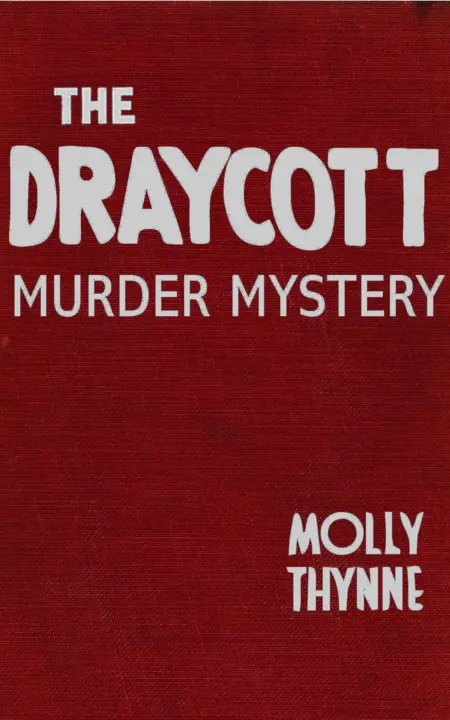
"The Draycott Murder Mystery" by Molly Thynne is a detective novel written in the late 1920s. The story unfolds in a small, isolated village in northern England, setting the stage for a suspenseful exploration of a murder case involving a woman found dead in a farmhouse. The central character so far is John Leslie, who discovers the body and becomes embroiled in the investigation, casting suspicion on himself. The opening of the novel introduces a stormy evening in the village of Keys, where the violent weather sets a foreboding atmosphere as John Leslie returns home to find a woman dead in his sitting room. The narrative captures the initial tension as he grapples with the shocking sight, and it quickly escalates as the police arrive, leading to a series of inquiries into his alibi and the circumstances surrounding the woman's death. Not only does the discovery raise questions about John's innocence, but it also leaves readers wondering about the mysterious identity of the murdered woman, hinted to be connected to the local society. The unfolding drama promises intrigue and complexity, engaging readers with both the investigation and the interplay of trust among the characters.
Introduction adapted from the source catalogue; source summaries may be automatically generated.
Free to read · English · 84,578 words · No account needed
MAKE TIME FOR A GOOD BOOK
On by default. Untick to stop anonymous reading totals. Each page counts after 10 seconds in view. How this works.
Anonymous counting is on unless you have switched it off.
“What would you have done in my place, I wonder,” he said quietly. “Sybil’s heart was in such a state that any shock might prove fatal. Lee was hopelessly insane, incapable even of recognizing her. I’m not exaggerating when I say that the mere sight of him would have killed her. Rather than take the chance of the knowledge of his existence reaching her now, I would kill you, here in this room, with my own hands, and take the consequences.”
He spoke quite gently, but his voice carried conviction and Fayre
realized that he would shrink from nothing in the effort to spare his
wife.
“Sybil knows,” he said and, even as he spoke, he felt that he would have given anything to unsay the words.
For the first time Kean’s composure deserted him. His face became suddenly grey and lined. “Impossible!”
Then, with sudden vehemence:
“Do you realize what you’re saying? Good God, man, it can’t be true!”
“It is true, unless I’ve made some ghastly mistake,” answered Fayre steadily. “I thought she had discovered it and was keeping the secret from you.”
“My God, if that woman told her!” muttered Kean. “It’s the only explanation. What have you got to go on?”
“A letter Sybil wrote me, which reached me just after I had come on the photograph of Lee. I took it for granted that that was what she was alluding to.”
“You didn’t speak to her about it?”
“I haven’t seen her since. I had meant to, but there’s been no
opportunity.”
Kean sank into a chair and covered his face with his hands.
“Thank God!” he murmured. “There’s some mistake. It’s impossible that she should have found out. She would never . . .”
He was interrupted by the insistent peal of the telephone-bell. With a half-frenzied exclamation he tore the receiver from its hook.
“Yes, Sir Edward Kean speaking,” he said mechanically, his mind entirely occupied with the revelation Fayre had just made. Then, as he listened, the already ghastly pallor of his face increased.
“It’s Sybil,” he said, hardly above his breath as he dropped the receiver. “They’ve rung up from Westminster. It’s another attack.”
For a moment he sat staring blankly into space; then he turned to Fayre with a look of almost childish entreaty in his eyes.
“I must go to her, Hatter. For heaven’s sake, don’t keep me now!”
For answer Fayre picked up Kean’s hat and coat and handed them to him.
“We must have this out soon, Edward,” he said gravely. “No matter what
happens.”
Your reading position is saved on this browser. Take it to another device with a library code. Reading pages adapt to text, rather than matching a printed edition.
BEHIND THE BOOK
This eBook is for the use of anyone anywhere in the United States and most other parts of the world at no cost and with almost no restrictions whatsoever. You may copy it, give it away or re-use it under the terms of the Project Gutenberg License included with this eBook or online at www.gutenberg.org. If you are not located in the United States, you will have to check the laws of the country where you are located before using this eBook. Read the source licence.
The original source file, including credits and licence, is retained by this library. Request an original-format copy at no charge. Please include the book title and Project Gutenberg identifier #75222.
KEEP YOUR CURIOSITY GOING
Coulson Kernahan

Maurice Baring
Frances Wright
Cécile Tormay

Frederic Jesup Stimson

W. H. P. (William Henry Pope) Jarvis