THE CLASSIC COLLECTION✦The Breath of the GodsCLASSIC FREE BOOKS
The Breath of the Gods
Sidney McCall
THE CLASSIC COLLECTION · 1905
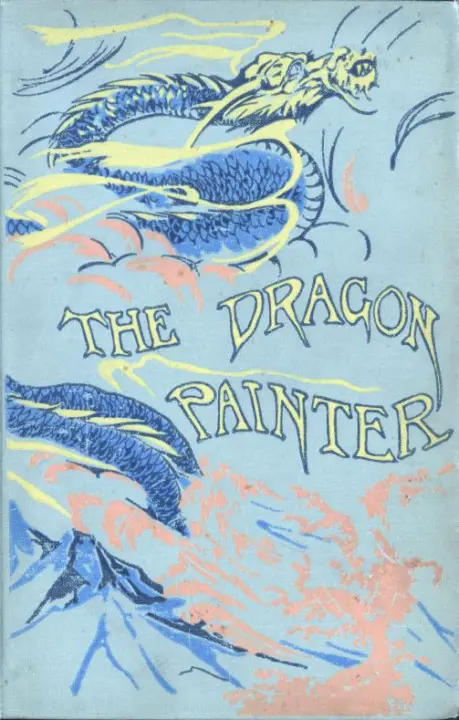
"The Dragon Painter" by Mary McNeil Fenollosa is a novel written in the early 20th century. The story unfolds in the vibrant setting of Tokyo, Japan, highlighting themes of artistic integrity and the struggles of an aging artist, Kano Indara, who is torn between traditional values and the encroachment of modernity. The narrative features Kano and his daughter, Umè-ko, as they navigate the complexities introduced by the arrival of Tatsu, a young painter with a wild spirit and a deep connection to the mythic. At the start of the novel, we are introduced to Kano Indara, an artist who cherishes the beauty of traditional Japanese art and laments the modern influences threatening his craft. Kano’s routine is disrupted when Tatsu arrives, a mysterious young man whose raw talent captivates Kano. As the two men engage, the narrative delves into their contrasting philosophies about art and identity, with Kano desperately seeking a worthy heir to his legacy. Umè-ko, caught in her father's ambitions and her own emerging feelings, becomes a focal point as Kano envisions a future where Tatsu can embody the essence of a true "Dragon Painter," symbolizing the intersection of tradition and alluring potential in the face of change.
Introduction adapted from the source catalogue; source summaries may be automatically generated.
Free to read · English · 43,105 words · No account needed
MAKE TIME FOR A GOOD BOOK
On by default. Untick to stop anonymous reading totals. Each page counts after 10 seconds in view. How this works.
Anonymous counting is on unless you have switched it off.
"Go!" said Kano again, and, in a daze, the girl rose and vanished from
the room.
Tatsu had hurled himself toward her, but it was too late. He turned angrily to his host. "She is mine! Why did you send her away?"
"Gently, gently," cooed the other. "In this incarnation she is called
my daughter."
"I believe it not!" cried Tatsu. "How came she under bondage to you? Have I not sought her through a thousand lives? She is mine!"
"Even so, in this life I am her father, and it is my command that she
will obey."
Tatsu rocked and writhed in his place.
"She is a good daughter," pursued the other, amiably. "She has never yet failed in docility and respect. Without my consent you shall not touch her,--not even her sleeve."
"I have sought her through a thousand lives. I will slay him who tries to keep her from me!" raved the boy.
"To kill her father would scarcely be a fortunate beginning," said Kano, tranquilly. "Your hope lies in safer paths, dear youth. There are certain social conventions attached even to a Dragon Maid. Now if you will calm yourself and listen to reason----"
Tatsu sprang to his feet and struck himself violently upon the brow. The hot wine was making a whirlpool of his brain. "Reason! convention! safety! I hate them all! Oh, you little men of cities! Farmyard fowls and swine, running always to one sty, following always one lead,--doing things in the one way that other base creatures have marked out----"
Kano laughed aloud. His whole life had been a protest against conventionality, and this impassioned denunciation came from a new world. The sound maddened Tatsu. He leaped to the veranda, now a mere ledge thrust out over darkness, threw an arm about the slender corner-post, and strained far out, gasping, into the night. Kano filled his pipe with leisurely deliberation. The time was past for fear.
In a few moments the boy returned, his face ugly, black, and sullen. "I will be your son if you give me the maiden," he muttered.
"Come now, this is much better," said Kano, with a genial smile. "We shall discuss the matter like rational men."
Tatsu ground his teeth so that the other heard him.
"Have a pipe," said Kano.
"I want no pipe."
"At least make yourself at ease upon the cushion while I speak."
"I am more at ease without it," said the boy, flinging the velvet square angrily across the room. "Ugh! It is like sitting on a dead cat. Kindly speak without further care for me. I am at ease!"
Your reading position is saved on this browser. Take it to another device with a library code. Reading pages adapt to text, rather than matching a printed edition.
BEHIND THE BOOK
This eBook is for the use of anyone anywhere in the United States and most other parts of the world at no cost and with almost no restrictions whatsoever. You may copy it, give it away or re-use it under the terms of the Project Gutenberg License included with this eBook or online at www.gutenberg.org. If you are not located in the United States, you will have to check the laws of the country where you are located before using this eBook. Read the source licence.
The original source file, including credits and licence, is retained by this library. Request an original-format copy at no charge. Please include the book title and Project Gutenberg identifier #22884.
KEEP YOUR CURIOSITY GOING
Coulson Kernahan

Maurice Baring
Frances Wright
Cécile Tormay

Frederic Jesup Stimson

W. H. P. (William Henry Pope) Jarvis