THE CLASSIC COLLECTION✦The Breath of the GodsCLASSIC FREE BOOKS
The Breath of the Gods
Sidney McCall
THE CLASSIC COLLECTION · 1905
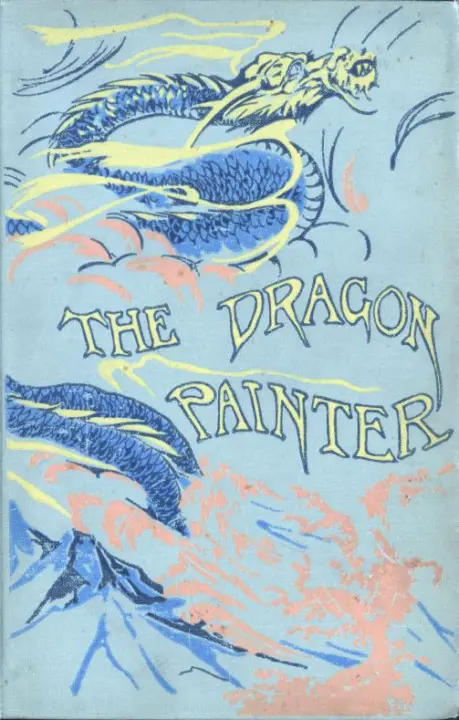
"The Dragon Painter" by Mary McNeil Fenollosa is a novel written in the early 20th century. The story unfolds in the vibrant setting of Tokyo, Japan, highlighting themes of artistic integrity and the struggles of an aging artist, Kano Indara, who is torn between traditional values and the encroachment of modernity. The narrative features Kano and his daughter, Umè-ko, as they navigate the complexities introduced by the arrival of Tatsu, a young painter with a wild spirit and a deep connection to the mythic. At the start of the novel, we are introduced to Kano Indara, an artist who cherishes the beauty of traditional Japanese art and laments the modern influences threatening his craft. Kano’s routine is disrupted when Tatsu arrives, a mysterious young man whose raw talent captivates Kano. As the two men engage, the narrative delves into their contrasting philosophies about art and identity, with Kano desperately seeking a worthy heir to his legacy. Umè-ko, caught in her father's ambitions and her own emerging feelings, becomes a focal point as Kano envisions a future where Tatsu can embody the essence of a true "Dragon Painter," symbolizing the intersection of tradition and alluring potential in the face of change.
Introduction adapted from the source catalogue; source summaries may be automatically generated.
Free to read · English · 43,105 words · No account needed
MAKE TIME FOR A GOOD BOOK
On by default. Untick to stop anonymous reading totals. Each page counts after 10 seconds in view. How this works.
Anonymous counting is on unless you have switched it off.
"Is it--is it--Tatsu?" screamed the old man, hurling his voice before
him.
"It is a madman," declared the servant, and flattened herself against
the hedge.
Ume said nothing at all. After one look into the stranger's face she had withdrawn, herself unseen, into the shadowy rooms.
"I am Tatsu of Kiu Shiu," announced the apparition, in a voice of strange depth and sweetness. "Is this the home of Kano Indara?"
"Yes, yes, I am Kano Indara," said the artist, almost grovelling on the stones. "Enter, dear sir, I beseech. You must be weary. Accompany me in this direction, august youth. Mata, bring tea to the guest-room."
Tatsu followed his tempestuous host in silence. As they gained the room Kano motioned him to a cushion, and prepared to take a seat opposite. Tatsu suddenly sank to his knees, bowing again and again, stiffly, in a manner long forgotten in fashionable Yeddo.
"Discard the ceremony of bowing, I entreat," said Kano.
"Why? Is it not a custom here?"
"Yes,--to a lesser extent. But between us, dear youth, it is
unnecessary."
"Why should it be unnecessary between us?" persisted the unsmiling
guest.
"Because we are artists, therefore brothers," explained Kano, in an
encouraging voice.
Tatsu frowned. "Who are you, and why have you sent for me?"
"Do you inquire who I am?" said Kano, scarcely believing his ears.
"It is what I asked."
"I am Kano Indara." The old man folded his arms proudly, waiting for
the effect.
Tatsu moved impatiently upon his velvet cushion. "Of course I knew that. It was the name on the scrap of paper that guided me here."
"Is it possible that you do not yet know the meaning of the name of Kano?" asked the artist, incredulously. A thin red tingled to his cheek,--the hurt of childish vanity.
"There is one of that name in my village," said Tatsu. "He is a scavenger, and often gives me fine large sheets of paper."
Old Kano's lip trembled. "I am not of his sort. Men call me an
artist."
"Oh, an artist! Does that mean a painter of dragons, like me?"
"Among other things of earth and air I have attempted to paint
dragons," said Kano.
"I paint nothing else," declared Tatsu, and seemed to lose interest in
the conversation.
Kano looked hard into his face. "You say that you paint nothing else?" he challenged. "Are not these--all of them--your work, the creations of your fancy?" He reached out for the roll that Uchida had brought. His hands trembled. In his nervous excitement the papers fell, scattering broadcast over the floor.
Your reading position is saved on this browser. Take it to another device with a library code. Reading pages adapt to text, rather than matching a printed edition.
BEHIND THE BOOK
This eBook is for the use of anyone anywhere in the United States and most other parts of the world at no cost and with almost no restrictions whatsoever. You may copy it, give it away or re-use it under the terms of the Project Gutenberg License included with this eBook or online at www.gutenberg.org. If you are not located in the United States, you will have to check the laws of the country where you are located before using this eBook. Read the source licence.
The original source file, including credits and licence, is retained by this library. Request an original-format copy at no charge. Please include the book title and Project Gutenberg identifier #22884.
KEEP YOUR CURIOSITY GOING
Coulson Kernahan

Maurice Baring
Frances Wright
Cécile Tormay

Frederic Jesup Stimson

W. H. P. (William Henry Pope) Jarvis