THE CLASSIC COLLECTION✦The Dark Road: further adventures of Chéri-BibiCLASSIC FREE BOOKS
The Dark Road: further adventures of Chéri-Bibi
Gaston Leroux
THE CLASSIC COLLECTION · 1909
"The Double Life" by Gaston Leroux is a novel written in the early 20th century. The book follows the protagonist, M. Théophraste Longuet, who unexpectedly discovers that he may have been a notorious criminal known as Cartouche in a past life. This revelation sets off a chain of events intertwined with mystery and supernatural elements as Longuet grapples with his identity and the legacies of his past. At the start of the narrative, readers are introduced to Théophraste Longuet, a seemingly ordinary man who receives a locked oaken chest from the executor of his deceased friend, M. Théophraste Longuet. The chest contains memoirs and documents linking Longuet to the infamous criminal Cartouche. As he examines the papers, Longuet experiences bizarre episodes that suggest a connection to his past life. The opening establishes a gripping blend of history, intrigue, and existential exploration, leaving readers eager to uncover the truths hidden within the chest and the dramatic life of its former owner.
Introduction adapted from the source catalogue; source summaries may be automatically generated.
Free to read · English · 57,326 words · No account needed
MAKE TIME FOR A GOOD BOOK
On by default. Untick to stop anonymous reading totals. Each page counts after 10 seconds in view. How this works.
Anonymous counting is on unless you have switched it off.
That which astonished M. Longuet above all else was the astral light which showed up the noble features of M. Eliphaste de St. Elm. He was a person of divine elegance, as elegant as a Christ on the Tripoli.
“I do not know where I am,” said Théophraste, “but it gives me confidence to see my friend Adolphe, and my wife, Marceline, at your side. However, I should like to know your name.”
“My dear sir,” said the harmonious voice, “I am called M.
Eliphaste de St. Elm.”
“Well,” said Théophraste, “my name is Cartouche. But it has been believed for a long, long time that this name was given to me as a nickname.”
“You are not Cartouche,” said Eliphaste.
“Your name is Théophraste Longuet. You will pardon me, but there is no longer any need for confusion; you were formerly called Cartouche, but now you are called Théophraste Longuet.”
M. Théophraste then recalled a number of personages with whom he had, in the spirit of Cartouche, been speaking. They were all of the eighteenth century—Gatelard, Marie Antoinette Neron, and others, and it was evident that his mind was dwelling on that period, and he was living in the present a life of the past.
Théophraste was still talking of these times, when the half shadows which seemed to envelop him were suddenly dissipated, and the room appeared in the splendid brightness of day. He looked around with evident satisfaction, first at his wife, and then at Adolphe, and finally at M. Eliphaste. Eliphaste had entirely lost his supernatural aspect, his astral mantle had disappeared, and if his features had still their sublime and unusual pallor, he seemed, nevertheless, a man like other men.
“Ah, this is better,” said Théophraste, sighing.
“It is not necessary for you to think any more of old Paris,” said M. Eliphaste. “You have nothing more to do with it. You are Théophraste, and it is the year of grace, 1899.”
“Possibly,” replied Théophraste, who was obstinate; “but the question is, what about my treasure? I have a perfect right to look at a plan of old Paris, for I can follow the place where I buried it formerly, and find the place where I must look.”
Eliphaste, speaking to Lecamus, said, “I have often witnessed the crises of Karma, but never has it been given to me to study one of such strength.”
Your reading position is saved on this browser. Take it to another device with a library code. Reading pages adapt to text, rather than matching a printed edition.
Gaston Leroux
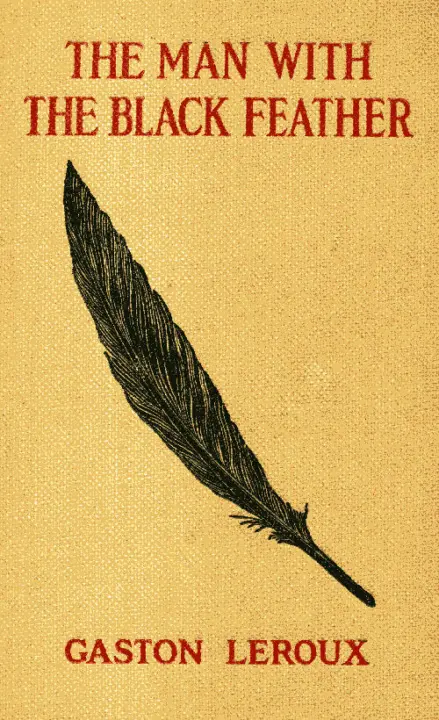
Gaston Leroux
Gaston Leroux
BEHIND THE BOOK
This eBook is for the use of anyone anywhere in the United States and most other parts of the world at no cost and with almost no restrictions whatsoever. You may copy it, give it away or re-use it under the terms of the Project Gutenberg License included with this eBook or online at www.gutenberg.org. If you are not located in the United States, you will have to check the laws of the country where you are located before using this eBook. Read the source licence.
The original source file, including credits and licence, is retained by this library. Request an original-format copy at no charge. Please include the book title and Project Gutenberg identifier #53989.
KEEP YOUR CURIOSITY GOING
Coulson Kernahan

Maurice Baring
Frances Wright
Cécile Tormay
Francis Greenleaf Allinson & Anne C. E. (Anne Crosby Emery) Allinson

Frederic Jesup Stimson