THE CLASSIC COLLECTION✦The Dark Road: further adventures of Chéri-BibiCLASSIC FREE BOOKS
The Dark Road: further adventures of Chéri-Bibi
Gaston Leroux
THE CLASSIC COLLECTION · 1909
"The Double Life" by Gaston Leroux is a novel written in the early 20th century. The book follows the protagonist, M. Théophraste Longuet, who unexpectedly discovers that he may have been a notorious criminal known as Cartouche in a past life. This revelation sets off a chain of events intertwined with mystery and supernatural elements as Longuet grapples with his identity and the legacies of his past. At the start of the narrative, readers are introduced to Théophraste Longuet, a seemingly ordinary man who receives a locked oaken chest from the executor of his deceased friend, M. Théophraste Longuet. The chest contains memoirs and documents linking Longuet to the infamous criminal Cartouche. As he examines the papers, Longuet experiences bizarre episodes that suggest a connection to his past life. The opening establishes a gripping blend of history, intrigue, and existential exploration, leaving readers eager to uncover the truths hidden within the chest and the dramatic life of its former owner.
Introduction adapted from the source catalogue; source summaries may be automatically generated.
Free to read · English · 57,326 words · No account needed
MAKE TIME FOR A GOOD BOOK
On by default. Untick to stop anonymous reading totals. Each page counts after 10 seconds in view. How this works.
Anonymous counting is on unless you have switched it off.
Adolphe turned around to reprove Marceline for her flippancy, but at this moment M. Milfroid, the Commissioner of Police, approached, and Adolphe rose to greet his friend.
Adolphe introduced M. Milfroid to M. and Mme. Longuet. He was a man of about forty years of age, elegantly dressed, immaculate gloves, a silvery ringlet of hair on the white forehead. He advanced, smiling and bowing.
“We have often heard our friend M. Adolphe speak of you,” said Marceline. “Your fame has gone before you.”
“Oh, madame, I have known you for a long time. Every time I meet M. Lecamus he speaks to me of his friends of the Rue Gerauds, and in such terms that it has been my greatest desire to have the happiness of being presented to you.”
Marceline was conquered by such gallant manners. “I hear that you play the violin very well,” she said.
“I am equally interested in philosophy,” said M. Milfroid. “An interest which I owe to M. Adolphe, who is continually in dispute with me over the immortality of the soul, and other psychic matters. He has really made a convert of me.”
“Monsieur,” said Théophraste, who had not yet taken part in the conversation, “Adolphe and I like to converse about serious matters, also. We were just speaking of the relations between the soul and the body, and the different ways that the soul has of behaving with the body.”
“Ah!” said M. Milfroid, who desired to shine before Marceline, “are you able to distinguish between matter and mind, or the material and the spiritual? Matter and mind are the same thing in the eyes of science. That is to say, they constitute alike one unit, one force, produce at one time the phenomenon of cause and effect, tending to one end, the progressive steps of existence. You are the only ones, gentlemen, to still make that old distinction between matter and mind.”
After a while they rose and returned through the Place de la Concorde. At the entrance to the Rue Royale, there was a crowd of people, shouting and gesticulating. Théophraste, an old Parisian, wanted to know what was taking place, and flung himself into the crowd.
“Look out for pickpockets,” Marceline called to him.
“Oh, madame,” said Monsieur Milfroid, the Commissioner of Police, “there are no pickpockets when I am about.”
“It is true. We should be in no danger when you are here.”
“I do not know about that,” said Adolphe, looking about them. “My friend here appears more dangerous to me than all the pickpockets on earth.” At this they all laughed.
Your reading position is saved on this browser. Take it to another device with a library code. Reading pages adapt to text, rather than matching a printed edition.
Gaston Leroux
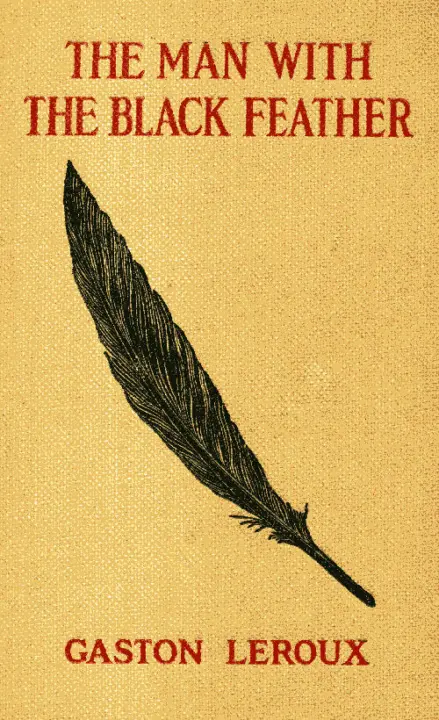
Gaston Leroux
Gaston Leroux
BEHIND THE BOOK
This eBook is for the use of anyone anywhere in the United States and most other parts of the world at no cost and with almost no restrictions whatsoever. You may copy it, give it away or re-use it under the terms of the Project Gutenberg License included with this eBook or online at www.gutenberg.org. If you are not located in the United States, you will have to check the laws of the country where you are located before using this eBook. Read the source licence.
The original source file, including credits and licence, is retained by this library. Request an original-format copy at no charge. Please include the book title and Project Gutenberg identifier #53989.
KEEP YOUR CURIOSITY GOING
Coulson Kernahan

Maurice Baring
Frances Wright
Cécile Tormay
Francis Greenleaf Allinson & Anne C. E. (Anne Crosby Emery) Allinson

Frederic Jesup Stimson